
Healthcare (Commonwealth Union) – Glioblastoma is an extremely aggressive brain tumor that spreads rapidly. Scientists from the University of Sussex in the UK and international partner institutions have developed a blood test that could help detect Glioblastoma — the deadliest form of brain tumour — at an earlier stage, potentially improving survival rates.
Led by Georgios Giamas, the research team identified unique biomarkers in blood samples that may indicate the presence of Glioblastoma, an aggressive brain cancer known for its rapid growth and spread.
Biomarkers are increasingly paying a crucial role in diagnostics and medical research and with artificial intelligence and more sophisticated analytical tools, they are likely to become evenmore significant in the years ahead.
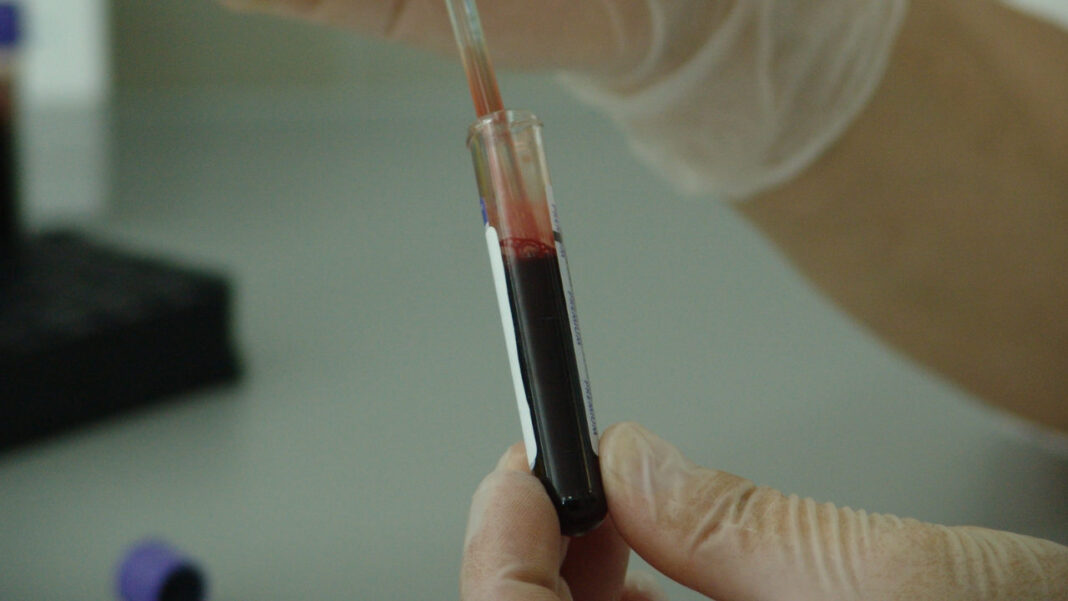
The findings, published in Cell Reports Medicine, examined whether a simple blood test could accurately identify and classify tumours by analysing tiny particles known as small extracellular vesicles (sEVs), which are released by cells into the bloodstream.
More than 11,000 people in the UK are diagnosed with a primary brain tumour each year. Glioblastoma is the most common high-grade primary brain tumour in adults, and diagnosis currently often depends on symptom monitoring, MRI scans and invasive brain biopsies.
Professor Giamas indicated that existing diagnostic methods can delay detection because they rely heavily on symptoms, imaging and surgical tissue sampling. The researchers believe the new blood test could offer a faster and less invasive alternative for identifying the disease.
“Early diagnosis for any type of cancer is crucial, but it is particularly so for Glioblastoma, which is often diagnosed late.”
The researchers first launched the study in 2022 using a small group of patients to develop a fast, non-invasive and reliable diagnostic approach.
For the follow-up research, the team analysed blood plasma samples from a larger cohort that included both glioma patients and healthy volunteers. They identified key biomarkers within small extracellular vesicles (sEVs) extracted from the blood and examined them using a range of advanced analytical methods.
The process enabled the scientists to build a “chemical fingerprint” of the biomarkers contained in the sEVs, including proteins and microscopic genetic material known as microRNAs. By applying machine learning algorithms, the researchers combined the complex datasets to identify the most dependable patterns linked to glioma diagnosis.
The analysis showed that blood samples from glioma patients consistently differed from those of healthy participants, allowing the team to develop a highly accurate diagnostic test. In a smaller group of patients monitored over time, shifts in the biomarkers also indicated the test may help track how individuals respond to treatment.
The method also delivered encouraging results in distinguishing between major glioma subtypes and separating gliomas from other brain tumours — an important step in selecting the most effective treatment.
Professor Georgios Giamas pointed out that it is extremely encouraging because they have demonstrated that a simple and affordable blood test can identify a reliable biomarker signature capable of detecting even the most aggressive brain tumours with impressive accuracy.
He also pointed out that the discovery has the potential to save lives by replacing risky brain surgery with a fast, minimally invasive test that sends answers in days instead of weeks, permitting treatment to commence as soon as possible.
“The next critical step is creating consistent procedures across hospitals and launching larger studies to bring this blood test from the laboratory into routine clinical practice, where it can truly transform patient outcomes.”
Dr Stephen Robinson, a Clinical Oncologist and recent postgraduate at the University of Sussex, was the paper’s first author. Highlighting the importance of the findings, indicated that brain tumours are particularly challenging to diagnose and monitor because of their location, which may help explain their historically low survival rates. He further pointed out that the study marks a significant step towards developing a reliable ‘liquid biopsy’ blood test that can deliver vital information about a patient’s brain tumour without requiring an invasive brain biopsy.