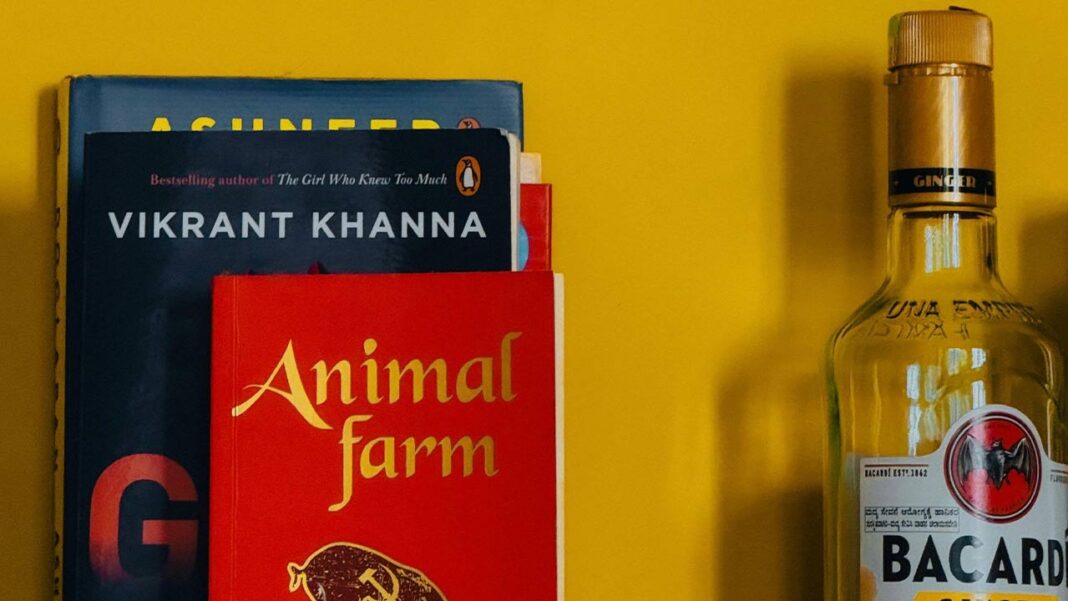

Authors write many books to entertain or inform us. In contrast, there are a select few that linger on our conscience well beyond the last page, such as Animal Farm by George Orwell.
At a cursory glance, Animal Farm seems simple enough: it tells the story of some farm animals who rise up against their human owner in search of an equal society. However, what lies hidden behind the exterior of a simple fable is one of the most profound examinations of political structures ever created in literature, masterfully wrapped up within the guise of a children’s book.
Written in 1945, in the aftermath of World War II, Animal Farm is a powerful condemnation of both the Russian Revolution and the rise to power of Joseph Stalin. This book is both a piece of literature and a symbol of an entire era of political ideologies; equally, it serves as a vehicle for Orwell’s condemnation of those ideologies.
If you removed the pigs, the farm and the sayings from Animal Farm but replaced them with the equivalent pigs and farms provided by modern governments, corporations, and media companies, the allegory of authority and the consequences thereof would still apply to each of those institutions—they just wouldn’t be as gruesome!
The brilliance of Orwell lies in how he illustrates the metamorphosis of pigs from liberators to oppressors. This change occurs imperceptibly over time rather than appearing abruptly; therefore, it is particularly disturbing. Rather than proclaiming tyranny with loud sounds, Orwell contends that tyranny is powered by the changing of rules, the alteration of language, and the creation of irrationally based fear.
The novel’s most chilling line—”All animals are equal, but some animals are more equal than others”—is also one of the best examples of political satire. While it is nonsensical and illogical, it vividly expresses how power frequently rewrites the perceptions of what is moral.
The characters of this story are some of the most memorable found in literature. Boxer, the diligently kept, loyal horse, represents the novel’s emotional anchor: a tragic demonstration of the working class, who are continuously used and abused by systems which they put their faith in. Napoleon is not simply the antagonist but is the embodiment of unconscionable ambition. Finally, Squealer is likely to be the character that Orwell has created that resonates most with contemporary life; his mastery of propaganda parallels the ability of today’s technologically driven world to manipulate everyday life through new media channels.
Orwell achieves an astonishing amount in less than 100 pages. There is no wasted sentence. Every piece of dialogue, each commandment on the barn wall, and every single betrayal serves a symbolic purpose. This is literary compression at its finest.
Animal Farm is not just a political warning but also a philosophical challenge. Animal Farm forces the reader to contemplate and answer unsettling questions. Why do we allow ourselves to throw away our freedom for comfort? Why do ordinary people facilitate corruption? How do you edit truth so easily?
Nearly 80 years after it was published, Animal Farm is disturbingly relevant today, not because history has repeated itself, but rather because human nature continues to be the same.
Animal Farm is not just a novel; it is a label of warning for humanity.
Read it once as a story.
Read it twice as a book of history.
Read it a third time and it will begin to look like you’re living in that farm.