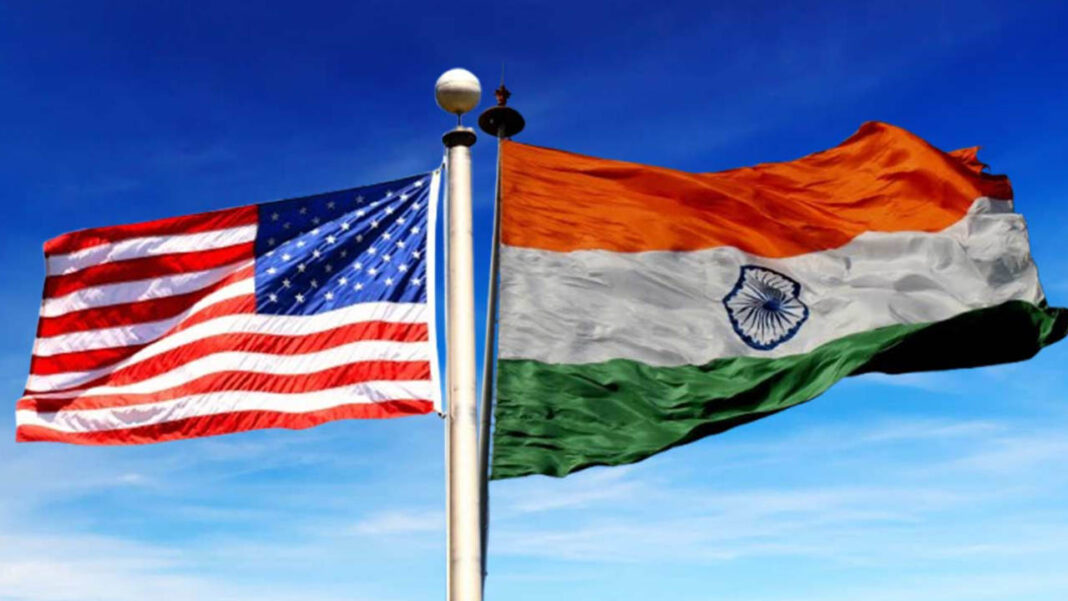

India and the United States (U.S.) are making remarkable progress toward finalising the initial tranche of a long-awaited bilateral trade agreement. Indian Commerce & Industry Minister Piyush Goyal expressed confidence that an initial package may be completed by mid-July ’26. This development represents an important move forward in one of the world’s most closely monitored trade negotiations. It reflects the growing strategic and economic partnership between the two countries.
Speaking after a fresh round of discussions between Indian & U.S. officials in New Delhi, Goyal said that both sides were working intensively to resolve outstanding issues besides close remaining gaps in the negotiations. According to Goyal, officials from multiple U.S. trade divisions participated in the talks. They underscored Washington’s commitment to advancing the agreement. He implied that negotiators were moving quickly toward closing all open ends. He anticipated that the first phase of the deal may be executed by the middle of July ’26.
The proposed agreement was expected to provide India with preferential trade access relative to several competing economies. Such a framework may strengthen India’s position in key export sectors. This included manufacturing, pharmaceuticals, textiles, and engineering goods besides technology services. Analysts view the arrangement as a potentially transformative development for bilateral trade, adding that both governments have sought to expand substantially over the coming years.
Negotiations between the two countries gained momentum following an initial understanding reached earlier this year. Progress, however, slowed after legal, besides political, developments in the U.S. affected broader tariff policies. The talks resumed with renewed vigour, with both governments seeking to establish a stable framework for trade as well as investment. This phase was before key tariff deadlines & regulatory decisions came shortly into effect.

Recent ministerial-level discussions have focused on market access. Also, tariff structures and supply-chain cooperation are measures designed to facilitate greater two-way trade. Both countries have emphasised the importance of creating a mutually beneficial agreement that may support businesses, investors & workers on both sides. The official described the latest talks as being constructive as well as forward-looking. The meeting was with negotiators exploring practical solutions in accelerating completion of the 1st phase of the Bilateral Trade Agreements (BTA).
Despite the positive momentum, several sensitive issues remain under discussion. India has sought assurances that any agreement may provide its exporters with a comparative tariff advantage over competing nations. Goyal has repeatedly stressed that New Delhi requires a level playing field for Indian products, adding that it will not conclude a deal that leaves Indian exporters disadvantaged. This stance reflects broader concerns among Indian manufacturers, particularly regarding global competition besides changing trade regulations.
On its part, the U.S. has emphasised the importance of reciprocal market access, besides fair trade practices. Washington remains focused on achieving a balanced agreement that benefits both economies, according to U.S. officials. This also creates new opportunities for American exporters and investors. Recent meetings between Goyal & U.S. Trade Representative Jamieson Greer have highlighted the high level of engagement between the two governments.
Trade negotiations are materialising against a backdrop of strengthening strategic ties between the world’s largest and the 5th-largest economies. Cooperation in areas such as technology, defence, critical minerals, semiconductors, and energy, besides supply-chain resilience, has expanded significantly during recent times. A successful trade agreement may further reinforce this partnership besides serving as a cornerstone of broader economic cooperation in the Indo-Pacific region.
Additional signs of progress on talks have emerged recently. The U.S. Ambassador to India, Sergio Gor, indicated that negotiations were in their final stages. Gor opined that the most contentious issue had already been resolved. He expressed confidence that the agreement may provide greater certainty for businesses operating between the two countries, besides supporting the shared objective of significantly expanding bilateral trade volumes.