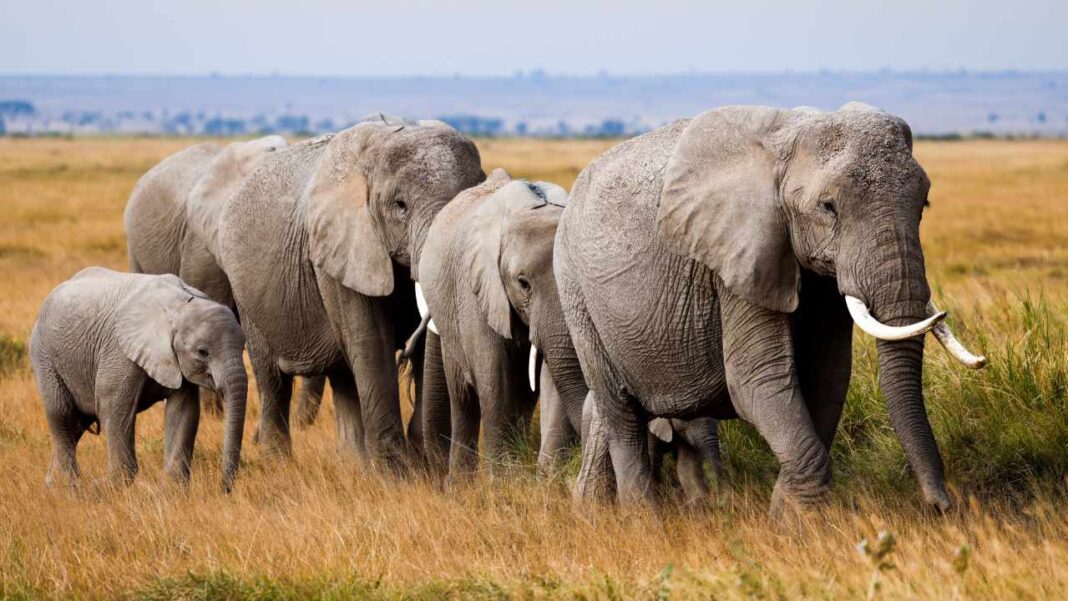

Every year on August 12, World Elephant Day, the world comes together to celebrate elephants and to help protect them. Established in 2012, the day is dedicated to the threats facing African and Asian elephants and promotes practical solutions to their protection and welfare.
Elephant conservation in Commonwealth countries such as Kenya, Botswana, South Africa and Zambia is about protecting wildlife, managing habitats and trying to reduce human-elephant conflict.
In Kenya, the “Sheldrick Wildlife Trust (SWT)” is well known for its work in rescuing, raising and rehabilitating orphaned elephants. The Nairobi Nursery provides care for young elephants, particularly before they enter the Trust’s reintegration program and are ultimately returned to the wild.
The Trust says it has rescued more than 300 orphaned elephants and has recorded dozens of calves born to ex-orphans after they were released back into the wild. Its work to conserve elephants includes anti-poaching operations, veterinary support and responding to human-elephant conflict in addition to rescuing them.
Human-elephant conflict is a major conservation challenge in Kenya. In 2025, SWT’s aerial teams responded to over 110 cases of human-elephant conflict and helped return close to 400 elephants to protected areas.
In South Africa the “Hoedspruit Elephant Rehabilitation and Development (HERD)” is working in elephant welfare, education and research.
In March 2026 HERD announced plans to establish the “Limpopo Research Centre”, named after an elephant in its care, Limpopo, who died in 2025. The proposed center would facilitate ethical elephant research and improve understanding of elephant welfare.
The proposed research program of the HERD also involves non-invasive methods, such as dung analysis, to improve our knowledge of elephant health and welfare. The center was under development in 2026, with construction underway as HERD worked towards establishing the research facilities.
Living With Elephants in Botswana
Botswana is home to one of Africa’s largest elephant populations, but its communities are also feeling the effects of human-wildlife conflict.
Government sources say there have been cases of elephants destroying crops and straying into human settlements. So, Botswana has taken measures to reduce conflict like improving water availability for wildlife in protected areas, keeping barriers and fences up and using other means to keep elephants away from settlements and farms.
Wildlife is also the basis of local economies, in the form of tourism, which compounds the problem further. Therefore, successful conservation must involve strategies that take into account both the protection of elephants and the safety and livelihoods of people living near wildlife areas.
People must protect elephants
Saving elephants isn’t just about locking animals up in national parks. Human-elephant conflict is a dominant aspect of conservation planning in many parts of Africa where people and elephants share the same landscape.
Crop destruction, property damage and threats to human safety can all cause serious problems for rural communities. Recently Botswana has experienced thousands of human-wildlife conflict incidents and is still formulating strategies to enhance coexistence.
Communities, in the long term, need to be viewed as partners – not just people living nearby protected areas. Improved fencing, compensation schemes, community engagement, responsible tourism and sound wildlife management systems can all help to minimise conflict.
The Importance of Elephants
Elephants are an essential ecological component of African ecosystems. Their movement and feeding can cause changes in vegetation, seed dispersal and habitats. Therefore, their presence can impact many other species that live in the same ecosystems.
But elephants are under threat from a variety of pressures, including loss of habitat, human conflict and illegal killing for their ivory. An increasing number of conservation organisations are calling for these threats to be tackled together, not separately.
Collective Responsibility: World Elephant Day 2026 is an opportunity to recognise the work of conservation organisations, governments, researchers, rangers and local communities.
Elephant conservation is a long-term commitment and a collaborative effort, encompassing rescue and rehabilitation in Kenya, research and welfare in South Africa, and rescue and rehabilitation in Kenya, research and welfare in South Africa or human-wildlife conflict resolution in Botswana.
The future of Africa’s elephants is not only about protecting individual animals but also about protecting their environment and finding ways to allow people and wildlife to co-exist within the same landscapes.
So, there is a simple but important message for World Elephant Day. Ultimately, elephant conservation aims to ensure a prosperous future for both elephants and the communities that coexist with them.