
US President Donald Trump has dropped his plan to charge a 20% fee on cargo ships passing through the Strait of Hormuz. Instead, he said the United States will focus on securing major trade and investment agreements with Gulf countries. The announcement came shortly before the US resumed its naval blockade of Iranian ports and launched another round of military strikes against Iran.
According to US Central Command (Centcom), American forces carried out fresh attacks aimed at reducing Iran’s ability to target commercial ships in the Strait of Hormuz. The US said the operation is meant to protect one of the world’s most important shipping routes.
Iranian state media reported explosions in several cities, including Bushehr, where Iran’s only nuclear power plant is located. The conflict has continued to grow after Iran launched attacks on US military facilities in Bahrain and Jordan. Tehran had also targeted two oil tankers from the United Arab Emirates.
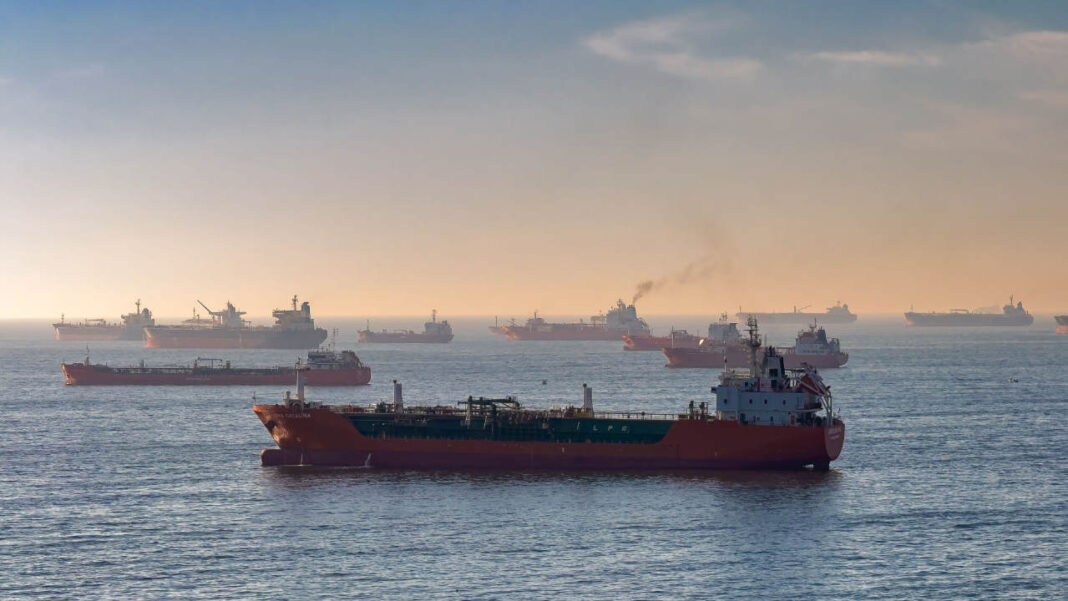
The Strait of Hormuz is a key route for global energy supplies. Around one-quarter of the world’s oil and about one-fifth of liquefied natural gas normally pass through the narrow waterway. Any disruption there can quickly affect global fuel prices.
Earlier this week, Trump announced that the US would act as the “guardian” of the Strait of Hormuz. He proposed a 20% shipping fee, saying it would help cover the cost of protecting the route. He also said the US would restart its naval blockade of Iran.
However, Trump later changed his decision. In a post on Truth Social, he said Gulf countries would instead make large trade and investment deals with the United States. He described the expected investments as “massive” but did not provide further details.
Speaking in Washington after meeting Iraqi Prime Minister Ali al-Zaidi, Trump said he did not like the idea of charging ships. He added that Gulf leaders had contacted him, leading him to reconsider the proposal.
Iran rejected Trump’s latest announcement and insisted it still controls the Strait of Hormuz. Iranian Deputy Foreign Minister Kazem Gharibabadi said the renewed US blockade had weakened an earlier agreement between the two countries.
The US first introduced a naval blockade against Iran in April before temporarily easing restrictions in June under a memorandum of understanding. However, tensions have risen again following new disputes over the Strait of Hormuz.
Shipping traffic through the waterway has fallen to its lowest level in two months, while oil prices have climbed due to concerns over supply. Separately, Israeli Prime Minister Benjamin Netanyahu warned that Israel would respond with much greater force if Iran launches another attack.