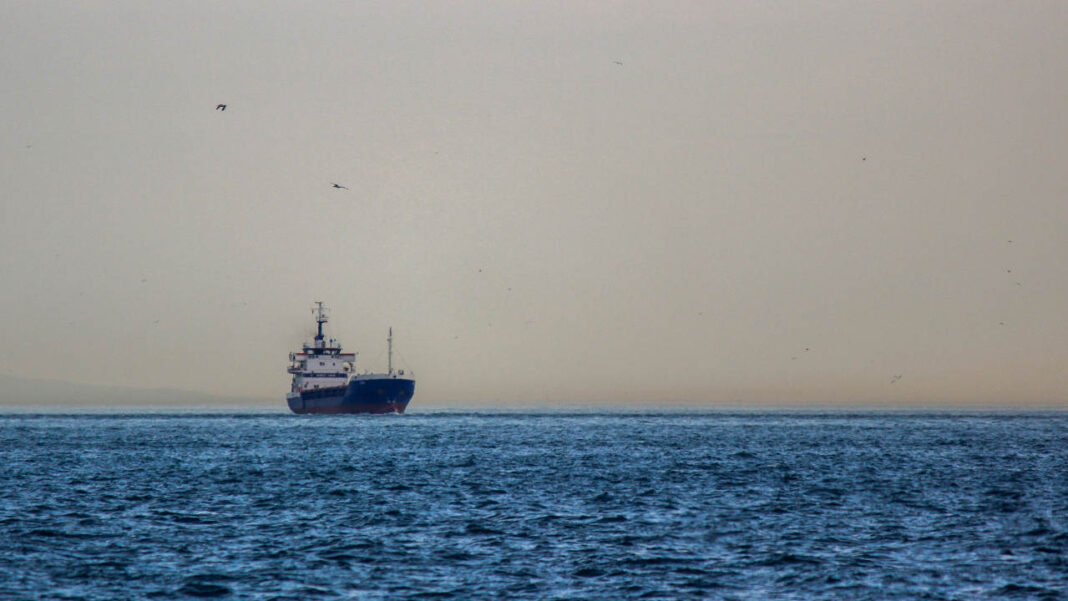

The United Arab Emirates (UAE) has accused Iran of carrying out a missile attack on two of its oil tankers in the Strait of Hormuz. The incident happened on Monday and left one Indian crew member dead. Eight others were injured, including six Indians and two Ukrainians. Four of the injured were reported to be in serious condition.
The UAE strongly condemned the attack. It described the strike as a serious violation of international law and said it threatened the security and stability of the region.
Iran’s Islamic Revolutionary Guard Corps (IRGC) later claimed responsibility for the attack. It said the two tankers ignored warnings, switched off their navigation systems, and entered a route that had been mined. According to the IRGC, the ships were targeted to stop what it called cooperation with hostile forces. The attack comes as fighting between the United States and Iran continues to intensify.
US President Donald Trump announced that the United States would introduce a new naval blockade around Iranian ports. He also said a 20% charge would be placed on cargo passing through the Strait of Hormuz. Trump argued that the fee would help cover the cost of protecting one of the world’s most important shipping routes.
Trump said the US military was taking control of security in the strait and claimed American forces were weakening Iran’s military capabilities through ongoing air strikes. The attacks marked the third straight night of US military action against Iranian targets.
The US military later confirmed it had carried out strikes on several military sites across Iran, including bases near key coastal areas. According to US Central Command, the goal was to reduce Iran’s ability to threaten commercial shipping in the Gulf. Despite the military action, Trump said he still believed a peace agreement between the US and Iran was possible.
Iran rejected the US announcement over the Strait of Hormuz. Foreign Minister Abbas Araghchi said Iran has always protected the waterway and would continue to do so. While responding to Trump’s comments, he mocked the proposed 20% cargo charge and suggested Iran would be “fairer” if it controlled access.
Iran also warned that any country helping the US enforce the blockade would be considered to be acting against it. Military officials said outside interference in the Strait of Hormuz could increase tensions across the region.
The International Maritime Organization (IMO), the United Nations agency responsible for global shipping, also questioned the US proposal. It said there is no legal basis under international law to charge ships simply for passing through an international strait.
The Strait of Hormuz remains one of the world’s most important shipping routes. Around one-quarter of global oil supplies and about one-fifth of liquefied natural gas shipments normally pass through the narrow waterway.
News of the latest attacks pushed oil prices higher. Brent crude rose after already recording a sharp jump the previous day as concerns grew over possible disruptions to global energy supplies.
Many analysts believe Trump’s latest move could increase pressure on Iran while also encouraging new negotiations. However, critics warn that the blockade, higher shipping costs, and rising oil prices could create fresh economic and political challenges both internationally and within the United States.