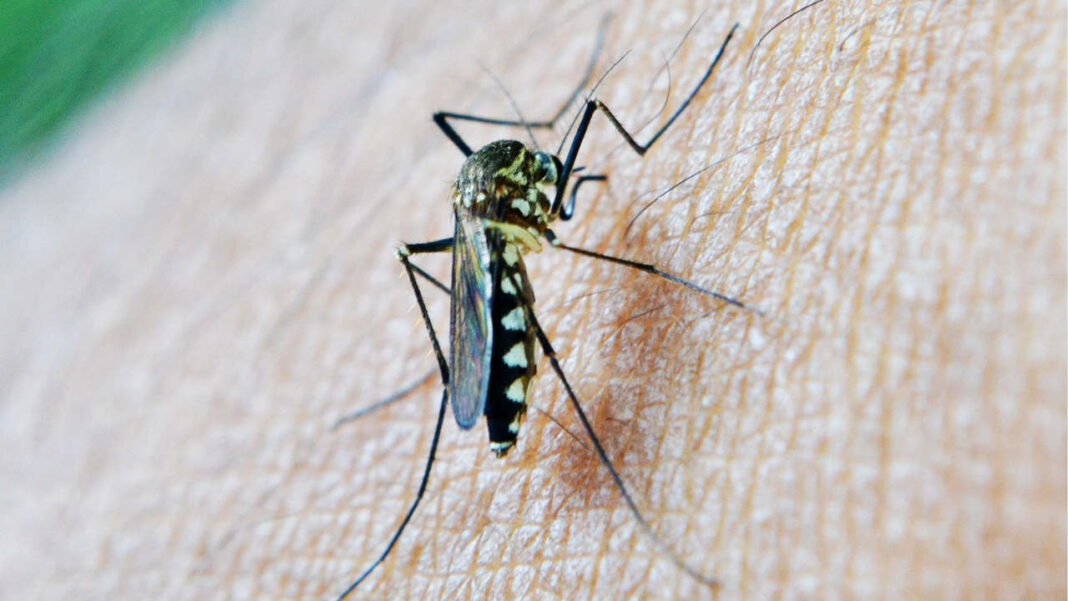

Healthcare (Commonwealth Union) – Malaria was initially discovered by French doctor Charles Louis Alphonse Laveran in 1880. The disease has been a serious health concern for many decades, often disrupting many lives.
An initial-stage clinical trial of a promising new non-artemisinin malaria treatment has shown that the drug candidate can quickly eliminate malaria parasites and was generally safe and well tolerated among infected volunteers. The findings suggest the medicine could become a valuable option for treating uncomplicated malaria and help address the urgent need for new therapies as parasite resistance to existing drugs continues to increase.
The compound, known as MMV367/GSK3772701, is believed to target and inhibit two key enzymes that malaria parasites rely on, potentially interfering with an essential metabolic pathway required for their survival inside red blood cells.
Researchers tested this new mode of action in people infected with malaria through a Phase 1 clinical trial led by scientists from QIMR Berghofer, in partnership with UniSC Clinical Trials. The study was supported by the non-profit organisation Medicines for Malaria Venture (MMV) and pharmaceutical company GlaxoSmithKline (GSK).
Malaria remains a significant worldwide health challenge, causing more than 280 million infections each year, with recent efforts to reduce its impact facing setbacks. Over time, malaria parasites have developed resistance to multiple treatments, reducing the effectiveness of existing medicines. Reduced sensitivity to artemisinin-based therapies — the foundation of current malaria treatment — has been documented in South-East Asia for around 20 years and has more recently emerged in parts of Africa.
A new study published in Science Translational Medicine tested the potential malaria treatment in 12 healthy volunteers who were deliberately exposed to a small number of Plasmodium falciparum parasites in a highly monitored clinical setting. Participants were then given varying single doses of MMV367/GSK3772701 to assess its effectiveness and safety.
The results showed that a single dose of 20 milligrams or more acted rapidly, eliminating half of the malaria parasites circulating in participants’ blood within just two to four hours. This rate of parasite clearance was similar to that achieved by artemisinins, which are currently a key part of standard malaria treatment.
Associate Professor Bridget Barber, Head of the Clinical Malaria Group at QIMR Berghofer and an Infectious Diseases Physician at Royal Brisbane and Women’s Hospital (RBWH), said the experimental drug demonstrated strong activity against Plasmodium falciparum malaria parasites.
She highlighted the ongoing need for new antimalarial medicines due to the increasing risk of parasite resistance to existing first-line treatments. According to A/Prof Barber, MMV367/GSK3772701 represents a completely new class of antimalarial drugs that targets the parasite through a different mechanism compared with current therapies.
“Our study found that doses over 20 mg were generally well tolerated by participants and rapidly killed the malaria parasites, and we saw no evidence of drug resistance. In the right combination with other anti-malaria compounds, it also has the potential to be administered as a single-dose therapy, rather than multiple doses of current standards of care.”
The findings indicate that MMV367/GSK3772701 warrants additional evaluation in malaria patients living in endemic areas, including regions such as sub-Saharan Africa. Stephan Chalon, a lead author of the study and Vice President of Experimental Medicine and Clinical Development at MMV, said the organisation was encouraged to have contributed to early research identifying a possible rapid-acting, single-dose, non-artemisinin treatment option for people with malaria. He added that achieving malaria elimination will require expanding the drug development pipeline with innovative medicines capable of providing alternatives if existing treatments become ineffective.
Dr. Harmony P Garges, GSK’s Chief Global Health Officer, highlighted that the battle against malaria continues, with rising drug resistance posing an ongoing threat. She further ppointed out that the initial results are promising and mark an important milestone in the search for new therapies to help treat the millions of people worldwide who are affected by this serious disease each year.