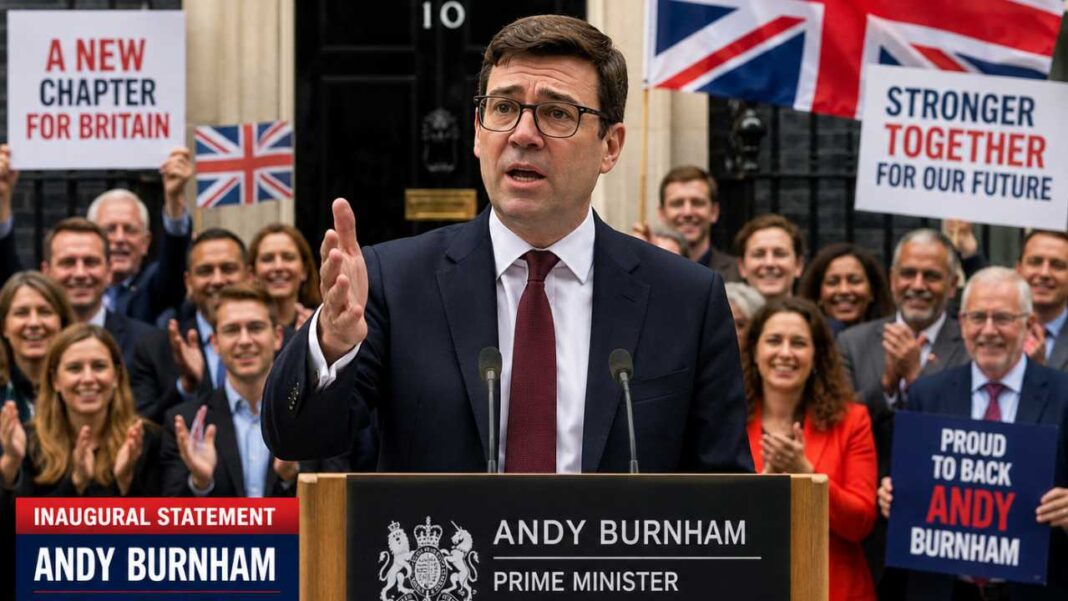

Britain’s new Prime Minister, Andy Burnham, entered 10 Downing Street on Monday, 20 July ’26. He made a few detailed policy statements & offered plenty of clues about the nature of his premiership.
In politics, optics hold significant importance. As such, on Burnham’s first day on the job, he delivered bold pledges. He didn’t constrain himself to timelines. He also showcased a more informal style of leadership. He brought with him a more upbeat mood to Downing Street.
Ambitious goals
Burnham announced lofty promises of change and welfare reform besides the devolution of power. His first policy intervention is to tackle homelessness.
Burnham, when ending his first address as prime minister, added that he may soon go through that door behind me to issue my first instruction to end rough sleeping in our country. Shortly afterward, his team announced that they would allocate an additional £340 million (USD 457 million) to support this initiative.
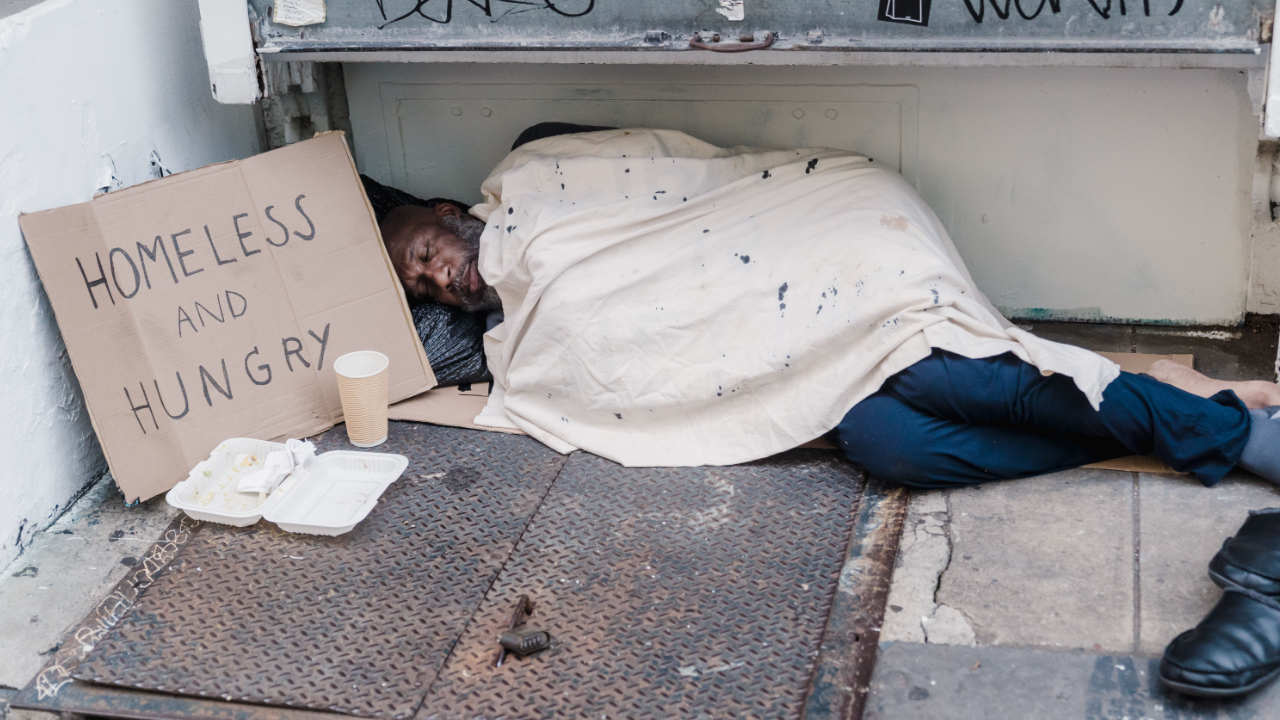
The prime minister rejected the notion that ending rough sleeping The prime minister dismissed the idea that ending rough sleeping could take decades or that it is impossible. decades or that it cannot be done at all. It’s a line in the accompanying statement shared, illustrating the scope of Burnham’s ambition. He added that at least 4,600 people in England tend to sleep rough every night. According to the homeless charity shelter, the number of those experiencing homelessness is far higher.
Former Premier Keir Starmer typically eschewed such maximalist goals in favour of narrower ones that were more likely to be achieved. Burnham seemed willing to tout bolder objectives. If such goals are achieved or failed to be achieved, it could erode public support, which may pose another issue. or if failing to achieve them may corrode public support, that could be another issue.
Burnham didn’t manage to achieve a similar pledge he made to end homelessness in Manchester when he became the city’s mayor 9 years ago in ’17. According to local government figures, homelessness in the city almost halved 2 years ago in ’24 from 2017. However, these numbers are seen to be rising again from their lowest point, achieved 5 years ago in ’21.