
Science & Technology (Commonwealth Union) – Repurposing science is responsible for a variety of innovations for medicines to Radar which was initially used during war times to detect hostile planes and boats ended up being widely used in airports.
A world-first technology demonstration has shown that existing scientific infrastructure can be repurposed to improve the monitoring of hostile satellites and dangerous space debris.
Researchers have achieved a major advancement by proving that highly sensitive radio telescopes can be adapted to enhance global capabilities for detecting, tracking and analysing satellites and debris orbiting Earth.
An international team of scientists, headed by the University of Birmingham, has conducted a real-time trial using existing scientific and commercial facilities as independent radar receivers. The approach could significantly boost the effectiveness of current space surveillance networks.
While conventional radar systems are capable of monitoring objects in low Earth orbit (LEO), identifying and tracking satellites and debris in geostationary orbit (GEO), located around 37,000 kilometres above Earth, typically demands extremely high-powered transmitters.
GEO contains some of the most vital space infrastructure in the world, including military, government and commercial satellites responsible for communications, navigation and weather monitoring. Safeguarding these valuable assets depends on maintaining an accurate and uninterrupted understanding of activity in orbit.
This requires the ability to detect, follow and identify every nearby object — from operational satellites and retired spacecraft to other space debris — allowing mission operators to assess threats, make informed choices and act swiftly when necessary.
Supported by the UK Space Agency, the Long Baseline Multistatic Radar (LBMR) project demonstrates how integrating radio telescopes with existing radar networks can improve detection capabilities by more than ten times. The technology could allow smaller objects to be identified from much greater distances.
Professor Marco Martorella of the University of Birmingham indicated that the successful LBMR demonstration represents a significant milestone towards deploying this technology for real-world monitoring of satellites and debris orbiting Earth.
“LBMR also provides a unique platform to advance radar technologies, validate new sensing concepts, and train the next generation of RF and radar engineers. Building and retaining this expertise is key to developing the capabilities needed to detect, track, and identify space objects. This will help to protect critical space infrastructure – ensuring the safe and sustainable use of space for the future.”
The research collaboration, which brings together specialists from the Universities of Birmingham and Manchester, Goonhilly Earth Station, Massachusetts Institute of Technology Lincoln Laboratory, and Australia’s national science agency CSIRO, successfully demonstrated the technology in a live trial at the European Space Agency facility in Harwell, Oxfordshire.
The demonstration allowed officials from government, defence and industry sectors to witness radar observations and data analysis taking place instantly as the system detected and measured objects in orbit.
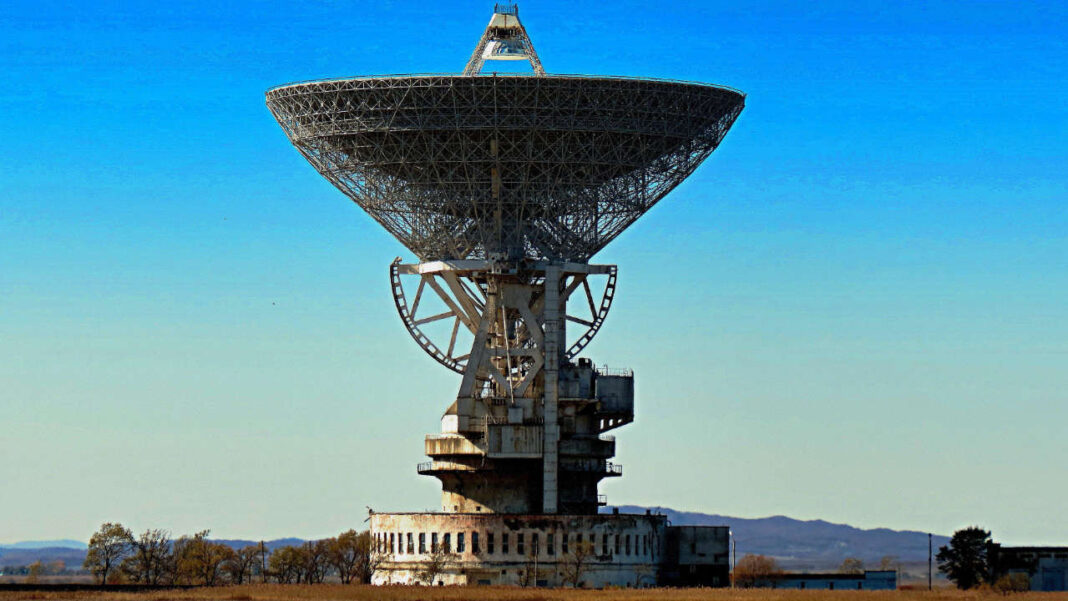
The trial made use of significant UK scientific assets, including the 76-metre Lovell Telescope at Jodrell Bank Observatory, the UK’s e-MERLIN radio telescope network, and the 30-metre Goonhilly Earth Station satellite communications antenna. It highlighted how existing scientific and commercial infrastructure can be adapted to help tackle growing challenges in national security and the long-term sustainability of space operations.
Gaining knowledge on how advanced technology is transforming scientific infrastructure into powerful tools for monitoring potentially hostile satellites and dangerous space debris can be vital.
Dr Chris Blount from the UK Space Agency indicated that the LMBR project represents an outstanding example of innovation and partnership, bringing together exceptional expertise from the UK and around the world. It demonstrates the kind of capability enhancement through collaboration that the International Bilateral Fund (IBF) was created to support.
Dr Blount further indicated that the LBMR team has tackled the complex challenge of providing real-time, on-demand monitoring of objects in geostationary orbit and they have built proactive partnerships and creatively using the UK’s existing world-class infrastructure.