
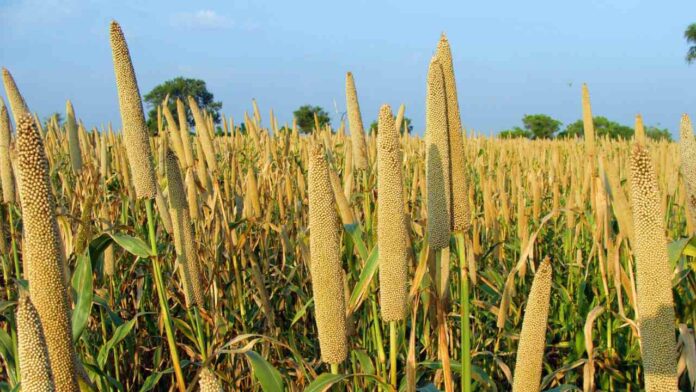

Every day, hundreds of young children in Mumbai‘s poorest neighbourhoods eat simple meals. These meals include porridge, soft curry, or baked snacks made for toddlers. The base ingredient is pearl millet, a grain that has been part of Indian diets for centuries. Some children ate regular millet. Others ate a special version bred to carry much more iron and zinc. You could not taste the difference. But inside the children’s bodies, something important was happening.
Iron deficiency is the most common nutrition problem in the world. About one in four people are affected. Without enough iron, the body cannot make enough haemoglobin. This leads to anaemia, which can hurt both physical health and brain development.
Researchers from Cornell’s Joan Klein Jacobs Center for Precision Nutrition and Health worked with partners in India and at the University of California San Diego. They studied toddlers who ate the iron-rich millet for nine months. The children did not show the usual side effects linked to extra iron. Even better, their gut bacteria changed in ways that looked healthy.
The study appeared in Nature Communications. Researchers say this is one of the first studies to look closely at how enriched crops affect the human gut.
“We wanted to move past a single supplement solution for everyone,” said Dr Saurabh Mehta, who led the study. “Food felt like a better way to support health in a more personal way.”
Why Iron Supplements Can Backfire
Iron pills are the usual treatment for deficiency, and they do work. But they often bring problems too. Past research shows that iron supplements can upset the balance of gut bacteria. Harmful microbes can grow, while helpful ones shrink. Children may also suffer from diarrhoea, constipation, or dark stools. This situation is risky for babies and toddlers, whose gut systems are still developing.
For this study, researchers enrolled 223 children age 12 to 18 months. All lived in Mumbai slum communities, where anaemia remains common. Half the children ate food made from the enriched millet. It contained 8.7 milligrams of iron per 100 grams. The other half ate regular millet, with only 3 milligrams. Scientists collected gut samples at the beginning and end of the study to see what changed.
Getting the millet ready wasn’t easy. “We worked with farmers to grow it, then gathered 38 tonnes total, split between both types,” said Samantha Huey, a researcher on the project. The team also had to find proper storage and test the grain for safety and nutrient content.
Local partners helped design the recipes and deliver food to 20 different centres. Staff tracked exactly how much each child ate, twice daily, six days a week, for nine months.
Encouraging Results
By using advanced gene sequencing, scientists could study more than just which bacteria were present. They could estimate what those bacteria were actually doing. “We compared the children’s gut DNA to known reference samples,” explained researcher Nathanial Cole. This let the team track how the microbiome changed over time.
Children who ate the enriched millet showed more activity linked to fighting harmful germs and reducing gut stress. Markers tied to bad bacteria dropped by the end of the study. In both groups, gut bacteria grew more diverse as children aged, which is a normal healthy pattern.
“Iron pills are given in high doses because so little gets absorbed,” Huey said. “The extra iron settles in the colon and can feed harmful bacteria.” Biofortified crops avoid this problem, since the iron is built into the food itself through breeding, not added artificially.
This approach may eventually help beyond Mumbai. Iron deficiency is also common in wealthier nations like the U.S. Biofortified crops fit well with newer dietary advice, which encourages whole foods over added supplements and processed ingredients.