
SYDNEY, 31 August 2026 — At one of Australia’s busiest airports, the most alarming aviation incidents are not necessarily those that end in disaster. Sometimes, the difference between a routine operation and a potential collision comes down to a pilot braking sharply, an air traffic controller recognising a developing conflict, or a crew spotting another aircraft where it should not be.
That distinction has come sharply into focus at Sydney Airport, where a series of aviation-safety incidents recently has drawn increased attention to runway operations and air traffic control.
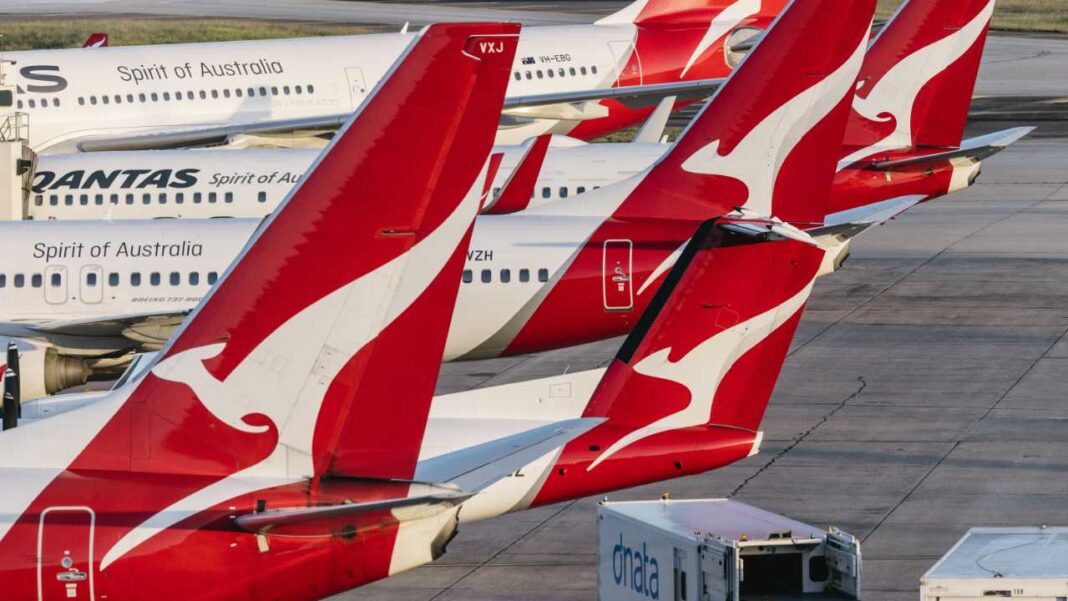
The first of the incidents occurred on 27 July 2026, when a Qantas Boeing 737 was cleared by air traffic control to cross runway 34L while a QantasLink-operated Bombardier DHC-8 was in its landing roll on the same runway. The 737 had been operating on runway 25 and was cleared to cross runway 34L.
ATC detected the developing conflict and alerted both crews. The Boeing 737 stopped after the holding point, preventing the aircraft from entering the runway in front of the arriving turboprop. The ATSB is investigating the incident as a serious incident involving a breakdown of coordination and a runway incursion.
Then came a particularly busy morning on 9 August.
At about 7am, Jetstar flight JQ402, an Airbus A320 bound for the Gold Coast, was taxiing at Sydney Airport when its crew encountered a Qatar Airways Boeing 777 being towed across its path. The Jetstar pilots applied the brakes firmly, bringing the aircraft to an abrupt stop and avoiding a collision. The Qatar aircraft was also stopped.
A Jetstar cabin crew member was injured during the sudden braking and was assessed by paramedics, although no passengers were injured. The ATSB subsequently opened an investigation into the incident, which it classified as a taxiing proximity event involving Jetstar A320 VH-VQJ and Qatar Airways Boeing 777 A7-BEU.
Less than three hours later, at around 10am, another runway conflict occurred.
Virgin Australia flight VA555, a Boeing 737 bound for Perth, had been cleared by ATC for a full-length take-off from runway 34L. As the Virgin crew began applying thrust, they saw a Qantas Boeing 737 crossing the runway ahead of them from taxiway Lima.
The Qantas aircraft was flight QF728, bound for Ayers Rock Airport, and its crew had also received clearance from ATC to cross the runway. The Virgin crew reduced thrust and stopped on the runway, while ATC simultaneously cancelled the takeoff clearance. Once the Qantas aircraft had cleared the runway, VA555 was cleared to depart.
The ATSB is investigating the event as a runway incursion, loss of separation assurance, and rejected takeoff. It said the two Boeing 737s were involved and that there were no injuries or aircraft damage.
The sequence has intensified scrutiny of Sydney Airport’s runway and taxiway operations, particularly the coordination required when multiple aircraft are moving simultaneously on one of Australia’s busiest and most complex airport surfaces.
An analysis of data from the Australian Transport Safety Bureau shows an increase in runway incursions involving air transport organizations in the years from 2003 to 2025. It was found that with time there was an increase in both the number and rate of runaway incursions, as well as domestic taxiing incidents.
The figures also provide the reasoning supporting the necessity of runway safety initiatives, even if no injuries were reported. Based on the statistics, since 2003, three out of the twenty-nine recorded cases of domestic airline crashes were due to taxi collisions. On the other hand, around 98 percent of the intrusions into the runway have been classified as incidents, or occurrences without the ensuing accident, but with the potential risk of the safety breaches.
It should be noted, however, that while Sydney Airport has witnessed four incidents, which involved different conditions and circumstances of operation, it is still too early to say what and how it went wrong, since investigators have not established the causes of the accidents and the reasons why safety measures failed.
The issue of staffing pressure is also present in the discussions, with fears regarding the inadequacies in the number of air traffic controllers and dependence on overtime being expressed. The ATSB states that it will evaluate whether lack of adequate staffing was a factor in the recent Sydney cases.
The real signal can probably be found not in a specific alarming occurrence, but rather in the series of various minor problems.
In the aviation world, near-miss situations are often referred to as incidents that did not happen. Now the task for Australia is to achieve that the next signal does not arrive as a result of an emergency.