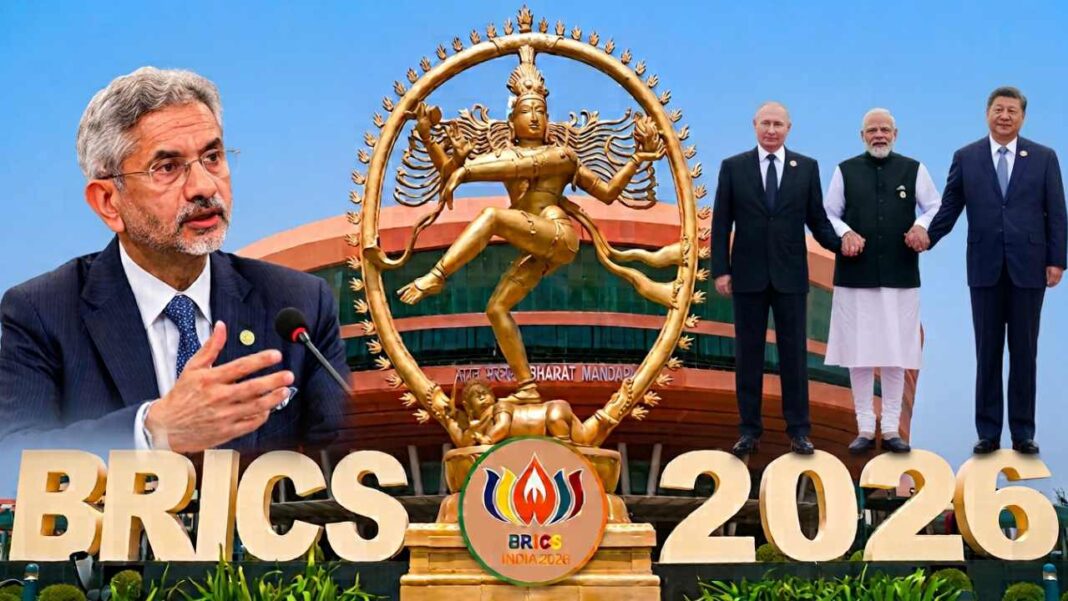

India (Commonwealth Union)_ India’s BRICS presidency faced a challenging time in 2026. With the world divided over major conflicts and growing geopolitical tensions, expectations for a common position among the member countries were far from certain. Yet the summit in New Delhi ended with the adoption of a joint declaration, giving India a significant diplomatic achievement to point to. Accordingly, External Affairs Minister S Jaishankar described the summit as a success, stressing that the BRICS countries managed to reach an agreement despite what he called a “very polarised world”. The most difficult issue was the conflict in West Asia, where member countries had differing interests and positions.
Also read: 18th BRICS Summit 2026: India hosts top global leaders in New Delhi as the world watches closely!
The negotiations over the declaration continued until the final stages. Iran and the United Arab Emirates had particularly different views on the language (or wording) concerning the conflict. Reaching a common position required careful diplomacy because BRICS operates on consensus, meaning members must agree on the final text. The result was the New Delhi Declaration. Rather than allowing disagreements over the conflict to prevent a common statement, the members agreed on language calling for peace, security and stability. The declaration also stressed the importance of protecting civilians and civilian infrastructure.
Also read: Analyzing the 2026 Global Passport Index: How are Commonwealth passports performing in 2026?
Another important element was its focus on the wider impact of conflicts. The BRICS countries called for the uninterrupted movement of global trade, supply chains and energy. These issues extend well beyond the countries directly involved in a conflict. Disruptions to energy supplies, shipping routes and international trade can affect prices, businesses and consumers across the world. That makes the declaration significant beyond the immediate summit. If BRICS members continue to use dialogue to manage differences, the grouping could provide another platform for countries with competing interests to discuss international crises. It does not remove those disagreements, but maintaining a channel for negotiation can help prevent divisions from completely blocking cooperation.
Also read: Meet the world’s highest-paid leader who earns more than Trump: Check out his new pay!
The summit also placed strong emphasis on the interests of the Global South. According to Jaishankar, the discussions centred on the economy, development and technology, with reform and resilience emerging as common themes. For developing countries, these areas are closely linked to long-term growth, access to technology and the ability to withstand global economic shocks. The scale of participation also underlined the importance of the meeting. Thirty-two delegations attended, including BRICS members, partner countries, regional organisations and international institutions. Leaders and senior representatives from major countries used the gathering not only for formal discussions but also for bilateral meetings on the sidelines.
Also read: Belgium PM’s India visit: A new chapter for India-EU ties. The EU angle explained!
Some of those meetings were particularly notable because they brought together countries with sharply different interests. The interaction between the UAE leadership and Iran’s president, for example, drew attention against the backdrop of tensions in West Asia. Such meetings demonstrated how an international summit can create opportunities for direct communication that may be harder to arrange elsewhere. Terrorism was another area where the members found common ground. BRICS leaders condemned terrorism in all its forms and manifestations, including cross-border terrorism. They also rejected double standards in dealing with terrorism and expressed opposition to the Pahalgam attack of April 2025.
For India, the summit therefore delivered a message that went beyond the adoption of a single document. Its presidency showed that BRICS could continue working together even when its members were divided on major international issues. The long-term importance of the New Delhi Declaration will depend on how its commitments are followed through. Calls for peace, secure energy supplies, resilient trade routes, protection of civilians and stronger cooperation among developing nations require continued diplomatic and economic action.
Still, reaching agreement during a period of intense global tension was itself notable. India used its BRICS presidency to keep dialogue at the centre of the summit and bring countries with different priorities around a common table. The broader message from New Delhi was clear: disagreements do not necessarily have to end cooperation. For a world facing conflicts, economic uncertainty and fragile supply chains, maintaining spaces for dialogue could prove increasingly important in the years ahead.