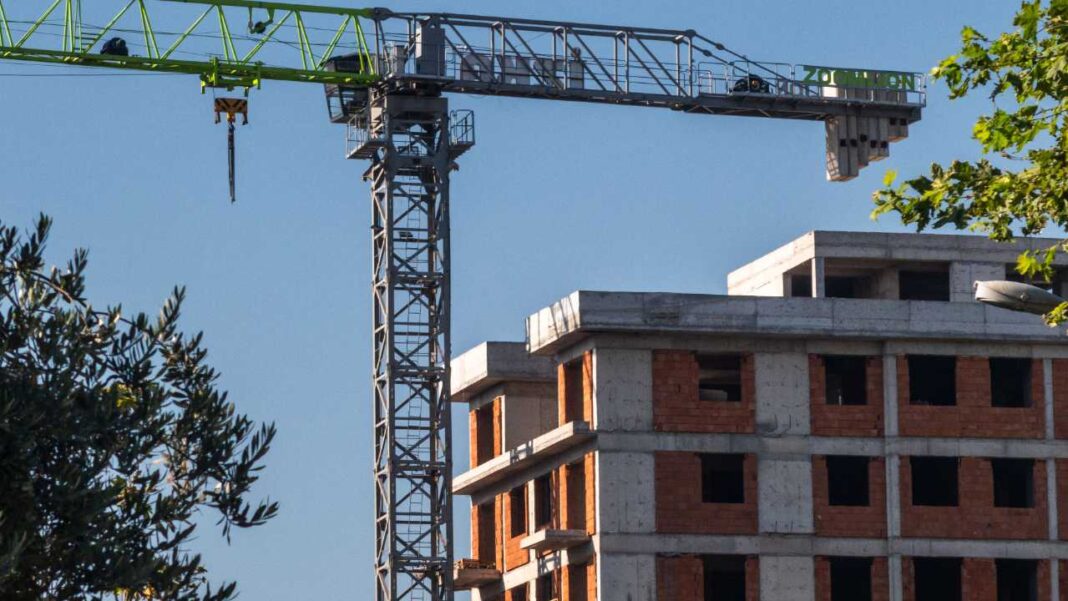

SYDNEY, 22 September 2026 — The appearance of cranes over major cities in Australia brings about a second construction boom, which this time is different and somewhat more difficult to notice—demand for warehouses, industrial sites, and yards needed to continue constructing successfully.
The latest report by Colliers shows that companies involved in construction demand 40 per cent more industrial space in Melbourne, Sydney, Perth, and Brisbane compared to 12 months ago (as of June 2026). The increase concerns not just building material distributors but also renting companies, manufacturers, and contractors.
This situation has resulted in less industrial space on the market. The national industrial vacancy rate reached 3.6 per cent in the second quarter of 2026, which means that the construction boom is taking place in a tight environment.
Melbourne recorded significant annual growth. Throughout the year leading up to June, construction companies experienced a significant 210 per cent increase in occupied space, reaching 33,125 square metres, compared to 10,692 square metres recorded the previous year.
A new class of energy-demanding infrastructure projects drives the increase. CDC has started construction of a 150-megawatt data campus in Laverton, while STACK Infrastructure has begun the construction of the 250-megawatt MEL02 data centre in Truganina. Such initiatives support construction work and generate not only for construction work; they also create demand for construction materials, equipment, and industrial and storage spaces.
Nonetheless, Brisbane, which represents the largest volume, is in the lead. Construction-related users have occupied 68,557 square metres of industrial space. Brisbane is also going to host the Olympic Games in 2032. Among other infrastructure initiatives, the Brisbane Stadium project at Victoria Park accounts for US$2.71 billion of work, taking into account the conversion from the source’s estimate of A$3.8 billion using the Reserve Bank of Australia’s exchange rate as of September 18, 2026.
The city of Sydney is experiencing another type of renovation boom. Construction companies have recently built 36,047 square metres of industrial space, reflecting a 28% increase in their control over such spaces. Much of the activity can be attributed to the growth of data centres in particular. According to Baxtel, a source that monitors ongoing projects in the industry, there are 15 data centres being constructed in Sydney, of which AirTrunk’s 400 MW SYD3 centre is one of the biggest. The construction began in 2026 and will be completed in mid-2028.
The city of Perth, although experiencing a much smaller increase of 4%, has become much more importantly involved in the national market. The city has become responsible for 18% of the construction activity across the whole nation, although usually, its share in that market would be around 8 to 10%. Projects related to defence, mining, and AUKUS have driven demand.
However, a significant obstacle looms: the unavailability of immediately usable industrial land. According to representatives from the Property Council in Western Australia and New South Wales, land has to be available for industrial use, but having the land is not enough. The land also has to have all the necessary infrastructure, including roads, freight and utility connections, disposal of sewage, and supply of electricity.
This means that the situation concerning industrial real estate in Australia is not simply the story of warehouses. It is the story of the necessary infrastructure as well. Increasingly in the wake of the development of data centres, defence programmes, transport solutions, and other major construction programmes, industrial real estate becomes a part of the economy of the country. And considering that Collier reports that construction take-up in Brisbane only increased by 58% during a year, the next point of pressure can be not a construction site but the very place where construction is done.