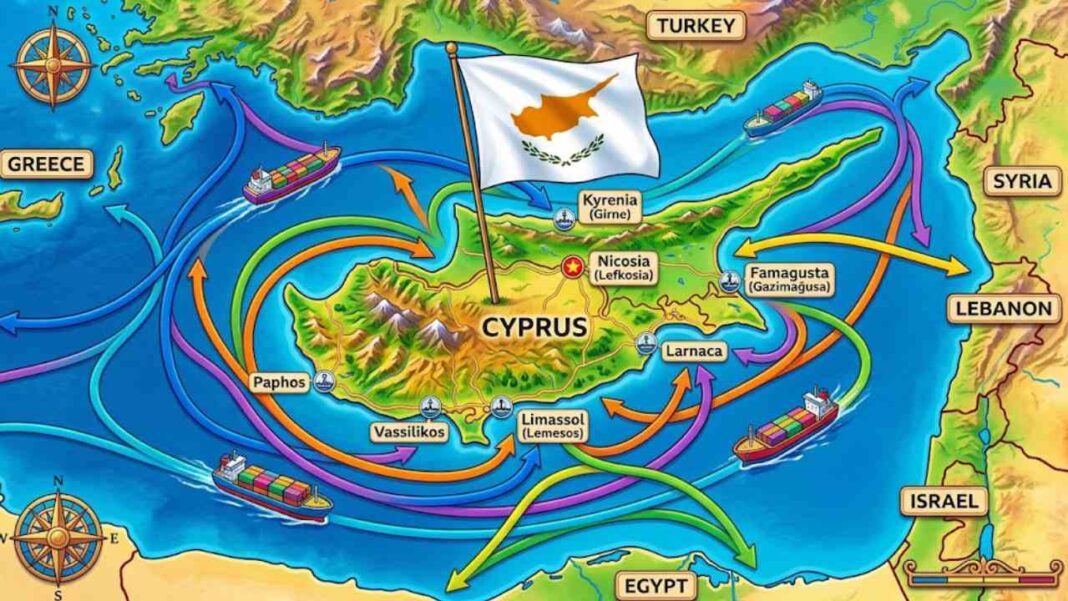

Cyprus President Nikos Christodoulides has described shipping as a central component of the island’s economic strength and international standing, as the country seeks to consolidate its position as a major maritime centre amid rapid changes in global trade and tighter environmental regulations.
Speaking at a dinner organised by the Cyprus Union of Shipowners in Athens on 18 September, Christodoulides highlighted the continued expansion of the Cyprus shipping sector and its contributions to the wider economy. The gathering, held during the union’s annual general meeting, brought together senior officials from Cyprus and Greece, European representatives, diplomats and shipping executives.
The president pointed to the expansion of the Cyprus Ship Registry as one of the sector’s recent achievements. According to his remarks, the registry has increased by more than 27% over the past 3 years, while the total carrying capacity of Cyprus-flagged vessels has reached its highest point in 25 years. Cyprus has also strengthened its role within the International Maritime Organisation, reinforcing its participation in international maritime policy discussions.
Christodoulides linked the shipping industry’s performance with what he described as a broader improvement in Cyprus’s economic position. He said the economy recorded 3.3% growth during the first half of 2026, while unemployment fell to 3.6%, its lowest level since 2008. Public debt, meanwhile, had declined to below 48% of GDP, according to figures cited by the president.

The government sees shipping not simply as a source of maritime activity but as part of a wider network involving professional services, finance, insurance, logistics, port operations and international business. The sector therefore has significance beyond vessels registered under the Cyprus flag.
At the Athens meeting, however, attention also turned to the pressures confronting European shipping. The major challenges identified include decarbonisation, digitalisation, technological development, and shortages of skilled maritime personnel. Christodoulides argued for practical, proportionate, and internationally applicable new regulatory measures.
Shipping representatives have similarly raised concerns about the costs and competitive implications of European environmental initiatives, including the EU Emissions Trading System and FuelEU Maritime rules. The Cyprus Union of Shipowners advocates for a transition to cleaner shipping, supported by mature technologies and realistically available fuels.
The discussions also underscored the close maritime relationship between Cyprus and Greece. Both countries have expressed interest in coordinating their positions on shipping policy, maritime safety, freedom of navigation and the future competitiveness of European fleets.
For Cyprus, the challenge now is to translate the recent expansion of its maritime sector into sustained long-term growth while adapting to environmental, technological and workforce changes. Christodoulides’ latest remarks indicate that his government intends to keep shipping firmly embedded in the country’s economic and international strategy.