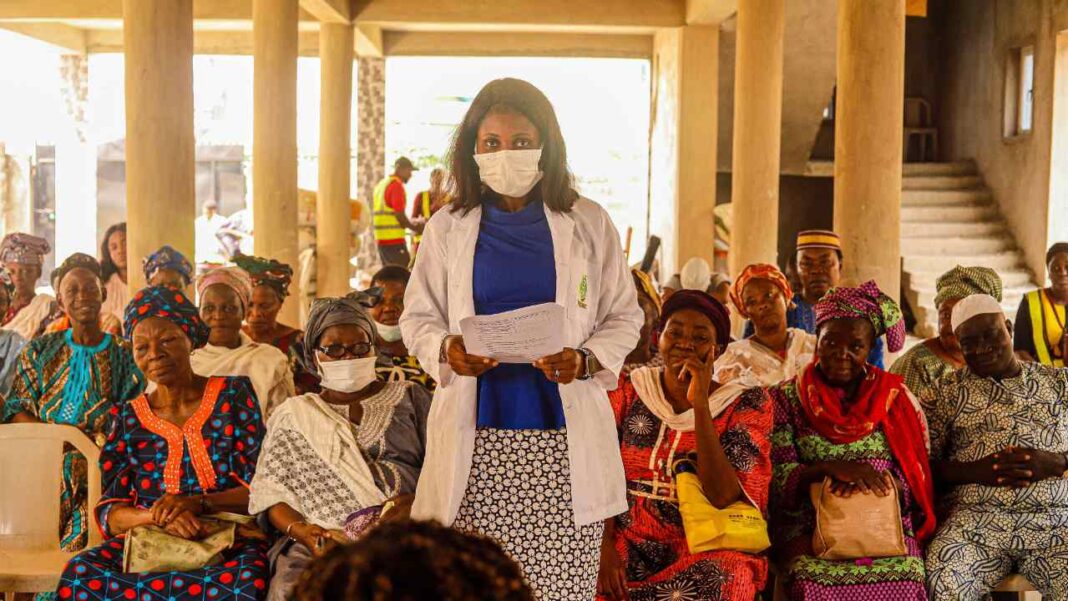

The Joint Country Cooperation Strategy (CCS) 2025-2029 between Cameroon’s Ministry of Public Health and the World Health Organization (WHO) has been officially launched. The Yaoundé strategic framework sets targeted public health priorities to modernise primary health care delivery, strengthen statutory disease surveillance networks, and expand equal access to essential medical services across all ten semi-autonomous administrative regions. The roadmap, spanning five years, was created collaboratively with multilateral health specialists, public hospital directors and regional administrators during technical assessments and is a direct support for the country’s National Development Strategy (SND30). The program aims to fill the chronic service gaps between urban economic hubs and remote rural communities by channelling resources into district hospitals and decentralised clinics.
The operational challenges in establishing resilient primary health delivery in Cameroon are typical of wider Commonwealth nations. Developing nations’ healthcare systems must consistently balance the need for preventative medical services with the sudden outbreaks of infectious diseases, such as cholera and vector-borne diseases, as well as the rising prevalence of non-communicable diseases. Public health surveillance among Commonwealth member states has shown that the centralisation of budgetary planning often makes peripheral districts vulnerable during cross-border health emergencies. In Cameroon, the focus is on establishing community-based triage centres, upgrading regional cold-chain vaccine storage, and training frontline midwives and nurses in-country. These targeted investments are consistent with a broader Commonwealth principle that institutional decentralisation, resilient regional supply chains and transparent sovereign pharmaceutical budget allocation are key to protecting baseline population wellbeing.
The integration of digital health monitoring systems and localised epidemiological data in Cameroon signals the evolution of health governance in Commonwealth countries. Using a bilateral strategy, multilateral technical teams are upgrading data collection at local health facilities to track infant immunisation rates, drug stock levels and infectious pathogen transmission in real time. Regional health planners across developing Commonwealth territories recognise that accurate, automated clinic reporting is critical for eliminating resource misdirection and informing national pandemic preparedness. The government’s strategy is to embed strong clinical accountability and digital reporting protocols into the public hospital network so that international medical funding directly translates into tangible patient outcomes.
In Cameroon, partnership with the World Health Organization shows the significance of lasting multilateral action in sovereign public health planning. But sustainable universal access to healthcare cannot be based on reactive overseas emergency aid alone. It requires long-term domestic institutional capacity, protected health care payrolls and resilient local governance. Cameroon’s strategy of measurable strategic milestones and transparent performance benchmarks offers a constructive model for other developing Commonwealth member states seeking to modernise primary healthcare while preserving fiscal discipline and institutional accountability.