
Science & Technology (Commonwealth Union) – Tremors often caused by neurological disorders and certain medications, can be serious obstacle to an individual’s daily activities.
Almost nine years back, a man named Michael stood before a packed audience at the Massachusetts Institute of Technology (MIT) Kresge Auditorium and was asked to draw a spiral, a simple exercise commonly used by doctors to assess Parkinson’s disease. His Parkinson’s-related tremors made it difficult for him to control his hand and complete the drawing smoothly.
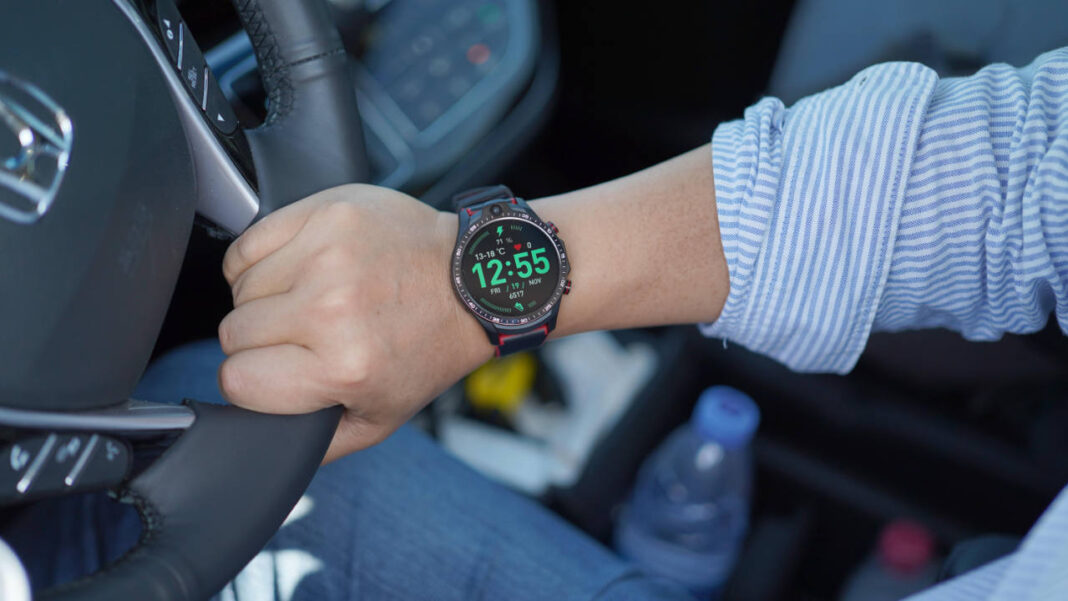
Michael then strapped on a wrist-worn device developed by MIT students as part of 2.009, or Product Engineering Processes, who were demonstrating their prototype that evening.
After Michael pressed a button, the device began generating a gentle vibration. The vibrations travelled through his wrist and sent signals toward his brain. Almost immediately, his tremors were significantly reduced. Within seconds, he could draw the spiral with far greater control and accuracy, prompting a loud ovation from the audience.
“When this device is turned on, I feel like I used to feel when I didn’t have Parkinson’s disease,” Michael told the crowd. “It’s an amazing, amazing feeling.”
The results were so remarkable that members of the student team began receiving messages from classmates and others asking where they could purchase the device for relatives and friends affected by tremors. Unfortunately, the students could only tell them that there was just one device available at the time.
That demonstration marked the beginning of a journey that would span nearly a decade. The team initially made use of entrepreneurial programmes at MIT, including MIT Sandbox, MIT FUSE and the MIT Venture Mentoring Service. In 2020, the student project evolved into a formal company called Encora Therapeutics. However, the development process was far from over, with numerous additional versions of the hardware still required, followed by clinical testing. In one clinical trial, 78 percent of participants said they experienced benefits after using the device at home for 90 days. Such impressive percentages particularly in clinical stage point to an extremely positive development.
Nine years after Michael’s courageous demonstration, the years of development and testing finally reached a major milestone this February. The FDA cleared Encora’s device for use by adults with essential tremor, a neurological condition that, like Parkinson’s disease, can cause involuntary shaking, particularly in the hands.
Daniel Carballo, who is an Encora co-founder and vice president of strategy indicated that it has been a long and difficult — very difficult — journey, but also very rewarding, especially when they get feedback from patients.
He further pointed out that they hear stories from patients about how they have struggled with their condition and how much they benefit from this and it reminds them why they keep going.
Three of Encora’s original founders remain involved with the company: Carballo, Allison Davanzo ’18, and Kyle Pina ’18. All three were MIT seniors in 2017 when they joined 2.009, the university’s well-known product-design course.
At the start of the semester, students took part in a brainstorming exercise, with teams of roughly 17 members challenged to generate dozens of possible product concepts. Carballo suggested developing a wearable device that could use mechanical vibrations to transmit signals to the brain and help lessen tremors. The first target application was Parkinson’s disease.
After weeks of brainstorming, the team reduced its lengthy list of potential ideas to a select few. Carballo’s proposal ultimately won the vote by a decisive 16–1 margin, with Carballo himself the only member to oppose it.
Carballo recalled that he tried to tell the team that the idea was so ambitious that there was no realistic way they could build something in a single semester, but he emphasised that it was fortunate that he was outvoted.
For most of the semester, the team’s progress seemed to reinforce his doubts. They repeatedly trailed other groups at key stages of the course and struggled to keep pace with the demanding schedule.
That changed just one week before the final presentations, when the students met Michael, whose severe hand tremors were caused by early-onset Parkinson’s disease. The encounter would give their project a new sense of urgency and purpose.