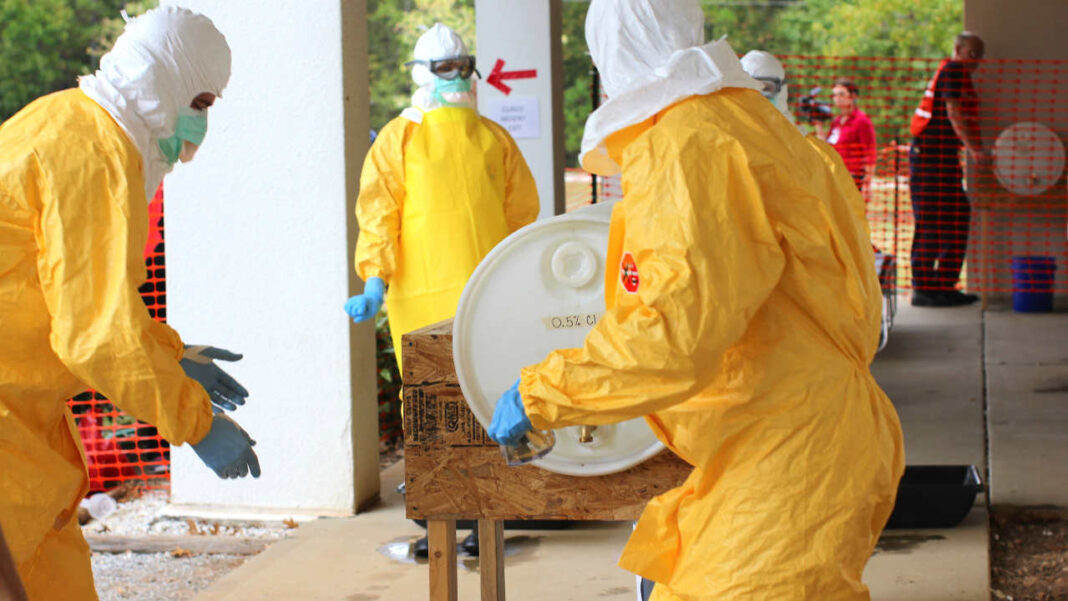

Kenya has confirmed a second Ebola infection involving a close relative of its first patient, prompting health authorities to strengthen contact tracing and disease monitoring. The announcement on 14 October comes as the country works to prevent further transmission linked to an ongoing outbreak in the Democratic Republic of Congo (DRC).
The newly identified patient, a 39-year-old man, had already been placed in quarantine after being identified as a contact of the first case. He developed symptoms, including fever, fatigue, and joint pain, on Tuesday and was immediately isolated, according to Kenya’s Ministry of Health. Officials said both infections were connected and that there was no evidence of wider community transmission.
Kenya’s first confirmed patient was a Kenyan national who had been living in the DRC. After becoming ill, he travelled through Uganda before arriving in Nairobi on 3 October. He tested positive for Ebola on 5 October and died that day. His journey raised concerns about the effectiveness of regional border screening and the challenges of detecting infections among travelers.
Authorities have identified 128 contacts associated with the first patient, with 113 traced and 108 placed in quarantine in Kenya. Monitoring efforts are also being extended to individuals who may have encountered the second patient.
The World Health Organization (WHO) is supporting Kenya’s response by providing medical supplies, strengthening laboratory testing, and assisting with surveillance and infection prevention. On 12 October, the organization announced that it had delivered essential supplies worth approximately US$70,000 to help protect healthcare workers and improve testing capacity.
The outbreak in the DRC remains a significant concern. By 13 October this year, the country had recorded 9,066 confirmed cases and 4,381 deaths, and this makes it the largest Ebola outbreak in its history. The current outbreak involves the Bundibugyo virus, for which no approved vaccine or specific treatment is available.
Kenyan authorities have also urged the public to remain vigilant while avoiding unnecessary alarm, highlighting that early detection, isolation, and effective contact tracing remain essential to limiting further infections.