

Science & Technology, New Zealand (Commonwealth Union) – For many decades, DNA techniques have provided us with the ability explore diseases, hereditary traits and historically extinct species.
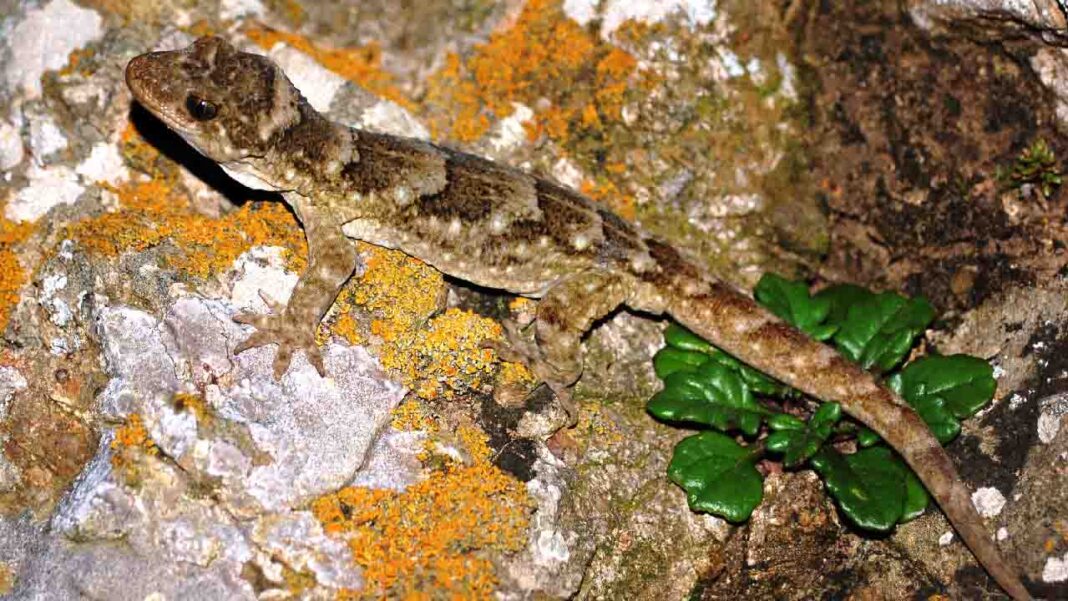
Scientists from the University of Otago recently gave a description of a new species of a New Zealand gecko facilitated by cutting edge ancient DNA techniques.
This distinct species, was referred to as Duvaucel’s gecko, on prior occasions consisted of only around 600 mature individuals confined to Cook Strait’s Ngāwhatu-kai-ponu (Brothers) and Kuru Pongi (Trios) Islands, has been given the Māori language name te mokomoko a Tohu (Hoplodactylus tohu).
Lachie Scarsbrook the lead researcher, who conducted the study in the Department of Zoology, at the University stated that even though these geckos were on prior occasions considered the same species as those located on islands off the northeastern North Island (Duvaucel’s gecko), it was common knowledge for scientists for years that there were variations between these southern and northern lineages.
“The Brothers and Trios Islands geckos are smaller, have different colours and patterns on their bodies, and possess unique genetic signatures, which are all the ingredients needed to describe a new species,” explained Mr Scarsbrook.
“It wasn’t until we used cutting-edge ancient DNA techniques to reconstruct the diversity in now-extinct North and South Island mainland populations that we realized just how different they really are. Over five million years to be exact.”
The paper that was published in the journal ZooTaxa, describes te mokomoko a Tohu, identification which was bought about thanks to a new non-destructive method of obtaining genomes from tiny bones without any damage to them.
Mr Scarsbrook also stated that by the recognition of Hoplodactylus tohu as distinct, the 2 small populations located on the Brothers and Trios Islands, along with those recently transferred to Mana Island, are presently the last surviving members of the new species and also stated that this has raised their threat classification, with both Duvaucel’s gecko and te mokomoko a Tohu presently getting the ‘critically endangered’ status on the IUCN Red List.
He also indicated that while these islands gave a sanctuary from rats and various introduced predators in the last few centuries, the impact of changing climate, together with predator incursion, pose significant risks to the survival of te mokomoko a Tohu.”
The species epithet tohu received its proposal by Dr Sharon Barcello-Gemmel, Rangatira of Te Ātiawa o Te Waka-a-Māui Trust, which is a charitable trust over the Ngāwhatu-kai-ponu Islands.
The name acknowledges her ancestral Maori leader prominently reffered to as Tohu Kākahi, who was one of the 1st recognized pacifists, acknowledeged for his activities in the decades heading up to the invasion of Parihaka.
Following him being taken prisoner, Tohu eventually traveled by sea to Whakatū, passed the Ngawhatu Islands, and covered the whole prehistoric and modern range of te mokomoko a Tohu as he headed towards Ōtepoti.
Mr Scarsbrook, who is now in the process of finishing his DPhil at the University of Oxford, stated that this description of a new species has been an immense and extremely satisfying process to carry out together with the local iwi.
“By using a te reo Māori scientific and common name for this species – te mokomoko a Tohu (Hoplodactylus tohu) – we hope to highlight the importance of iwi engagement and collaboration in science, especially in ensuring our taonga species are named appropriately into the future,” said Mr Scarsbrook.
Mr Scarsbrook further indicated that the process also puts the spotlight on the conflicts that are present between the International Code of Zoological Nomenclature (ICZN) rules for scientific naming and te reo Māori.
The advent of new technology together with years of data from the past, has in recent times paved the way for researchers from across the globe to make many new discoveries and enhance prior knowledge of many different species.