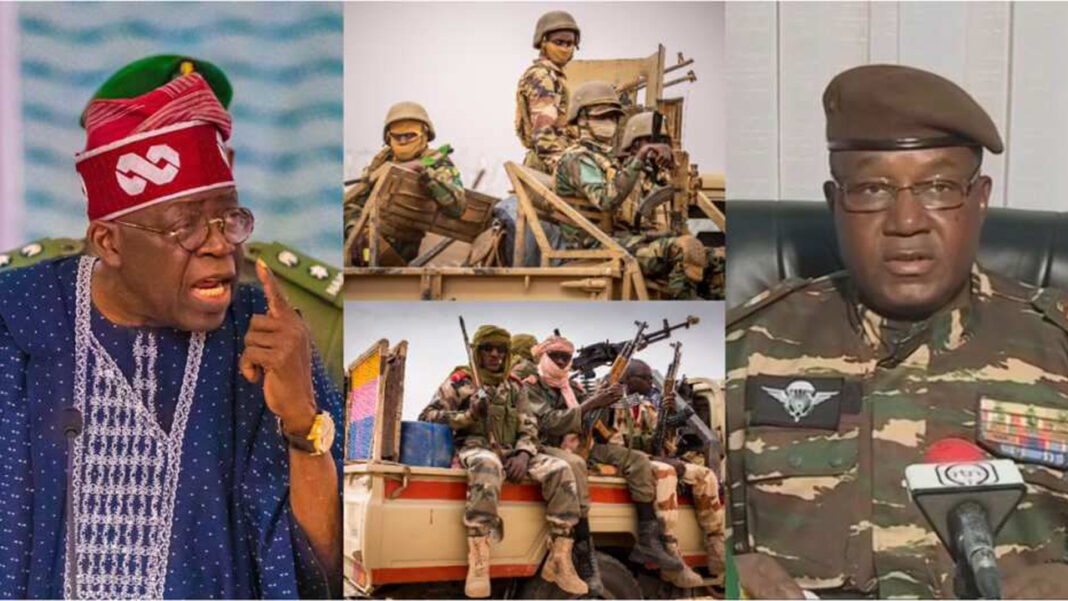

Africa (Commonwealth Union) _The recent news about the Economic Community of West African States (ECOWAS) considering a military intervention in Niger has raised concerns and prompted discussions. The summit, led by President Bola Tinubu, aimed to address the political situation in Niger and potentially deploy a military force to restore stability. While Tinubu’s leadership and efforts to address the situation are commendable, it’s crucial to remember the limits of his powers and responsibilities within the constitutional framework.
Tinubu’s role as the Chairman of ECOWAS and President of Nigeria comes with significant influence and recognition, representing Nigeria’s leadership on the African continent. However, it’s important to clarify that his position as Nigerian President is a constitutional one, and he must operate within the bounds of the law.
While Tinubu has made efforts to mediate and initiate dialogue with the military junta in Niger, the situation remains complex and challenging. The junta’s resistance to peaceful resolutions has led to considerations of military intervention. ECOWAS, as a regional body, has the authority to make collective decisions, including military actions, when diplomatic efforts prove ineffective.
However, it’s crucial to note that the decision to engage in military intervention requires constitutional processes and checks. In Nigeria, the Constitution places certain limitations on the President’s power to declare war or deploy military forces outside the country. These limitations include the need for the sanction of both Houses of the National Assembly and, in some cases, the consent of the Senate.
The Nigerian Senate, recognizing the gravity of the situation, invoked its powers under the Constitution to resist the suggested military intervention and called for diplomatic relations with Niger. This move underscores the importance of adhering to constitutional processes and seeking legislative approval for significant actions, especially those related to military engagement.
Tinubu’s role as President of ECOWAS and Chairman of the summit allows him to support the regional decisions within his capacity. However, any military engagement by Nigeria would require adherence to constitutional provisions and consultations with the relevant legislative bodies.
It’s crucial for Tinubu to uphold the democratic principles of Nigeria and respect the constitutional framework that guides the nation’s actions, especially in matters of war and military intervention. While his leadership is commendable, it’s essential to work within the established legal and constitutional processes to ensure the integrity of Nigeria’s governance and decision-making.