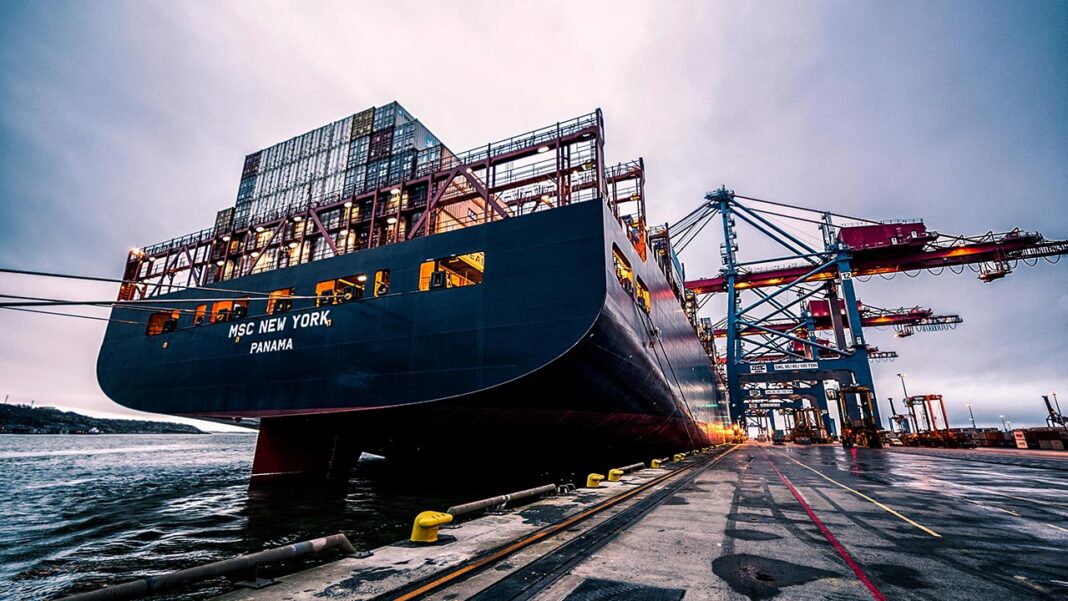

Ports Shipping and Logistics (Commonwealth Union) – The Port of Singapore processed a total of 23.82 million twenty-foot equivalent units (TEUs) in the first seven months of 2024, reflecting a notable 6.1 percent rise in container traffic compared to the same period last year. Most container ships completed both cargo handling and bunkering operations within 24 hours of docking. By July 2024, the average waiting time for container berths had been reduced to under a day. These improvements can be attributed to various initiatives by the Maritime and Port Authority of Singapore and PSA Singapore, including the opening of new berths at Tuas Port, reactivating berths and yard areas at Keppel Terminal, boosting workforce capacity, and collaborating with shipping and feeder lines on operational scheduling.
Pasir Panjang Terminal (PPT), situated in the southern part of Queenstown in Singapore is a significant part of the port of Singapore. The terminal has been a pivotal component of the city-state’s logistics and trade infrastructure for decades. This sprawling terminal, located along the southern coast of the island, has played a crucial role in facilitating the smooth flow of goods and services in and out of Singapore.
The PPT has undergone significant expansion and modernization in recent years, with the goal of enhancing its capacity and efficiency. The terminal is equipped with state-of-the-art facilities and technology, enabling it to handle a wide range of cargo, including containers, bulk, and break-bulk shipments. The terminal’s strategic location, combined with its advanced infrastructure, has made it a preferred choice for many international shipping lines.
One of the most significant aspects of the PPT is its contribution to Singapore’s economy. The terminal plays a vital role in supporting the country’s position as a global trade hub. By efficiently handling a large volume of cargo, the terminal helps to maintain Singapore’s status as one of the world’s leading ports, with a reputation for reliability and efficiency.
The Maritime and Port Authority of Singapore (MPA) and Port of Singapore Authority (PSA) have recently concluded a four-month trial involving six barge operators, enabling the nighttime transport of line-towed container barges to and from the PPT during the hours between 7:00 PM and 6:30 AM. This trial was part of MPA’s continuous efforts to assess and modify its rules and regulations with the aim of cutting business expenses, shortening turnaround times, and improving resource optimization without compromising safety. Prior to this initiative, only Brani and Keppel Terminals allowed night-time movement of line-towed container barges, as their navigational traffic was less intricate compared to the surrounding area of PPT.
This initiative aims to maximize the use of the nighttime period for transferring containers via barges into and out of the Port of Singapore, as well as to nearby and transshipment ports. By allowing for a greater number of containers to be transported by barge at PPT throughout the day, this move will bolster connections with regional ports, increase overall port productivity, decrease the time container and feeder vessels spend at the dock, and lessen the requirement for containers to be moved between land terminals. Typically, each line-towed barge can accommodate around 300 TEUs.
In order to guarantee the safe navigation of line-towed container barges during nighttime hours at PPT, MPA will enforce supplementary safety protocols that were successfully tested with barge operators and PSA during the trial period. These measures encompass mandatory pilotage for the barges, limitations on the length of towing lines, and continuous monitoring of barge movements via MPA’s vessel traffic management system. Prior approval from MPA is required for all night-time movements of line-towed container barges to and from PPT. Barge operators have been informed about the safety protocols and the approval process for night-time movements of line-towed container barges at PPT.