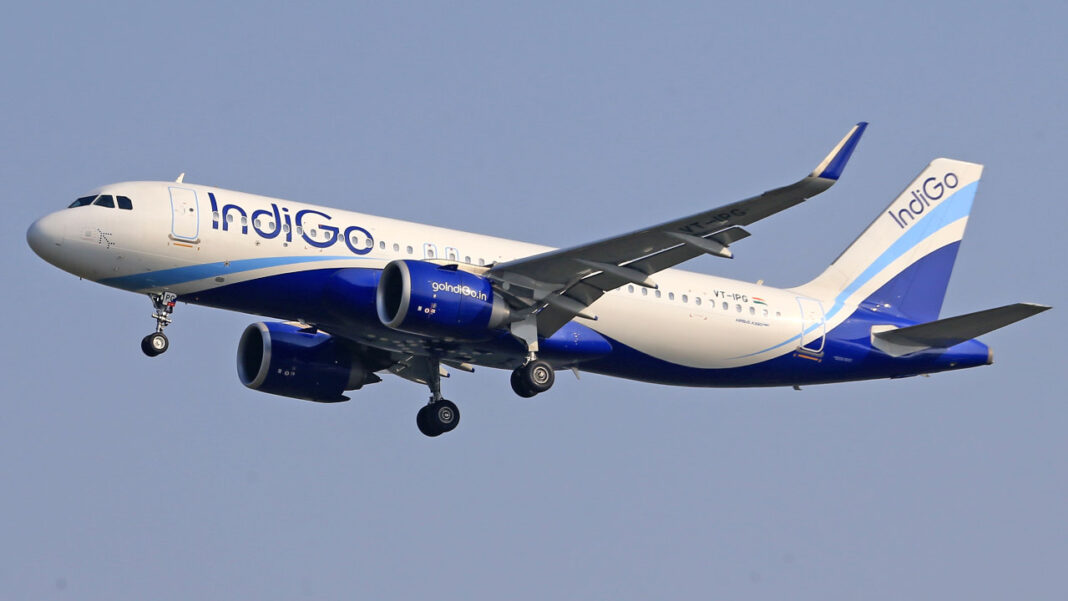

BENGALURU, India, September 28, 2026 — On the 27th of September, a regular landing at Kempegowda International Airport, one of India’s busiest airports, escalated into a serious aviation mishap involving IndiGo’s Airbus A321neo operating flight 6E 6542 from Guwahati to Bengaluru when there was a tail strike because of the gusty weather conditions.
The aircraft did not remain in the air for long after the mishap. It eventually landed safely during a second approach to the airport, where all those on board securely disembarked from the aircraft. IndiGo made the aircraft go for a thorough check.
What makes the incident more interesting is that it provides a compelling story.
According to reports, the aircraft made its first attempt to land, but it got missed, so the crew went for a go-round. In the process the tail of the plane did touch the runway. Finally, the aircraft landed safely on its second approach to the airport. The Times of India reported the aircraft’s registration number as VT-NHP.
Describing the incident in technical terms, IndiGo Airlines stated that the jet had “an abnormal touch down” while landing due to the turbulent weather. The airline announced that it had informed the appropriate authorities and was currently inspecting the aircraft. The aircraft should only be allowed to fly again once all necessary approvals have been secured.
It is important to note that IndiGo has indicated that bad weather was to blame for the incident; beyond that, the cause of the incident has not yet been determined. An investigation has been launched by the Directorate General of Civil Aviation (DGCA), and thus the regulation will look into the circumstances surrounding the incident rather than simply accept the explanation of bad weather.
What makes a go-around a potential cause of tail strike?
A go-around is a fundamental safety operation in aviation where the pilots abort landing when the situation does not permit a safe landing, and the plane reverts to climbing or to a different approach. However, Airbus has indicated in its guidance materials that the likelihood of a tail strike may increase in case a go-around is executed close to the ground, as the airplane could be flying at low speed close to the airport, and the engines are being sped up while the pitch is changing.
Thus, the latest incident in Bengaluru should not be treated just as a case of a plane touching down the runway but as an example of how quickly the factors around landing change and why professionals like pilots and engineers as well as regulators pay attention to what may seem to be a minor event.
As far as the passengers of flight 6E 6542 were concerned, the outcome was favorable: the plane landed safely, no injuries were reported, and the passengers were disembarked without any issues at the terminal. However, for the Indian aviation industry, the challenging task starts only after landing—what happened up in the air, what role did the weather play in the matter, and what useful lessons are to be learned before the next airplane operates under similar circumstances?
The investigation of the incident will provide the answers.