
People’s daily habits for buying groceries and quick meals are changing across the globe. Traditional shops require large premises, human cashiers, and fixed opening hours. Now big retailers are trying something new: tiny cashier-less micro-stores run by artificial intelligence and computer vision. One recent case is the European supermarket giant Carrefour, which has opened twelve automated “BuyBye” locations in Belgium and France. You’ll find the mini shops in hospitals, tech campuses, military headquarters, and rail hubs. It’s a useful look for consumers and observers alike at how AI is coming out of the research lab and into our daily lives.
To understand why this model is spreading, it helps to understand how it works without staff or barcode scanners. In a normal corner shop, you pick up items, put them in a basket, and queue at a counter where a cashier scans each barcode before you pay. In an automated microstore, it’s a lot easier. There is no queue and no waiting for a till to free up.
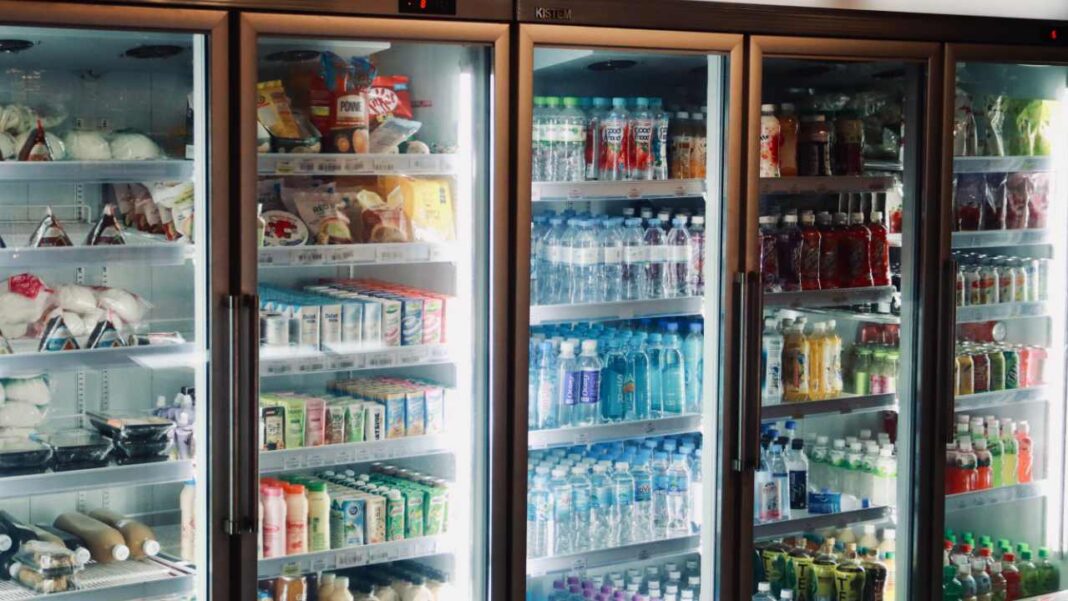
Customers enter by tapping a debit or credit card or phone app on an electronic door terminal. Inside, the unit often looks like a row of stylish refrigerated display cases, and a web of sensors and cameras keeps track of what’s going on in real time. There is no facial recognition. Cameras overhead watch what’s being moved, and weight sensors on the shelves detect the exact weight change when something is picked up. The cameras are trained to recognize each product from several angles, which helps the system get the bill right. When a customer picks up a sandwich or an apple, the system adds it to a virtual basket. If they change their mind and put it back, it is taken off straight away. When the customer walks out, the door locks behind them, the system settles the bill, and the associated card is charged automatically.
The main reason this technology is taking off is that it answers a real need: feeding people 24/7 where a regular shop can’t, either because of cost or space. Hospitals are one of the most obvious examples. They work round the clock every day of the year. Doctors in the emergency room, theater nurses, and support staff work long shifts overnight, but hospital canteens and nearby restaurants usually close in the late evening. For a retailer, staffing a normal shop through the night in a hospital can cost more than it earns, so a small, unmanned unit makes more sense.
The micro-store, located close to the hospital reception or surgical wards, gives staff and visiting families access to fresh meals, dairy products, and hot drinks at any time of the day without leaving the building. The same logic applies to remote military bases, international transit terminals, office parks, and university research campuses, where people on irregular shifts often struggle to find decent food.
But the rise of automated retail also brings bigger questions about work and inclusion. With algorithms and cameras replacing checkout and stock tracking, labour advocates and economists often wonder what this means for entry-level retail jobs in the long run. Automated units don’t need a full-time cashier, but operators say the human work shifts to the back end: restocking, food safety and cleaning, and hardware maintenance. Machines also make mistakes, so shoppers need an easy way to question a wrong charge.
And then there’s the access issue. In much of the world, a large share of people still rely on cash or lack sophisticated digital banking tools. The responsibility remains for urban planners and retailers to make sure these services do not exclude older people, the unbanked, or marginalised communities.
Micro-stores could herald a major change in how retail is built. Shops are getting smaller, spreading out, and moving into the places where people live, work, and heal, rather than asking people to travel to large shopping centres. Autonomous micro-retail combines computer vision, smart inventory sensors, and secure contactless payments to show how artificial intelligence can meet real, everyday needs and quietly change how we shop.