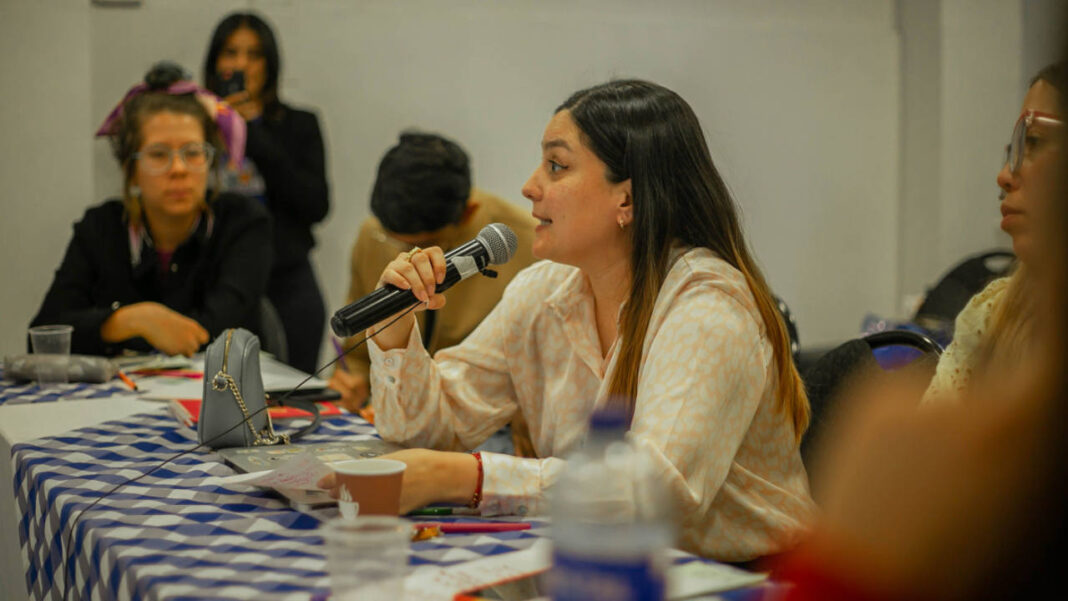

The Qatar Debate Centre, part of Qatar Foundation’s initiative, has focused the national dialogue on a question that is vital in this era of supply shocks, logistical constraints for trade routes, etc.: Is local production going to be one of the strongest economic protections for Qatar? The latest “Qatar Connects” session titled “Beyond Imports: Will Local Production Lead Qatar’s Future” allowed entrepreneurs and other stakeholders in the ecosystem to share ideas about how Qatar can become more self-sufficient and at the same time maintain growth. Additionally, this session resonates with the overall direction of the Qatar National Vision 2030, which aims to create an environment where the country is capable of sustaining its development while ensuring a high standard of living for its citizens in the future.
During a panel moderated by media figure Mohammed Al Hamadi, the panellists represented the local production community, with participants including Saoud Al Emadi (founder of Enavra) and Fatma Ali Al Khater (founder of Torba Market). The initial talk started with general policy ideas but quickly moved to practical topics like how ready the ecosystem is, home-based production, challenges for producers, government help for them, and the chances available in Qatar’s effort to build a stronger industrial base. Abdulrahman Al Subaie (Qatar Debate Center) stated that the timing of this session was intentional and that discussions about resilience, sustainability, and self-sufficiency should be immediate priorities, not just temporary slogans.
One of the most enlightening insights came from Al Emadi, who provided an example of Enavra’s reaction to regional disruption by rerouting raw materials through Jeddah to continue producing goods even though the cost would be higher than originally planned. This example underscored a crucial truth: resilience stems not from impressive press releases, but from robust logistics, redundancy, and institutional support. This makes the Qatar Development Bank particularly relevant due to its mandate to support private sector growth by providing financing, guidance, training, and entrepreneurial programmes that assist local businesses in scaling up their enterprises and becoming more competitive in global markets.
For Al Khater, this is a story about people, too. According to her, the increase in demand for locally produced fresh and high-quality goods has led to an increase in the visibility and trust of Qatari products through the local market. She also pointed out that while Qatar is dealing with the ongoing challenges of extreme water scarcity and challenging climate, there is significant potential within small-scale agriculture and artisanal efforts to build food sovereignty. Ultimately, the message from this panel discussion was clear: local Qatar production has become an important part of the overall national strategy through the efforts of many entrepreneurs as well as supporting institutions and an overall economic desire to turn dependence into sustainability.