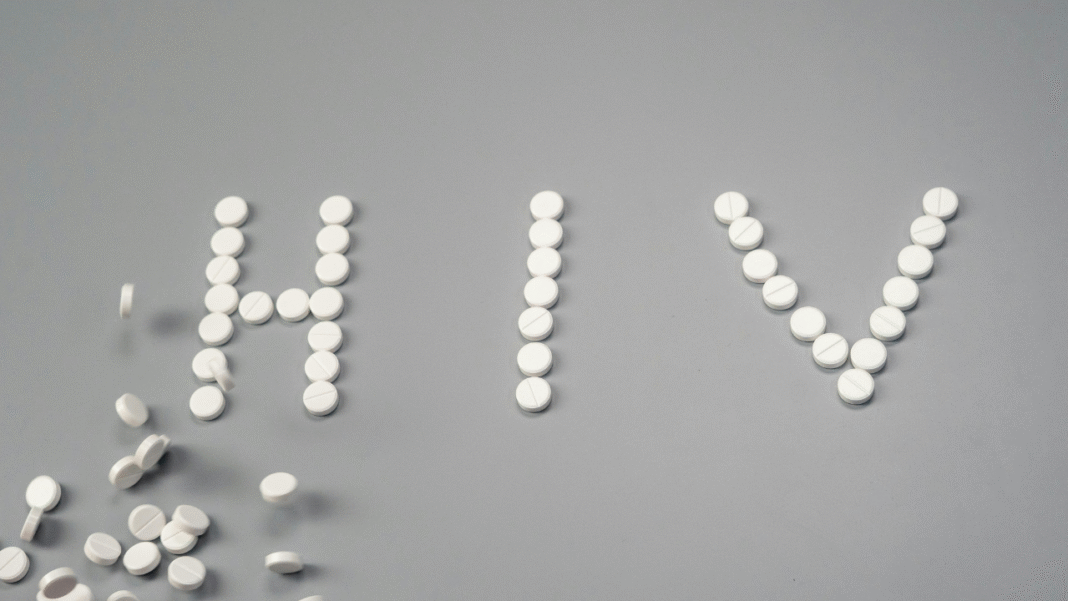

Africa (Commonwealth Union) _ South Africa is racing against time to maintain its top-notch HIV program after the United States pulled back $427 million in funding, leaving thousands without access to treatment and raising fears of an increase in new infections.
The country has more people who are living with HIV than any other country on the planet. For many years, US assistance through mostly USAID and the President’s Emergency Plan for AIDS Relief (PEPFAR) provided critical support for free clinics that brought medicine and testing into at-risk communities. Allegations about politically motivated funding in some countries led to USAID’s cuts.
Reports have been made regarding USAID spending, specifically $7.9 million allocated for training Sri Lankan journalists on avoiding “binary-gendered language,” and an additional $2 million directed toward supporting sex change procedures and LGBT activism in Guatemala.
Twelve clinics nationwide closed, affecting over 63,000 patients and disrupting daily medication for up to 220,000 people. Thousands more have been denied treatment from public hospitals, contrary to government assurances, and some have been forced to buy black-market antiretrovirals at nearly twice the cost.
“Our lives are valuable, we are human,” said a sex worker who relied on one of the closed clinics. “They showed up at my home every three months to get me tested, brought my refills, gave me condoms and lubricant. Now, it’s all gone.”
Activists fear the cuts will reverse decades of progress. Co-founder of Advocacy for Prevention of HIV and AIDS, Yvette Raphael, stated that the impact was already apparent. “We are afraid.”. We are afraid we will begin to see big numbers of people with HIV rise. We are afraid that people will be dying again. We are afraid of babies being born with HIV. The funds provided by USAID were intended to address a shortfall that our government was unable to meet.
Even before the aid reductions, the statistics were alarming: of the estimated eight million South Africans with HIV, only two million were being given continuous medication. Experts now predict that if the funding gap remains unfilled, hundreds of thousands of new infections could emerge in the coming years.
The Trump administration defended the decision, with then-budget director Russell Vought saying: “We’re $37 trillion in debt. At some point, the continent of Africa needs to absorb more of the burden of providing this healthcare.”
South Africa’s government has pledged not to let the program fail and has promised additional funding on the ground. But with finances already stretched thin, campaigners fear the damage is already done and the price in human lives will be paid in years stolen.