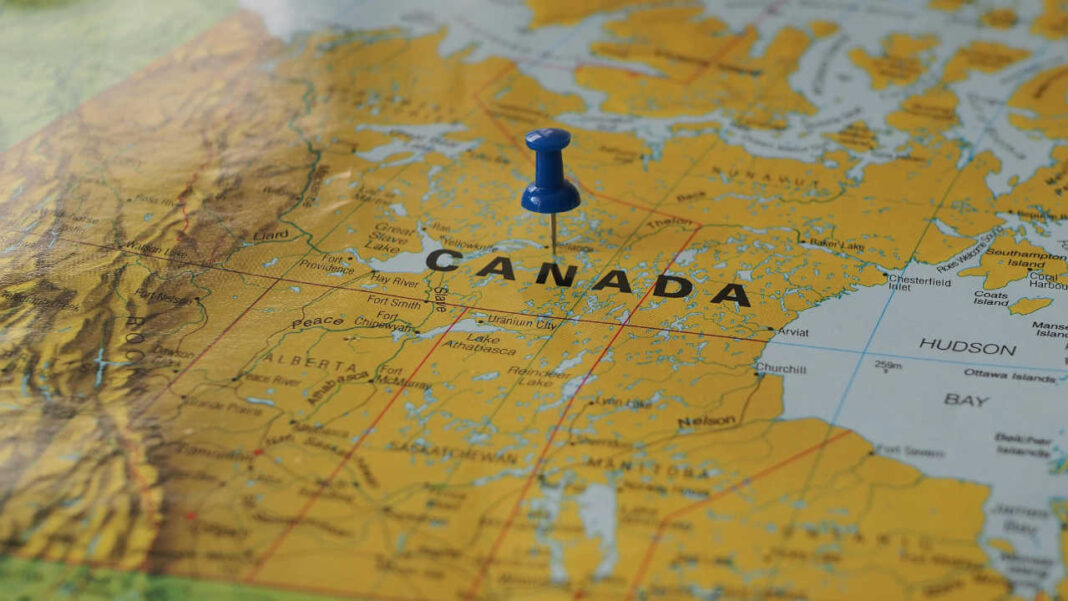

Ottawa intends to modernise its northern region, which is about six times the size of Texas, USA, as it was in the 1800s and yet home to only 150,000 people.
Imagine an Arctic territory, marginalised by its own country, which is almost entirely lacking roads, ports, and power sources despite being rich in mining potential and suddenly feeling vulnerable to external threats.
Instead of being Greenland, it’s the Canadian Arctic.
After sustaining decades of underinvestment, Ottawa is now turning its attention to the country’s north amidst an outbreak of nationalism and new spending. The move is in reaction to provocations by the Trump administration.
In June ’25, the government of the newly elected prime minister, Mark Carney, passed a ‘nation-building’ bill meant to cushion the effects of Donald Trump’s tariffs. The goal is by drumming up employment and investment with the fast-tracked construction projects. Carney had shared that we can give ourselves far more than any foreign government could take away.
The goal is to integrate the Arctic territories into Canada, akin to the 1800s. This was when the federal government decided to build a railway, extending from eastern Canada right across the Canadian landscape to the western coastline of British Columbia. This railroad initiative opened up trade and commerce,” said Natan Obed, who speaks on behalf of the Canadian Inuit as head of the organization Inuit Tapiriit Kanatami.
As in all times in the Canadian Arctic, the tough part is knowing how to build strategically. This region is about 6 times the size of Texas, although home to only about 150,000 people. The trick is to pick up projects that serve many purposes simultaneously. However, northern leaders are often sceptical that southerners can plan properly around their requirements.
On Thursday, March 19, the government revealed that it was pushing ahead with two road projects.
One happens to be the Greys Bay route. This route is also known as the Arctic economic and security corridor. It would connect Yellowknife and point south toward the Arctic Ocean. It winds near several mines to a proposed deepwater port.