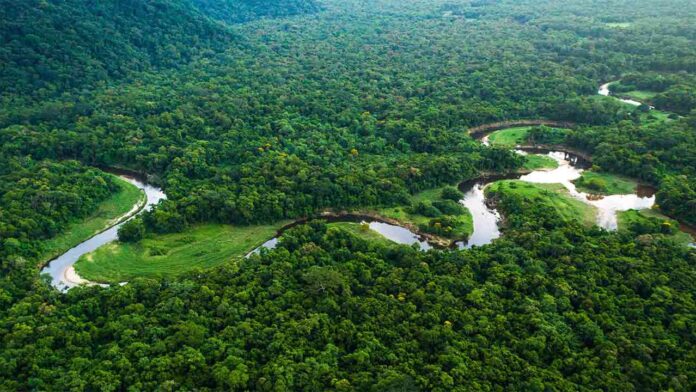

Agriculture and Climate Change (Commonwealth Union) _ A recent study published in Nature, involving scientists from the Potsdam Institute for Climate Impact Research (PIK), warns of a looming crisis in the Amazon rainforest. The research indicates that up to 47 percent of the Amazonian Forest is under threat, with potential implications for the global climate system. The study identifies critical climatic and land-use thresholds that must not be surpassed to maintain the resilience of the Amazon.
PIK scientist Boris Sakschewski emphasizes that the Southeastern Amazon has already transitioned from a carbon sink to a carbon source due to excessive human pressure. This trend not only jeopardizes the long-term existence of the rainforest but also disrupts moisture circulation, leading to a cascading effect across the continent.
Multiple stressors, including rising temperatures, droughts, deforestation, and fires, are weakening the Amazon’s natural resilience mechanisms. The study projects that by 2050, 10-47 percent of the Amazonian forests will be threatened by increasing disturbances, potentially triggering a critical tipping point.
The researchers identify five key drivers linked to this tipping point, including global warming, rainfall patterns, dry season length, and deforestation. They propose safe boundaries for each driver to ensure the Amazon remains resilient.
For instance, the study highlights that mean annual rainfall below 1000 mm per year cannot sustain the Amazon rainforest, with transitions to savanna-like vegetation becoming possible below 1800 mm per year. The loss of forest not only affects the Amazon but also disrupts rainfall patterns in other parts of South America, exacerbating global warming by releasing stored carbon.
The study underscores the urgent need to halt greenhouse gas emissions and deforestation while prioritizing forest restoration efforts. It warns of irreversible damage, such as the transformation of forests into flammable ecosystems, if action is not taken promptly.
In conclusion, the study emphasizes the importance of combining local and global efforts to protect the Amazon. It calls for an end to deforestation and forest degradation, alongside ambitious measures to reduce greenhouse gas emissions worldwide.