
BRUSSELS, BELGIUM — 22 OCTOBER 2026
What happens when a country’s national security doctrine becomes the subject of a wider European debate? The answer may shape how governments across Europe approach extremist networks, political influence and the boundaries between religious freedom and national security.
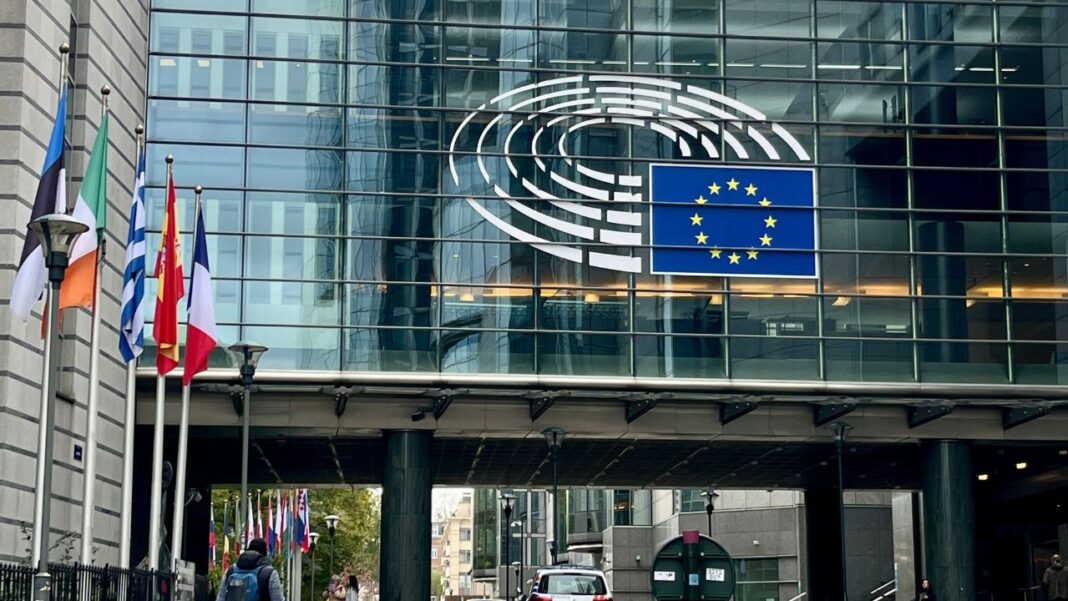
On 2 June 2026, the United Arab Emirates highlighted its concerns about the Muslim Brotherhood at a conference held at the European Parliament in Brussels, raising a question with potentially far-reaching consequences: should the European Union adopt a common approach to the organisation and its associated networks?
Hosted by the European Conservatives and Reformists (ECR) Party, the conference brought together UAE Ambassador to the European Union Mohammed Ismail Al Sahlawi and members of the European Parliament from various political groups. According to the UAE Ministry of Foreign Affairs, participants discussed what they described as the organisation’s attempts to influence European institutions, policymaking and society, alongside concerns about extremist ideologies.
These allegations reflect the position expressed by the participants and the UAE government; they should not be mistaken for a blanket legal finding against every organisation or individual associated with the broader movement.
Al Sahlawi reaffirmed the UAE’s commitment to combating extremism and terrorism, rejecting violence and promoting coexistence and tolerance. He also welcomed decisions by countries to designate certain Muslim Brotherhood branches as terrorist organisations, citing official reports that those governments relied upon.
Founded in Egypt in 1928 by Hasan al-Banna, the Muslim Brotherhood developed into a transnational Islamist movement. Its history has included social and political activism, intense confrontations with governments and differing relationships with violence across national contexts. This complexity makes the distinction between the broader movement, its branches and individual affiliated organisations central to any legal assessment.
The debate has since acquired a more concrete parliamentary dimension. On 8 October 2026, the European Parliament adopted a resolution on countering Islamist influence networks and the Muslim Brotherhood, with 381 votes in favour, 167 against and 15 abstentions. It called for a European strategy, greater scrutiny of funding and the inclusion of entities and individuals linked to the Brotherhood on the EU terrorist list where the applicable legal criteria are satisfied.
However, the resolution did not itself designate the Muslim Brotherhood as a terrorist organisation across the EU. Any such listing requires a separate legal process.
The Parliament also stressed that Islam as a religion must not be conflated with political Islamism, reinforcing the importance of distinguishing religious identity from political ideology and evidence of unlawful conduct.
The central question now is whether European governments can agree on common security measures while safeguarding democratic freedoms and applying the law consistently. The outcome could influence not only counterterrorism policy but also the future scrutiny of political networks, charitable funding and foreign influence across Europe.