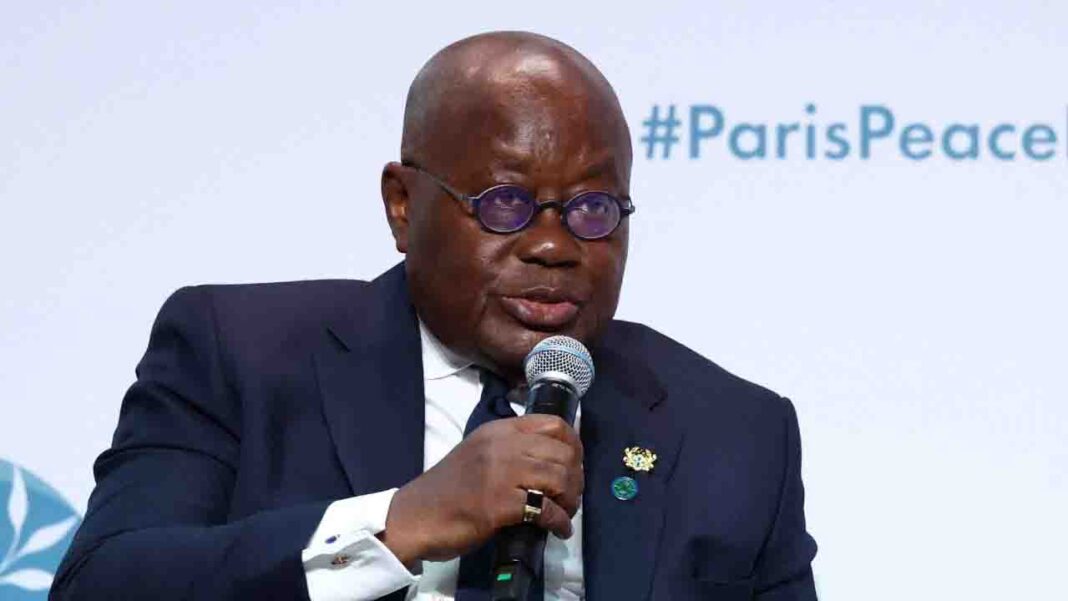
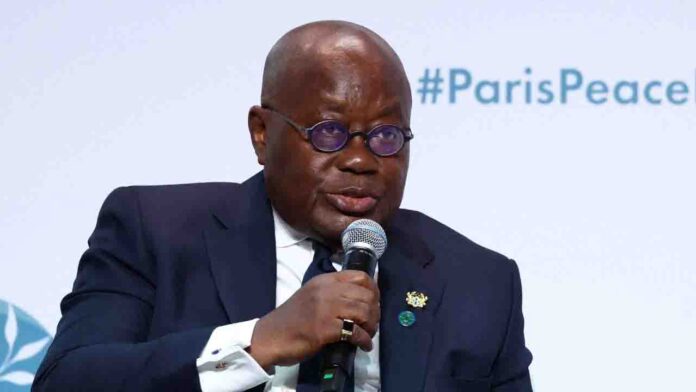

Africa (Commonwealth Union) _ Ghana’s President Nana Akufo-Addo called for a united front among African leaders in their quest for reparations for transatlantic slavery and colonial-era damages. While some Western leaders have recently acknowledged the injustices of the colonial era, including the return of stolen African treasures, the idea of providing financial reparations for the transatlantic slave trade remains unclear.
Akufo-Addo, a prominent advocate for reparations, emphasized the importance of a formal apology from European nations involved in the slave trade. In a reparations conference in Accra, he declared, “No amount of money can restore the damage caused by the transatlantic slave trade and its consequences. But surely, this is a matter that the world must confront and can no longer ignore.”
During his speech at the UN General Assembly this year, Akufo-Addo urged for more acknowledgment of the impact of colonial exploitation. He believes that, even before reparations discussions conclude, the entire continent of Africa deserves a formal apology.
President Akufo-Addo called for collaborative efforts between Africa and the Caribbean to advance the cause of reparations, labeling it a “valid demand for justice.” The historical legacies of slavery and colonialism still wreak havoc in African populations, as noted by Azali Assoumani, President of the Comoros and African Union Chairperson.
While the debate over financial reparations for slavery continues, progress has been made in restoring stolen treasures and artifacts. Nigeria is in the process of repatriating thousands of 16th to 18th-century metal plaques, sculptures, and objects looted from the ancient Kingdom of Benin, which had found their way into museums and private collections in the US and Europe.
The issue of reparations for historical injustices is gaining traction globally, with Germany’s President Frank-Walter Steinmeier expressing “shame” at crimes committed during his country’s colonial rule in Tanzania. Additionally, the owner of The Guardian newspaper apologized for its founders’ role in transatlantic slavery and announced a decade-long program of restorative justice.
In this evolving landscape, the restoration of stolen cultural artifacts stands out as a tangible step toward addressing the historical wounds inflicted by slavery and colonialism. The debate surrounding reparations continues to shape the discourse on justice and acknowledgment of past wrongs.