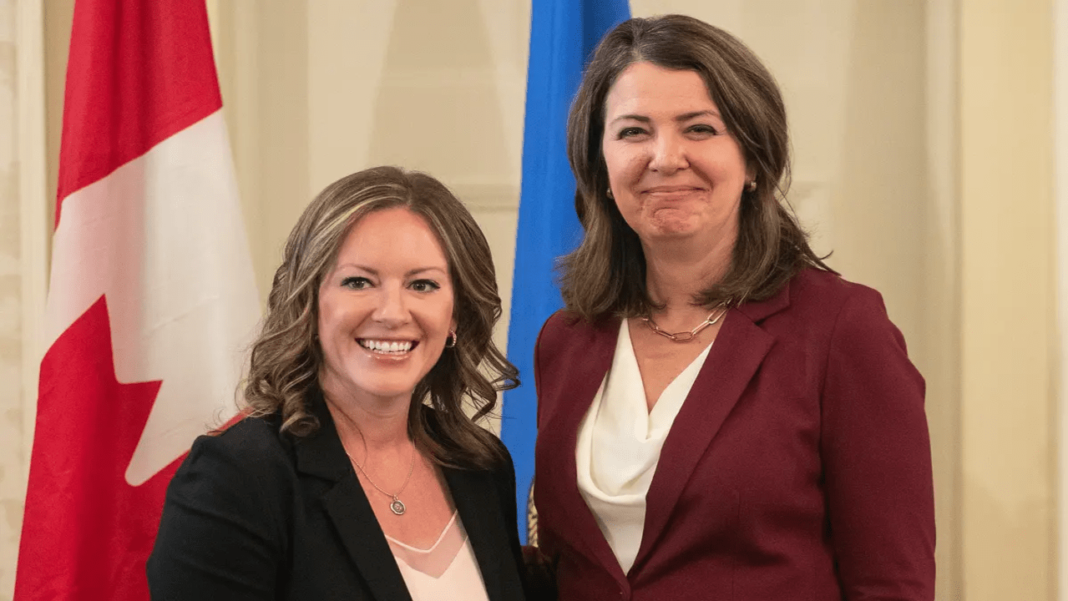

Commonwealth _ Alberta’s Environment Minister, Rebecca Schulz, disclosed an intriguing encounter at the recent COP28 in Dubai. Schulz revealed via social media that during the event, she approached Canada’s Minister of Environment and Climate Change, Steven Guilbeault, to discuss the federal government’s forthcoming emission cap plans for the oil and gas industry. However, Guilbeault declined to engage in any discussion unless Alberta signed a non-disclosure agreement (NDA). During the COP28 conference on December 7, Minister Guilbeault unveiled an ambitious plan aimed at slashing oil and gas emissions by a considerable one-third margin by the year 2030. This strategic initiative is a testament to their unwavering dedication to placing stringent constraints on the pollution originating from Canada’s oil and gas sector. The overarching objective behind this bold move is to drastically reduce these emissions to a level that would propel Canada towards the pinnacle goal of achieving carbon neutrality by 2050. Guilbeault’s announcement underscores a proactive stance in addressing one of the most significant contributors to greenhouse gas emissions within Canada. By targeting a substantial reduction in oil and gas emissions, the government aims to make substantive strides toward aligning with international climate goals and commitments. This comprehensive strategy reflects a concerted effort to chart a path that not only acknowledges the urgency of climate action but also demonstrates a firm resolve to substantially mitigate the environmental impact of the oil and gas industry within the country.
The proposed measures outlined at COP28 signal a resolute step forward in Canada’s commitment to combat climate change and transition towards a more sustainable, environmentally conscious future. They mark a pivotal milestone in the country’s trajectory towards curbing emissions and play a crucial role in realizing the ambitious target of achieving carbon neutrality by 2050. Specifically, the federal government’s proposal entails instituting a cap on oil and gas emissions at a level ranging between 35 to 38 percent lower than the recorded levels in 2019. This proposed reduction is slated to unfold over the upcoming seven years. Jonathan Wilkinson, the Minister of Natural Resources, underscored the critical importance of this particular approach, emphasizing its pivotal role in meeting Canada’s overarching targets for reducing emissions across the board. This initiative aligns with the broader national agenda to tackle and mitigate the impact of greenhouse gas emissions on the environment. Schulz expressed deep reservations and dissatisfaction regarding the insistence on a non-disclosure agreement (NDA), characterizing it as both “odd” and “unprecedented.” Her critique stemmed from a fundamental sense of disappointment in the absence of an open, transparent dialogue concerning policies that significantly affect provincial jurisdiction. She articulated her dismay, emphasizing that the request for an NDA was not only disrespectful but also implied a deliberate avoidance by the federal government of engaging in substantive and meaningful discussions.
In Schulz’s perspective, the necessity of an NDA set a troubling tone, indicating a lack of genuine willingness on the part of the federal government to engage in a constructive exchange of ideas and policies that impact the provinces. This approach, in her view, stifled the opportunity for transparent communication and collaboration on matters crucial to provincial interests. She implied that this tactic seemed calculated to sidestep open discourse, undermining the spirit of cooperative federalism that should ideally facilitate meaningful consultations between the federal and provincial levels of governance. In a series of social media posts, Schulz lamented the damage she believes the Liberal-NDP government is causing to Canada, particularly to its families. She criticized the government’s carbon tax as a failure and highlighted legal setbacks faced by the government in related challenges. Schulz conveyed concern that figures like Guilbeault might exacerbate harm to the country before exiting, asserting that ultimately, the constitution and Canadians will have the final say.