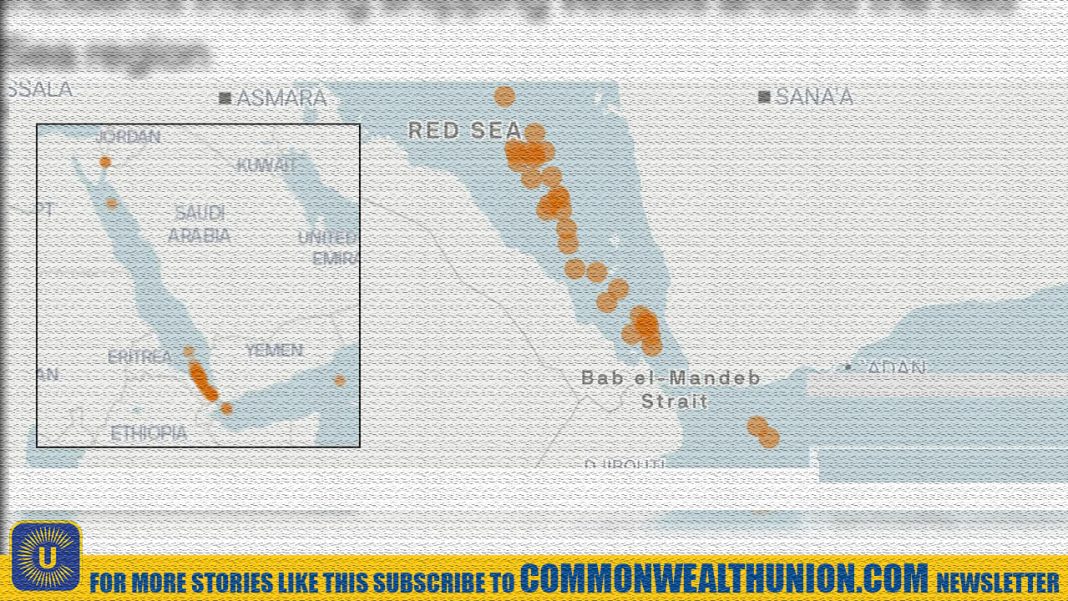

The conflict that has been raging between Yemen’s Houthi rebels and the Saudi coalition that backs Yemen’s internationally recognised government has largely subsided. However, the Houthis have repeatedly attacked ships transiting the Red Sea in response to Israel’s war on the Palestinian Hamas movement.
Dialogue between the Houthis and Saudi Arabia, along with Iranian-Saudi normalisation, has provided hope for a negotiated solution. However, talks initiated have yielded little progress and have been punctuated by violence.
Meantime, the Southern Transitional Council (STC) has also renewed calls for an independent southern Yemeni state, complicating the seemingly fragile peace prospects. Meanwhile, Al-Qaeda in the Arabian Peninsula (AQAP) has surged. The humanitarian crisis has not improved. 21.6 million people need aid, which includes 11 million children, whereas more than 4.5 million are displaced.
Yemen’s civil war began 11 years ago in 2014. This was when Houthi insurgents – Shiite rebels with links to Iran & reputed for rising against the Sunni government – took control of Yemen’s capital & largest city, Sanaa. Their demands were for lower fuel prices, besides a new government. Following failed negotiations, the rebels seized the presidential palace earlier this year in January 2025. This led to President Abd Rabbu Mansour Haddi & his government resigning. A decade back, beginning in March 2015, a coalition of Gulf states, led by Saudi Arabia, launched a campaign of economic isolation and led air strikes against the Houthis. This operation was with US logistical & intelligence support.
After about a month in captivity, in February 2015, Hadi escaped from Sanaa to rescind his resignation. This complicated the UN-supported transitional council formed to govern from the southern port city of Aden. The incident complicated a UN-supported Transitional Council, formed to govern from the southern port city of Aden. However, a Houthi counter-advance forced Hadi to flee Aden for exile in Saudi Arabia. Later the same year, Hadi attempted to return to Aden and ended up ruling as president in exile.
Regional powers, including Iran and the Gulf states led by Saudi Arabia, intervened in Yemen’s conflict. This drew the country into a regional proxy struggle along the broader Sunni-Shia division. Five months ago, in June 2015, Saudi Arabia implemented a naval blockade with the aim of preventing Iran from supplying the Houthis. In response, Iran dispatched a naval convoy, raising the risk of military escalation between the two countries. The militarisation of Yemen’s waters drew the attention of the US Navy, which continued to seize Yemeni-bound Iranian weapons. This blockade has been at the heart of the humanitarian crisis throughout the conflict.
Saudi Arabia & the United Arab Emirates have also led an unrelenting air campaign, with their coalition executing over 25,000 air strikes. These air strikes have caused over 19,000 civilian casualties. The Houthis, in turn, responded with drone attacks on both Saudi Arabia & the UAE during the couple of years of 2021 & 2022.
On the battleground, a decade back in 2015, the Houthis made rapid progress at the start of the war. They moved eastward to Marib and then southward to Aden. However, a Saudi intervention pushed the Houthis back, both north and west, until the frontlines stabilised. A UN effort to broker peace talks between allied Houthi rebels and the internationally recognised Yemeni government stalled in the summer of 2016. Meanwhile, in the south and east of the country, growing al-Qaeda in the Arabian Peninsula (AQAP) threatened the government’s control, although its influence has since waned.
9 years back in 2016, the Houthis & the government of former President Saleh, ousted in 2011 after nearly 3 decades in power, announced the formation of a political council to govern Saná & much of northern Yemen.