
NEW DELHI, INDIA — 23 NOVEMBER 2026
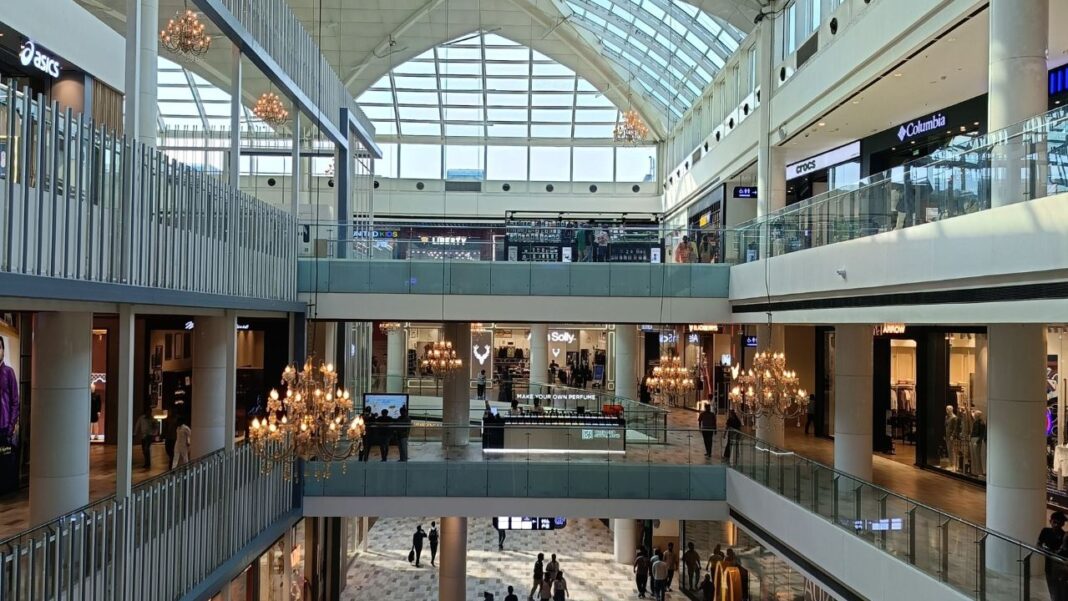
India‘s retail industry is poised for significant growth, with over 43.7 million square feet of retail space projected to be added in the seven major cities by 2030. However, the question that developers are faced with today is no longer about how fast they can add more malls and shopping centers. Instead, they have to think about whether the cities around them can cope with the surge of crowds, traffic, and services from a thriving retail sector.
The projections from JLL, a real estate consultancy, come against a backdrop of increasing demand in this industry because retailers leased 9.36 million square feet of space in the seven cities from January to September 2026, which corresponds to a 5.6 percent increase from January to September 2025 when the lease volume was 8.86 million square feet. This is the best record of new leases in four years, which shows that businesses are still looking for physical places.
Delhi-NCR was the market leader in terms of leasing, with a share of 26 per cent, followed by Mumbai with 25 per cent and Bangalore with 21 per cent. In totality, these three regions together accounted for approximately 72 percent of all activity in area leasing. Besides these markets, places under consideration include Chennai, Hyderabad, Kolkata, and Pune, with very mixed results. Pune, for instance, showed an 80.6 percent year-on-year growth in the leasing sector from a low base.
The changing composition of tenants also highlights the retail expectations of shoppers. Fashion and apparel accounted for 31 percent, food and beverages 18 percent, and entertainment for about 15 percent of total leasing activity of the first nine months of the year. What was noteworthy is that entertainment took 11 percent in the previous year but grew by 39.1 per cent in this financial year.
This phenomenon is facilitated by youthful consumers. According to JLL, generations Y and Z account for 52% of the Indian population, with generation Z’s expenditure expected to increase manifold in the next decade and half. This means that developers will now be working in an environment where shopping, dining, leisure, and social activities will be integrated.
This shift is reshaping the competition between retail formats. For the period of January to September, high streets leased 46.3% of total retail area against 45.9% of shopping malls. Growth of retail in the Indian market is not only about shopping centers; well-situated street-front properties are very attractive, as they provide accessibility and spending power.
International brands are significantly pursuing their expansion plans. Though domestic retailers were responsible for 79.2% of leasing, international retailers increased their share from 15.9% to 20.8%, contributing to a 38.8% increase in leasing activity year-on-year. During the nine-month period, as many as 24 international brands opened their stores in India, which can point to the interest of international companies in the Indian market.
However, the success of a shopping center does not rely solely on its architectural design or branding. Roads, public transport systems, parking, the ease of getting to a shopping center, reliability of utilities and infrastructure all determine whether consumers will be able to get to a shopping venue and whether companies will be able to efficiently operate in a market.
According to comments made by Abhishek Trehan, the executive director of Trehan IRIS on The Realty Today, dated November 23, new projects should be evaluated based on their relevance to local catchments, as opposed to their size. Similarly, Umang Jindal, the CEO of Homeland Group, emphasized connectivity, parking, reliable utilities, and unified urban planning. The remarks made indicate retail properties’ transformation into urban destinations rather than stand-alone structures.
It further indicates that the expansion of retail space in India has likely become a form of test of urban development operation. The 43.7 million sq. ft. projection is significant, and however, success may not mean developing as much space as possible since the winners will be those who create places that are accessible, functional, and involve urban mobility of real people.
The conclusion can also be drawn that by 2030, the number of stores will be less important than the ability of Indian cities to accommodate people who come to take advantage of malls.