
AMMAN, Jordan – 25 August 2026 – Jordan hopes to play a role in the Middle East‘s energy future without needing rich petroleum fields or huge gas deposits. Instead, it is going to utilise what it already has – its favourable geographic location.
Jordan’s government approved the Energy Sector Strategy of Jordan for 2025–2035 on May 3, 2026, and thus created a framework lasting a decade that aims to increase energy security, speed up the use of cleaner energy and boost economic competitiveness.
The strategy is notable for emphasising interconnectivity and diversification since, instead of trying to achieve energy independence, Amman intends to have a variety of suppliers, improve its domestic production and create stronger regional connections in the field of electricity and gas.
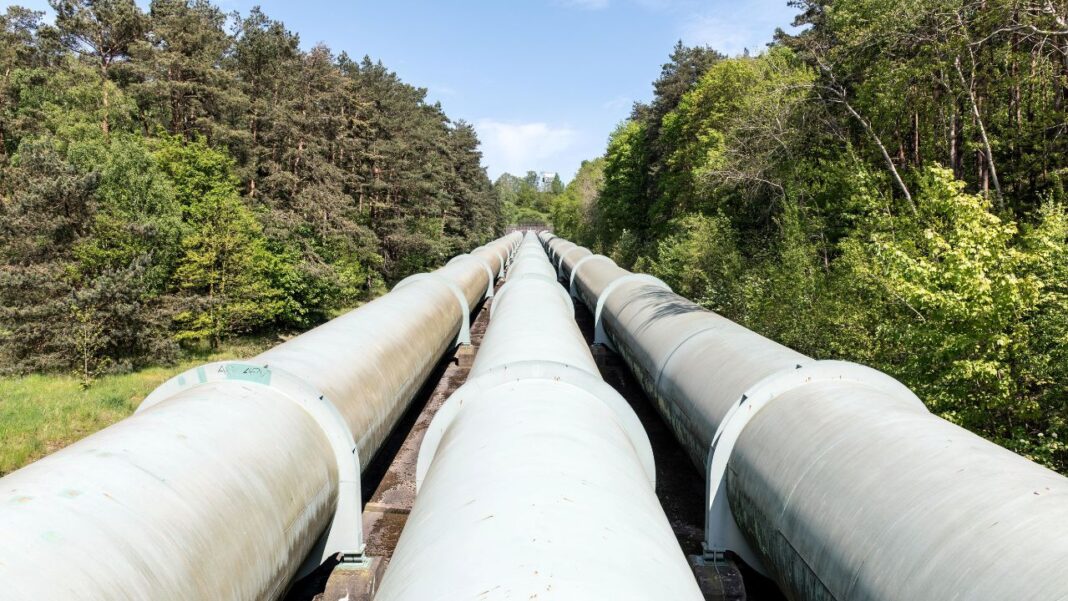
The plan centres on developing the Risha gas field, Jordan’s main domestic gas source. The government envisions the output figure of 418 mcf by 2029 and 812 mcf by 2035. The construction of a pipeline linking Risha and the Arab Gas Pipeline They also plan to construct a pipeline linking Risha and the Arab Gas Pipeline by 2029.
However, the most ambitious move of Jordan could be its drive toward renewables. The strategy envisages renewables to account for 40% of the electricity mix by 2035, with commercial green-hydrogen production commencing in 2030 and amounting to 500,000 tonnes per year by 2035.
The country is busy building interlinkages with electricity networks regionally. Connection with Iraq has already started supplying energy to Al-Rutba, and the higher-capacity link from Risha to Al-Qaim is in the pipeline. Regarding Saudi Arabia’s connection, it is currently undergoing technical and economic preparations, while a study is being conducted to determine how the existing submarine link with Egypt and Jordan can be expanded.
Connecting with Egypt can be crucial: Jordan is looking to increase the capacity from the current 500 MW to 2,000 MW, which allows for greater movement of renewable electricity.
In terms of strategy, there is also a revolution in transport as electric vehicles are targeted to account for 60% of car sales each year, and there will be 500,000 cars in Jordan.
Jordan’s message extends far beyond a simple energy policy. Jordan’s message goes well beyond a simple energy policy. Rather, it represents an attempt to make a developing country a regional hub of energy, where electricity or gas and eventually hydrogen will be flowing in different channels in the future.
The strategy is simple: if Jordan cannot win through the resources beneath the ground, it can still rival by being crucial on the surface.