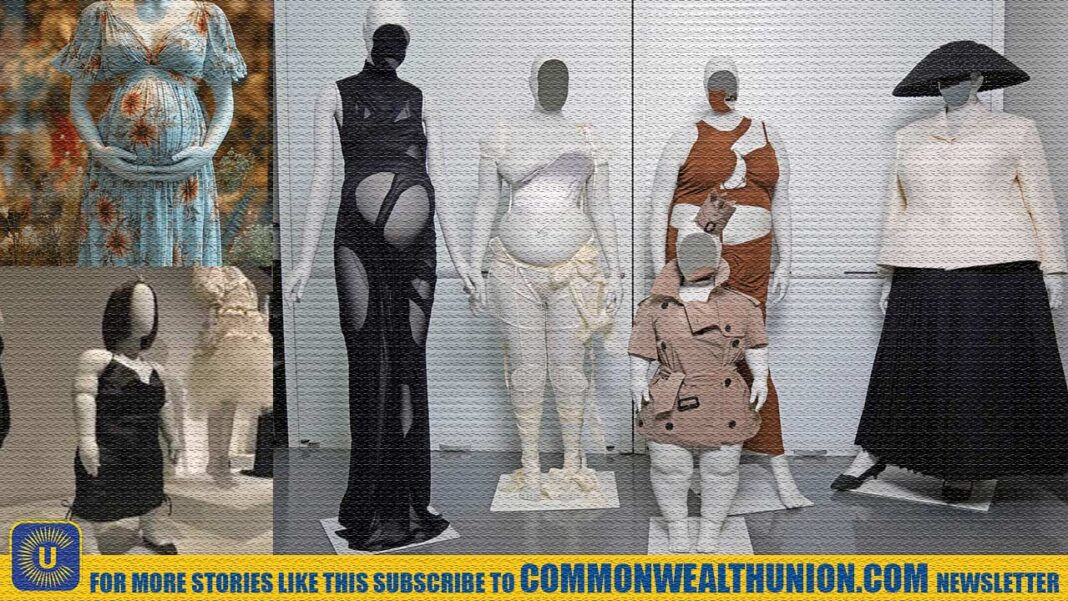

As one diverts their eye to the world of fashion, one can identify the massive shift which it has begun to undergo as the Metropolitan Museum of Art’s upcoming exhibition approaches. The transformation is placed directly under the spotlight as long-standing standards of beauty are challenged by the costume art exhibition, which is set to debut in May 2026. While traditionally relying mainly on mannequins to show a narrow idea of a typical thin body type that easily fits the industry’s sample sizes, the exhibition is now diverted to embrace a much fuller representation of the human body. Taking a much bolder departure from the typically accepted norm of fashion, visitors will gain the chance to experience a wide spectrum of body types on mannequins, including pregnant, differently abled, ageing and even plus-size forms.
This move not only comes as bold but is more appreciated as the crowd is eager to welcome and accept the norms of body diversity, rather than the norm of the rigid standards in fashion. The initiative demonstrates the growing awareness within the fashion industry of traditional standards that exclude the realities of people’s experiences. The main highlight of the exhibition is to showcase the reality that fashion should be accessible to everyone, rather than being limited to a single form and confined behind a showcase mirror, where it appears as a mere dream attainable only by a few. Instead, it should exist, and it should be shaped for everyone.
A particularly innovative aspect of the exhibition lies in how these mannequins were created. Instead of using generic forms, curators worked with real people whose bodies were scanned using advanced photogrammetry technology. Among those featured are artist Michaela Stark, disability activist Sinéad Burke, and athlete Aimee Mullins, each bringing their own lived experience into the representation of fashion.
A striking visual element is also introduced by the exhibition: that mannequins usually possess a reflective and mirror-like face. This design has a far deeper meaning than what usually seems just a manufacturing detail. The reflection causes the viewers to see themselves reflected on the mannequin as they observe, which brings a much closer connection to fashion, which can be raw and emotional, between the person and the object. This intention aims to encourage a sense of empathy and self-identification, reinforcing the idea that fashion belongs to everyone.
Andrew Bolton, the event’s curator, said the goal is to expand the past, not erase it, to make it more accessible. He suggests that the history of fashion has for a long time been dominated by a set of body ideals and that by bringing up new and more realistic forms and perspectives, the exhibition looks to “complete the picture” instead of just trying to replace it.
Running entirely through January 2027, the exhibition Costume Art will feature hundreds of items that go beyond traditionally accepted ideas and will explore the relationship between clothing and people, creating a sense of body positivity. By combining garments with artwork and creativity which represents one’s inclusivity and identity, the exhibition highlights fashion’s place not just as a commercial industry that provides bucks and bills but also as a vital form of artistic and cultural expression.
Ultimately, this exhibition signifies a much larger and broader shift in understanding fashion. How it is no longer confined to a singular ideal where people will either have to reach or observe on the sidelines, it is increasingly recognised as a reflection of diverse identities, experiences, and different realities. The Met is redefining fashion display and who it represents.