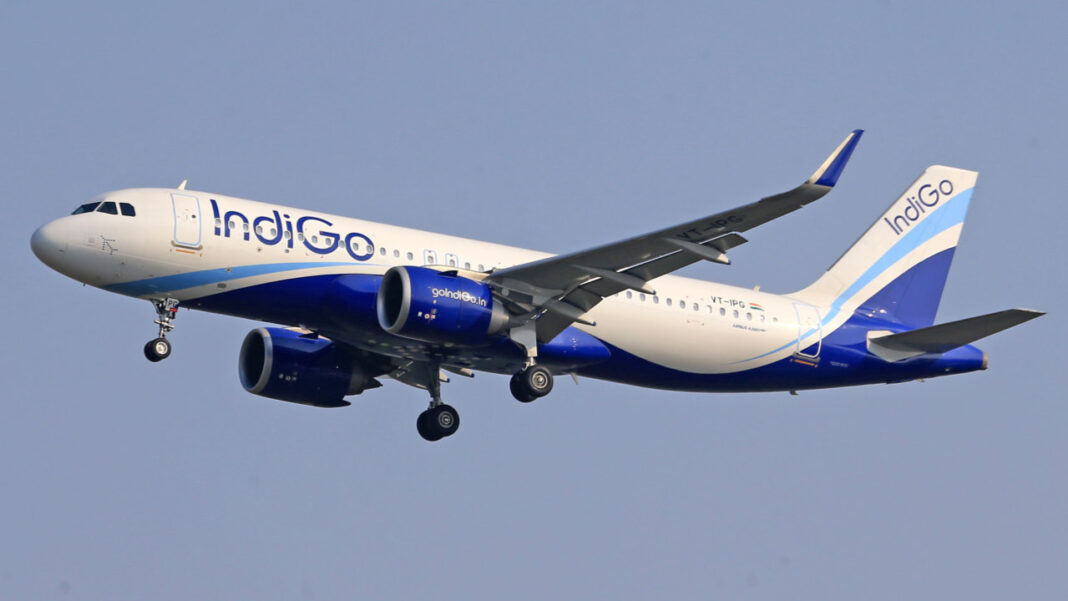

A scheduled flight from northeastern India to Delhi managed to operate without any inconveniences until it was alerted to some smoke in the hold of the plane and was compelled to change direction towards Lucknow.
IndiGo 6E6504, which departed from Agartala for Delhi, landed safely at Chaudhary Charan Singh International Airport, Lucknow, at 6:29 p.m. with 103 passengers and six crew members onboard. It was reported by the airport authorities that there were no injuries or incidents during the flight.
The significance of the indication of smoke was sufficient to divert the flight to Lucknow, even though it still had not yet been verified whether there was actually a fire onboard the plane. Nevertheless, the aircraft shunned its originally chosen destination and headed to a qualified airport prepared to deal with the possible in-flight emergency.
In Lucknow, a prompt action took place. Fire and rescue units, ambulances, the medical team, security personnel, and other supporting teams were engaged during the presence of the aircraft and after its landing, thus displaying the typically accepted precautionary approach used whenever a commercial aircraft signals a presumably existing fire or smoke.
As stated in an earlier report, the aircraft transmitted the transponder code 7700, which is the unique code enabling an aircraft to indicate a general emergency to controllers in charge of air traffic.
What makes the concern even more intriguing is that the alarm did not instantly lead to any smoke traces appearing. It is reported that when the aircraft had landed safe, an inspection was carried out and nothing was detected in the cargo compartment, thus pointing to the fact that the smoke did not exist after all; however, technical specialists were still looking for the cause of the alarm.
This event also bears an interesting similarity to a recent incident. An Air India Express flight IX 1253 operating between Varanasi and Delhi on September 3, 2026, had to land at nearly the same airport 12 days earlier due to a smoke alarm going off inside the cargo hold.
This flight was operated at 8.52 a.m., and no casualties were reported. All passengers and the crew of 155 on board managed to deplane by 9:02 a.m. Examination of the aircraft gave no signs of smoke or fire.
For travelers, a smoke alarm can lead to a shocking change in the circumstances despite the fact that no fire is discovered at the end of the flight. Aviation safety principles are based on the idea of acting upon the smoke alarm first and figuring out what caused it later. The September 15 incident with IndiGo serves as a prime example of this practice, as a routine flight transformed into an emergency landing in Lucknow, yet all 109 passengers on board landed safely.
Afterwards, the plane was checked for technical difficulties while the company was arranging for the passengers to go to Delhi. The most important issue now is not why the plane landed safely—that happened. The question is what caused the smoke warning.