

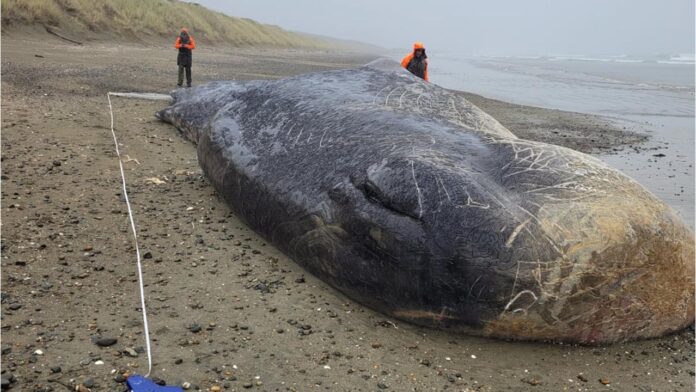

The jawbone of a nearly 50-foot sperm whale that recently washed ashore on Oreti Beach in New Zealand’s southernmost region has been illegally removed and stolen, according to the New Zealand Department of Conservation (DOC). Officials reported on Monday that the jawbone was cut out with a chainsaw, violating the country’s Marine Mammals Protection Act of 1978, which imposes severe penalties on offenders.
DOC Senior Ranger Rosalind Cole expressed dismay at the incident, emphasizing the illegality and disrespect involved. “Someone has come along with a chainsaw and taken the jawbone,” she stated. Evidence at the scene, including marks on the remaining bones and tire tracks, suggests the act was perpetrated by people rather than scavenging animals.
Under New Zealand law, particularly the Marine Mammals Protection Act, such actions can lead to fines of up to NZD 250,000 (approximately USD 150,000). This legislation is designed to safeguard marine mammals and ensure that their remains are treated with respect and integrity.
The removal of the jawbone is not only a legal violation but also a profound cultural disrespect to the Māori, the indigenous people of New Zealand. Whale bones, known as taonga, are highly valued in Māori culture. They are seen as treasures and hold significant spiritual and cultural importance.
The act has deeply upset the local iwi, the tribal community. Kai Rongoā Muriel Johnstone, a Māori elder, expressed the rūnaka’s (tribal council) distress, highlighting the traditional protocols that were disregarded. “We know and treat whales as Rangatira (Chiefs) of the sea and as such deserve appropriate protocols said over them. This includes a farewell address and appropriate karakia [prayers],” Johnstone stated. The theft of the jawbone is seen as a deliberate and disrespectful act, targeting the cultural and spiritual value these bones hold.
Earlier this year, a significant treaty was signed by indigenous leaders from New Zealand, Tahiti, Tonga, and the Cook Islands, granting whales legal personhood. This landmark agreement aims to enhance legislative protection for whales, referred to as tohorā in Māori culture. Māori conservationist Mere Takoko emphasized that the treaty is a step towards more comprehensive whale protection, recognizing them as sacred ancestors of indigenous Polynesians.
This incident is not isolated. The DOC has recorded similar occurrences in the past. In April 2019, the jawbone of a sperm whale washed up on the West Coast of New Zealand’s South Island was similarly stolen. Tim Rochford, chairman of Makaawhio at the time, expressed his disappointment in a DOC press release, lamenting the disregard for established protocols designed to protect the mana (power) of the whale.
Further back, in 2015, another sperm whale’s jawbone was taken from Oreti Beach. DOC biodiversity ranger Juzah Zammit-Ross noted the frequency of whale beachings on South Island beaches and the various factors contributing to these events. However, determining the cause of death is often challenging due to the condition of the carcasses.
The recurrent theft of whale jawbones underscores a troubling disregard for both legal frameworks and cultural traditions. The DOC and local iwi have well-established protocols for handling whale remains to honor the mana of these majestic creatures. The removal and theft of jawbones not only violate these protocols but also deprive the Māori of their cultural heritage.
In response to the recent incident, the DOC has reiterated the importance of respecting marine mammals and adhering to legal and cultural guidelines. The ongoing thefts have prompted calls for increased awareness and stricter enforcement to prevent further desecration of these sacred animals. The DOC continues to investigate and urges anyone with information about the theft to come forward, emphasizing that protecting the dignity and legacy of these whales is a collective responsibility.


