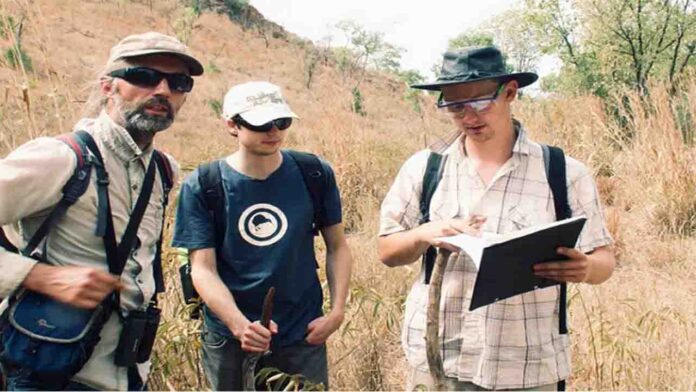

Australia (Common Wealth) _ Australian scientists have uncovered a “lost world” of ancient organisms that existed in the Earth’s oceans 1.6 billion years ago. The research community believes that this discovery may change how we see our earliest relatives.
The researchers discovered this incredible discovery after ten years of hard labor, and their findings were published in the journal Nature. These animals could have been the earliest carnivores on Earth, according to the experts.
These ancient organisms were common in marine ecosystems all across the planet and most likely shaped ecosystems for most of Earth’s history. According to the researchers, the Protosterol Biota existed for at least one billion years before any animal or plant appeared.
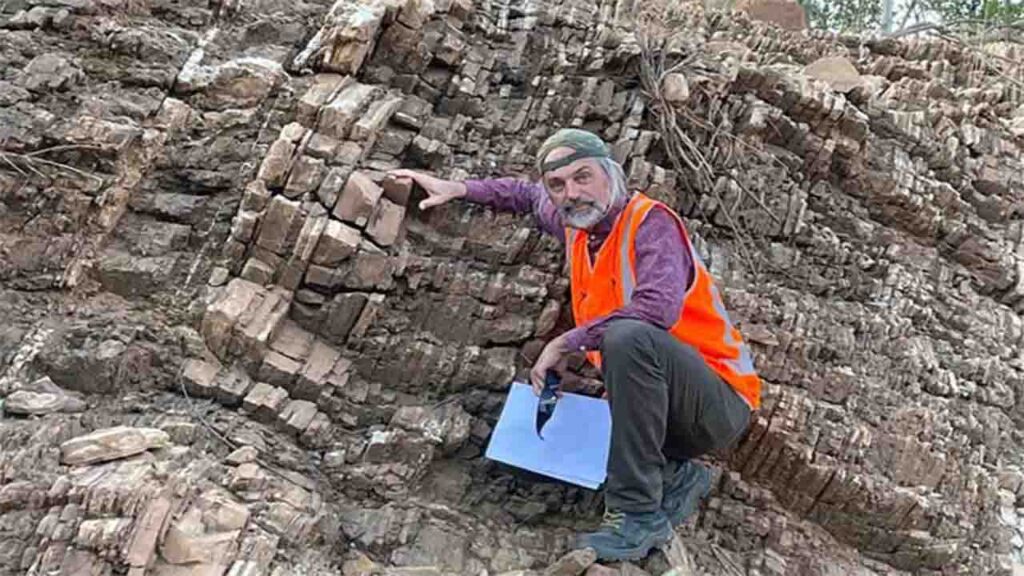
“Molecular remains of the Protosterol Biota discovered in 1.6 billion-year-old rocks appear to be the earliest remnants of our own lineage – they existed before LECA.” “These ancient creatures were abundant in marine ecosystems all over the world and most likely shaped ecosystems for much of Earth’s history,” said Dr. Benjamin Nettersheim, who did his Ph.D. at ANU and is now located at the University of Bremen in Germany.
We can trace the ancestry of humans and other species with nuclei back to the last common ancestor of eukaryotes (LECA), which lived over 1.2 billion years ago, he said.
Professor Jochen Brocks of ANU, who discovered the Protosterol Biota with Dr. Nettersheim, stated that the Protosterol Biota was obviously more sophisticated than bacteria and possibly larger, albeit it is uncertain what they looked like.
“We believe they may have been the first predators on Earth, hunting and devouring bacteria,” said Professor Brocks. Brocks, who co-led the research with Benjamin Nettersheim, explained that the Protosterol Biota was more sophisticated than bacteria.
Although their outward appearance is unknown, these ancient organisms are thought to be bigger than bacteria. Unfortunately, these early living forms have long since gone from the Earth’s surface!
According to Brocks, these species flourished on Earth from around 1.6 billion years ago to approximately 800 million years ago.
This time period corresponds to the Tonian Transformation, during which more complex living forms such as fungi and algae began to thrive. However, the precise timing for the extinction of the Protosterol Biota is unknown.
A group of researchers from Australia, France, Germany, and the United States joined together to investigate fossilized fat molecules. These molecules were discovered in a billion-year-old rock formation that formed in the ancient ocean near what is now Australia’s Northern Territory.
The Northern Territory of Australia is well-known for its extraordinarily well-preserved sedimentary rocks from the Earth’s Middle Ages, notably the mid-Proterozoic epoch.
These are the earliest known biomarker-containing rocks on our planet, providing vital insights into the past history of life.