
Environmental (Commonwealth Union)_ The Arctic tundra, once a vital carbon sink, has now transitioned into a net source of atmospheric carbon dioxide, a startling revelation made by the U.S. National Oceanic and Atmospheric Administration (NOAA) in its 2024 Arctic Report Card. This shift is a direct consequence of accelerated warming, increasing wildfire activity, and other cascading effects of climate change that have plunged the Arctic into uncharted territory.
According to NOAA, the Arctic tundra is now emitting more carbon dioxide than it can store, a troubling milestone driven by the escalation of circumpolar wildfires. Since 2003, these fires have released an average of 207 million tons of carbon annually, exacerbating global greenhouse gas emissions. NOAA Administrator Richard Spinrad emphasized the urgency of the situation, stating, “We are seeing impacts of warming in real time in the Arctic, and it’s a call to action.”
This worrying trend is not unique. Climate Central recently reported that climate change has extended warmer winter conditions across 20% of Canada’s weather regions. Cities such as Vancouver, Toronto, and Montreal are experiencing significantly more days with temperatures above freezing, disrupting ecosystems, industries, and cherished traditions. Philippe Marquis, an Olympian and coach of Canada’s national freestyle ski team, voiced his concerns, highlighting how these changes are not only affecting winter sports but also posing economic and cultural threats.
The NOAA report underscores the far-reaching impacts of warming in the Arctic. Annual surface air temperatures in the region have reached the second-highest levels since 1900, with Alaskan permafrost also experiencing record-breaking warmth. The past nine years have been the warmest ever recorded for the Arctic, a stark testament to the accelerating pace of climate change.
Seasonal changes in the Arctic are equally unsettling. Despite above-average snow accumulation last winter, the snow season was the shortest in 26 years across central and eastern Arctic Canada. Snowmelt now occurs one to two weeks earlier than historical norms, disrupting ecosystems dependent on predictable seasonal cycles. In summer 2024, northern Alaska and Canada experienced an unprecedented heatwave, setting all-time temperature records and contributing to the region’s wettest summer on record.
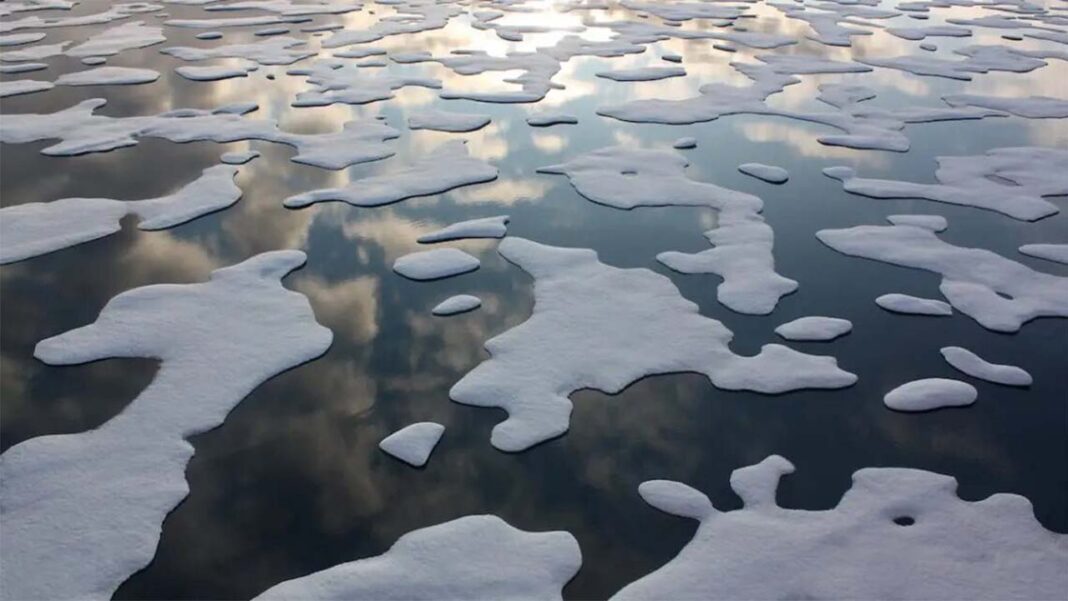
The Arctic Ocean, integral to the region’s climate and ecosystems, is also undergoing profound changes. Ice-free areas in August have been warming at a rate of 0.5°C per decade since 1982. Sea ice extent, a critical indicator of Arctic health, hit its sixth-lowest level in 45 years of satellite monitoring. These changes in sea ice have ripple effects on global weather patterns and marine ecosystems.
The human and ecological impacts are devastating. Migratory caribou herds, vital to Indigenous communities and Arctic biodiversity, have declined by 65% over the last two to three decades. “The Arctic today looks really different than the Arctic of a couple of decades ago,” remarked Twila Moon, lead editor of the NOAA report and deputy lead scientist at the U.S. National Snow and Ice Data Center.
Moon cautioned against the notion of a “new normal” for the Arctic, stressing that the region is locked into a cycle of continuous and rapid change. With each passing year, the Arctic faces increasingly unpredictable conditions, driven by humanity’s relentless emission of heat-trapping gases.
Recent climate trends and the findings in NOAA’s report serve as a stark reminder of the urgency of combating climate change. As global leaders strive to meet the Paris Agreement goals, the Arctic serves as both a warning and a call to action. The world must intensify its efforts to reduce emissions and mitigate the impacts of this evolving crisis, given the fragility of its ecosystems.
The 2024 Arctic Report Card is a sobering document that highlights the stark realities of climate change and its far-reaching consequences. The Arctic’s shift from a carbon sink to a carbon source underscores the urgent need for immediate and sustained global action. The future of this fragile, rapidly changing region and the planet depends on the choices made today.