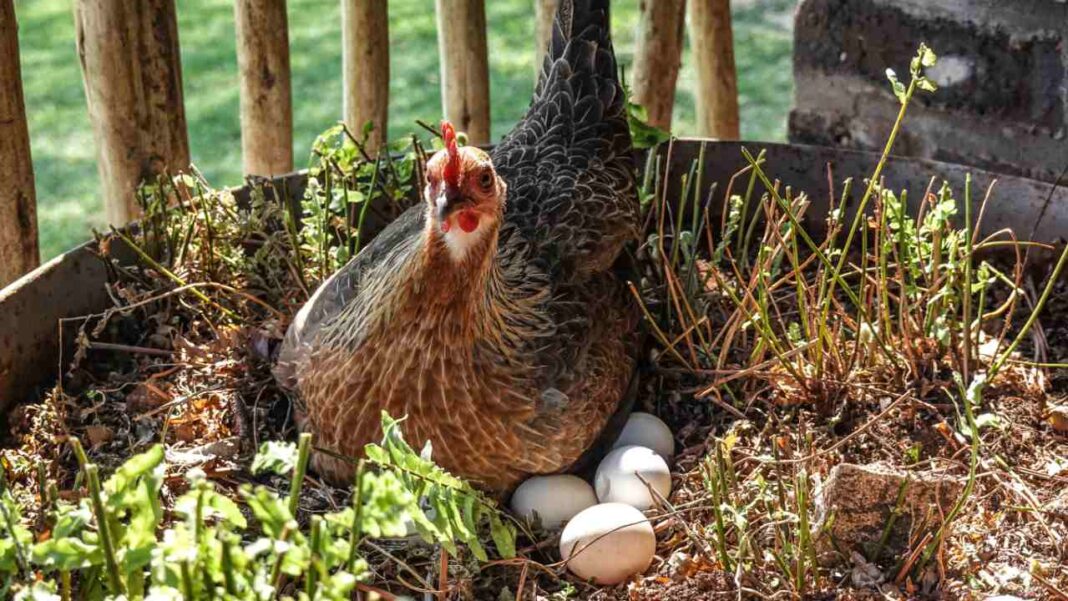

A new study has highlighted a growing challenge in egg production. Researchers argue that the transition from conventional cage systems to free-range and organic farming, often viewed as a positive development for animal welfare, may entail substantial environmental costs. The findings underscore a complex trade-off that is drawing increasing attention from scientists and policymakers alike.
An international team worked on the study. It includes researchers from Oxford University‘s Smith School of Enterprise and the Environment. They looked closely at data from UK egg production. Their main goal was to compare different farming methods and measure their effects side by side.
The team examined several possible futures for the egg industry. These included barn systems, free-range systems, and fully organic systems. In each scenario, total egg output stayed exactly the same. Only the farming method itself was allowed to change. This let them isolate the true cost of each approach.
The results were striking. Cage-free systems do match public wishes for better animal treatment. However, these systems often need larger hen populations to produce the same number of eggs. This raises pressure on land, water, and climate systems. Emissions and land use can both climb sharply as a result.
One example was particularly notable. If the UK switched entirely from its current mixed system to only free-range and organic farming, emissions would rise by 60 percent. Land use would nearly double at the same time. That is a major shift with serious practical consequences for the country.
At the Smith School, Dr. Harriet Bartlett is a senior researcher in sustainable food. She explained that we must consider welfare, environmental impact, and food production together. Ignoring any single factor makes it much harder to plan a truly sustainable future for egg farming. Being aware of these trade-offs, she said, leads to smarter and more balanced decisions.
The wider context makes this issue even more important. Food supply chains worldwide cause about 26 percent of all human-driven greenhouse gas emissions. They are also linked to 78 percent of eutrophication, the harmful build-up of nutrients in water systems. Food production causes roughly 32 percent of soil-damaging acidification as well.
Egg production plays a notable role within these figures. Global egg output has grown four times larger over the past fifty years. This growth has continued alongside rising public pressure to move away from caged hen farming entirely.
The researchers stressed that improving welfare in hen farming remains genuinely worthwhile. But their findings raise a clear warning. If farms shift to cage-free systems without also improving other factors, new problems can emerge. Two key areas are hen mortality rates and how efficiently hens convert feed into eggs. Without real progress in these areas, environmental harm is likely to grow rather than shrink.
Dr Bartlett was careful to clarify her point further. She said this research does not mean concerns about caged hens are misguided. Nor does it suggest farming should return to more restrictive caging methods. Instead, she wants both farmers and everyday shoppers to understand the full picture. Every farming method carries some form of impact somewhere in the system. Understanding the entire picture enables individuals to make well-informed and balanced decisions.
The study also revealed another important concern. Fully free-range and organic systems showed a clear and significant rise in hen mortality. This finding is a serious welfare issue in its own right, separate from environmental questions.
The data used in this research came from 2009 and 2010. The team openly admitted that this dataset is a limitation, since farming practices have changed since then. Even so, they said the study remains the most comprehensive dataset available for UK laying hens today.
The researchers ended with a clear message for policymakers. Future efforts to expand cage-free egg farming must incorporate environmental considerations from the outset. Welfare and sustainability, they argue, need to move forward together, not separately.
The full study appears in Royal Society Open Science, under the title “The Environmental Cost of Welfare-Driven Policy Changes in UK Egg Production.”