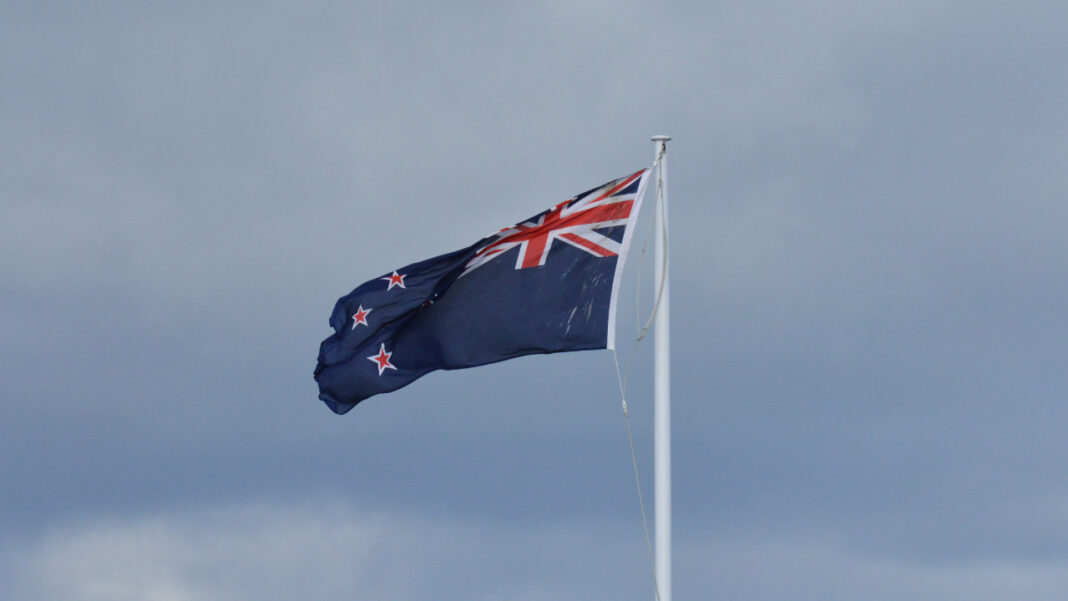

July 13, 2026 – As New Zealand’s inclination to join the newly created Ocean of Peace Alliance emerges, New Zealand has been engulfed in a full-scale debate, which transcends military aspects of the matter.
Although the proposed agreement with Fiji and Australia promotes greater regional security for the region and the allied countries, experts warn that in order to join the alliance, Wellington has to first check if it can take on enormous expenses associated with the membership in the organization.
The agreement was signed by the Prime Minister of Australia, Anthony Albanese, and the Prime Minister of Fiji, Sitiveni Rabuka, on July 6, 2026, in Suva and is considered a commitment of both countries to support one another in case of an armed attack against any of the two countries involved. The agreement has also kept the opportunity for other Pacific countries to join the pact open.
On July 9, 2026, Prime Minister of New Zealand Christopher Luxon stated that New Zealand would commence its investigation of the matter and that the final decision would have to go through cabinet and parliamentary procedures as it is in the case with any other treaty of New Zealand. The announcement was made in the wake of growing concerns regarding security in the region brought on by a long-range ballistic missile test carried out by China over South Pacific waters.
Nevertheless, it is said that joining an international organization is not only about sealing a deal, but also might entail greater costs for the country including higher budgetary costs, military readiness improvement, increased number of joint exercises, and promises of active contribution to different security operations within the Pacific region. New Zealand is faced with the challenge as it seeks to transform its military forces and reinforce partnership with other countries of the region amid the growing competition around the Indo-Pacific strategic environment.
The Pacific Ocean has always been viewed as one of the most geopolitically important bodies of water. Covering 30% of the Earth, it remains a significant transit route for international trade, information exchange, and security cooperation. As international rivalry escalates, island nations of the Pacific find themselves in the role of the ones who shape security environment in the region rather than merely observe it.
Those in favor of the arrangement assert that stronger cooperation will be beneficial to New Zealand’s long-lasting security connection with Australia and boost security projects in the Pacific region. Those against the arrangement, however, underscore huge expenditures involved in integrating the militaries and intricate foreign relations issues that will be created as a result of the deal, particularly in the context of New Zealand’s important trade relations with China.
While Wellington is getting ready to arrive at a conclusion, one of the questions that arises is not whether or not to join the Ocean of Peace Alliance, but whether or not New Zealand will be able to preserve its economic independence and find a proper balance between its security goals and sustainability issues in the Pacific region.