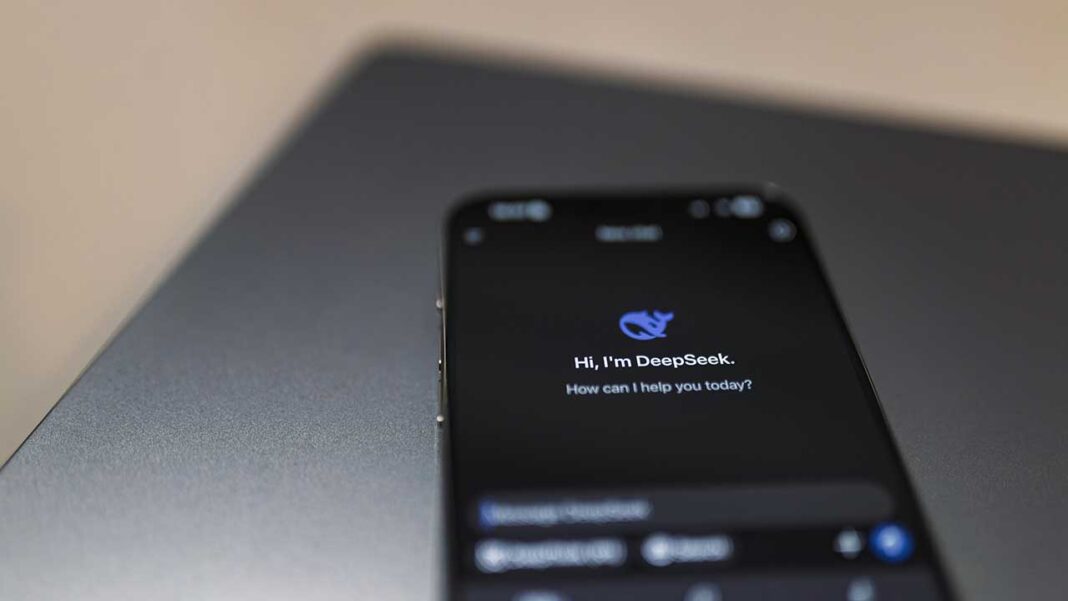

Commonwealth_ The government of British Columbia has officially banned the Chinese-owned artificial intelligence application DeepSeek from all government-managed devices, citing security risks. The decision was communicated to provincial civil servants through a message from Chief Information Officer (CIO) Hayden Lansdell on Wednesday afternoon.
Lansdell explained that after reviewing the application, his office determined that it posed an “unacceptable risk” to government systems. Effective Thursday, all web access to DeepSeek would be proactively blocked. Government employees who have already installed the application on their mobile devices will be contacted and instructed to remove it. The CIO’s office also assured employees that it will continue monitoring systems to prevent new installations of the software.
British Columbia’s decision follows similar actions taken against other Chinese-based applications. The provincial government had previously prohibited the use of TikTok, WeChat, and ToTok on government-managed devices, citing security and data privacy concerns.
DeepSeek-R1, the latest version of the AI tool, was publicly launched on January 20; it gained attention for its claimed performance, which is said to rival or exceed that of AI models developed by U.S. companies while also being more cost-effective. Liang Wenfeng, co-founder of the High-Flyer hedge fund, controls a Hangzhou-based firm that is developing the application.
A notable characteristic of DeepSeek is that it operates as open-source software, meaning its source code is freely available, allowing users to modify and redistribute it. However, concerns have emerged that its use could lead to unintended security vulnerabilities, particularly in government settings where data protection is paramount.
British Columbia is not alone in taking action against DeepSeek. Several other countries, including Australia, South Korea, Taiwan, and the Netherlands, have already imposed similar bans on the AI tool for government devices. Meanwhile, in the United States, a proposed bill aims to enforce a ban within 60 days, based on suspicions that DeepSeek may contain “hidden links” that could transmit data to a Chinese state-owned telecommunications company.
Lansdell’s message to B.C. government employees did not specify the exact security threats posed by DeepSeek but underscored the necessity of balancing AI’s potential benefits with stringent cybersecurity standards. He emphasized the government’s commitment to maintaining the highest levels of security and ensuring that any risks associated with new technologies are thoroughly assessed.
“In this instance, we have determined that the risk associated with DeepSeek is too high, and we cannot confidently ensure or commit to the level of security required to use it,” Lansdell wrote.
The Canadian federal government is also taking precautions regarding DeepSeek. On Thursday, Chief Information Officer Dominic Rochon sent a similar directive to federal officials, as reported by the National Post. Rochon cited “serious privacy concerns associated with the inappropriate collection and retention of sensitive personal information” as the primary reason for restricting DeepSeek’s use. He further described the ban as a “precautionary measure to protect government networks and data.”
While concerns over data privacy and potential security breaches have led to these restrictions, DeepSeek’s developers have not publicly responded to the bans. The increasing scrutiny of Chinese technology, particularly in North America and other Western countries, reflects broader geopolitical tensions over data security and state surveillance. Governments are taking a cautious approach to adopting AI tools, particularly those developed in jurisdictions where data protection regulations differ significantly from those in Western democracies.
As AI technology continues to evolve and become more widely integrated into government operations, security officials will likely remain vigilant about potential risks. British Columbia’s decision to prohibit DeepSeek aligns with a global trend of heightened scrutiny over AI applications and their potential to compromise sensitive government data. Future developments may see further restrictions placed on foreign AI models that fail to meet stringent security standards.