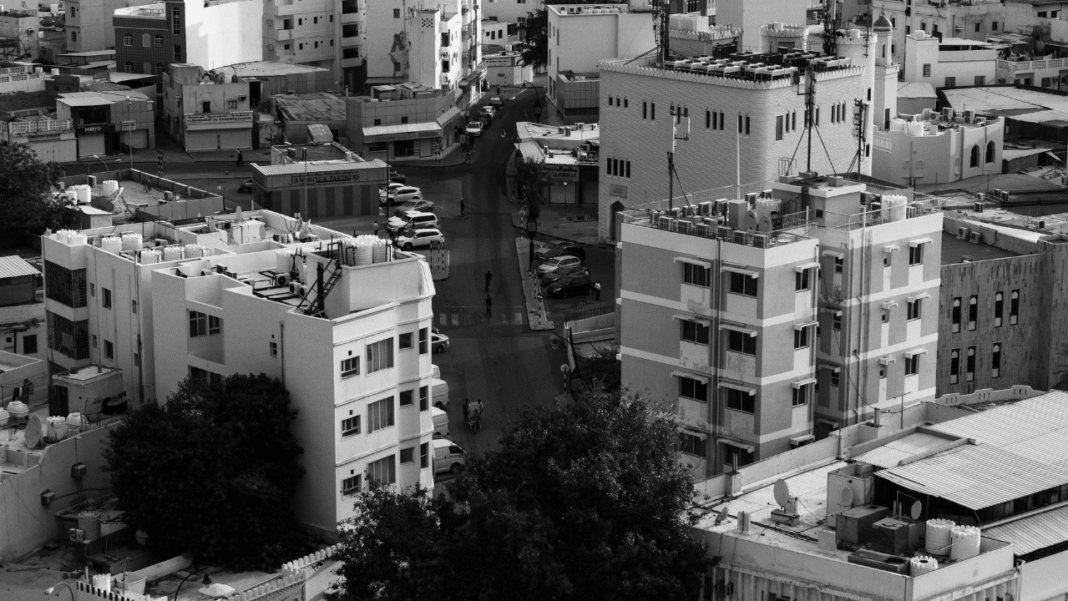

The skyline of Oman salutes a sunrise in monochromatic splendour: pristine white and fluffy ivory building facades stretch as far as the eye can see. It is not by chance décor, it is state regulation. In Muscat and throughout, buildings are required to wear white or similarly close lighting shades—alabaster, pearl, or pale beige, for instance—unless a formal municipal application for a different colour scheme is granted the green light.
A Legacy in Light
Omani builders years ago realized what engineers now measure in terms of the Solar Reflectance Index (SRI): pale roofs reflect the sun, cooling the interior. To be specific, ordinary white paint will reflect up to 80% of visible light and a good 35% of total solar heat, saving on air-conditioning in a country where summer highs reach over 45°C. Omani governments have legislated this good sense: municipalities at the local level must bring colour requests of dark or light colours before a technical licensing department approval, preserving both the architectural DNA and environmental efficiency of each street.
Culture Woven in Colour
Beyond plain pragmatism is cultural pride. The whitewashed walls are inspired by Islamic values of cleanliness and serenity and remind me of ancient fortresses and traditional desert homes constructed using limestone and gypsum plaster. In restricting the use of colour, Oman verifies a communal identity—an “urban fabric” in which no one house screams for attention, but all are part of harmony as a whole.
A Global Whitewash Phenomenon
Oman is in no way the only island with monochrome savvy. Villagers on the Aegean island of Santorini whitewash cubic homes for a greater-than-postcard-perfect effect against cobalt waters but also to protect against the blistering sun from worsening its effect—a centuries-old idea still savoured by contemporary architects. Shiny white coats in tandem “cool roof” programs in other cities, such as New York and Los Angeles, have also fought the urban heat island, showing that one sweep of whitewash can be worth environmental and beauty dividends.
Exceptions—and The Future of Colour
These past few years have seen muted browns and sandy greys infiltrate private projects as indications of minor relaxations in the rulebook—after stern sanction. These rigorously controlled experiments intend to change Oman’s luxurious tradition to accommodate changing tastes and preserve the cool, coherent cityscape that has become its trademark.
By conjoining immortal legacy and forward-looking climate policy, Oman’s “white is law” decree teaches a lesson in life: sometimes restraint, not riotous color, lights up the soul of a people.