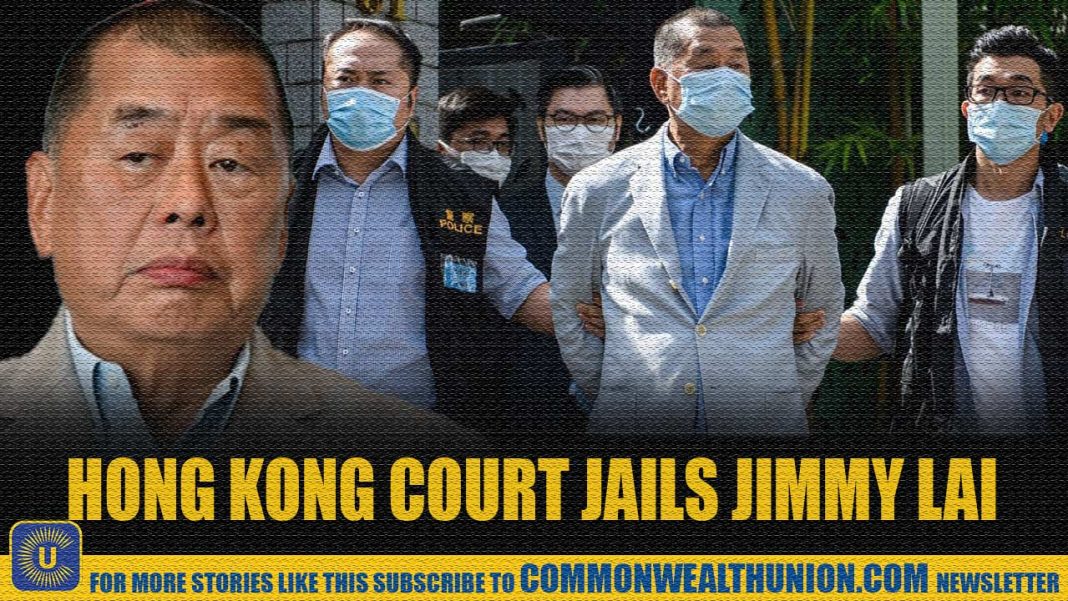

Hong Kong courts have convicted Jimmy Lai, a prominent pro-democracy campaigner and founder of the now-closed Apple Daily newspaper, of colluding with foreign forces under the city’s National Security Law. The ruling acts as a significant shift in the reformation of Hong Kong’s legal and political environment following the mass protests that took place in 2019.
Lai, 78, a British citizen who has been detained since December 2020, pleaded not guilty to the charges. The court found that he used Apple Daily and his international contacts as part of an effort to encourage foreign governments to take action against Hong Kong and mainland China. He also was convicted under a separate colonial-era statute for publishing seditious material. Lai faces a possible life sentence and is expected to be sentenced early next year.
In delivering the verdict, the court concluded that Lai’s public commentary and overseas meetings amounted to a sustained campaign that crossed legal boundaries set out in the National Security Law, which Beijing introduced in 2020 without consultation with Hong Kong’s legislature. Authorities argue the law restored order after months of unrest, while critics say it has narrowed space for political expression.
Hong Kong Chief Executive John Lee welcomed the decision, saying Lai’s actions harmed national interests and social stability. Rights organisations, however, described the case as emblematic of a wider crackdown, pointing to the law’s high conviction rate and the frequent denial of bail in national security cases. Lai has spent much of his detention in solitary confinement, and his family has raised concerns about his health.
During his testimony, Lai denied seeking to influence foreign policy, telling the court that his meetings with US officials were limited to explaining developments in Hong Kong rather than requesting sanctions. He also said he never permitted advocacy for Hong Kong independence within Apple Daily, calling the idea unrealistic.
The UK government condemned what it described as politically motivated prosecution and repeated calls for Lai’s release, while the Chinese foreign ministry rejected foreign criticism, defending Hong Kong’s judicial process. In Washington, US President Donald Trump said he had asked China’s leader to consider releasing Lai, citing humanitarian concerns.
Lai’s case is widely seen as a test of Hong Kong judicial independence, particularly following restrictions on foreign lawyers in national security trials. Once a business tycoon who founded the Giordano clothing brand, Lai became an outspoken critic of Beijing after the 1989 Tiananmen Square crackdown. His conviction places him among dozens of figures from the Hong Kong pro-democracy movement who have received prison sentences under the NSL.