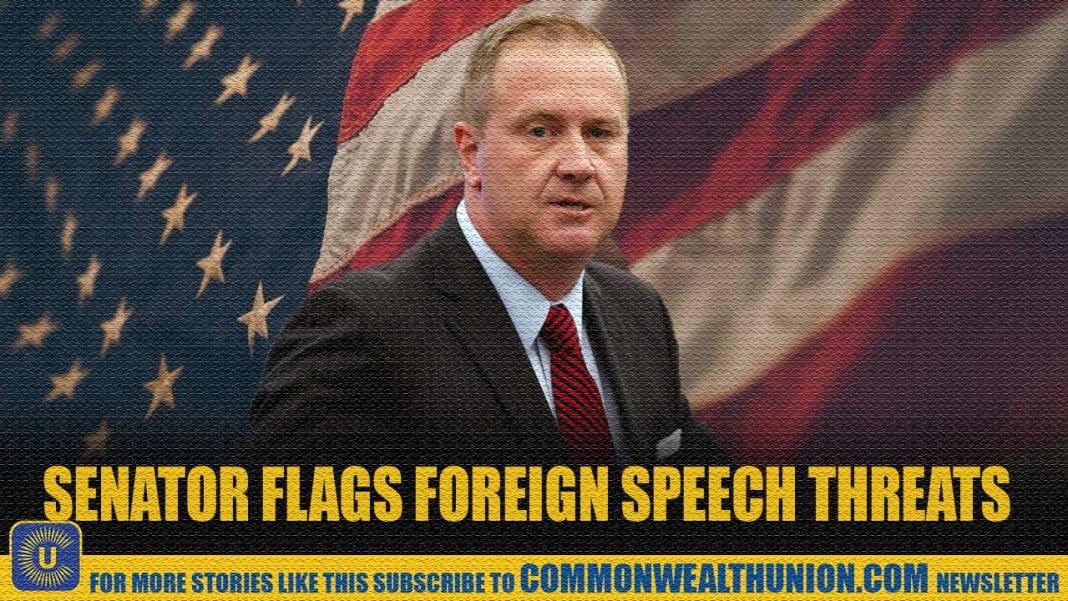

Senator Eric Schmitt is urging the US State Department to consider punitive measures against foreign actors he believes are influencing speech standards inside the United States, framing the issue as part of a growing global censorship challenge rather than a narrow dispute over internet rules.
In a letter to the Undersecretary of State for Public Diplomacy and Public Affairs Sarah B. Rogers on December 18, Schmitt argued that foreign governments and regulators are increasingly shifting towards the use of economic and regulatory pressure to shape online speech beyond their borders. He described this trend as a threat to free speech and national decision-making, warning that international digital policies are beginning to affect how Americans communicate online.
Schmitt’s concern is directed at the European Union’s enforcement of its Digital Services Act, which includes a high-profile fine imposed on X, formerly known as Twitter. Schmitt described the action as a warning to American-based platforms that complying with European content rules could become a prerequisite for international operations. He also shared his view that such enforcement risks extending foreign speech standards into US-based digital spaces.
The senator urged the administration to respond using tools such as sanctions and visa restrictions, citing the Global Magnitsky Act as a potential legal framework. He also argued that the measures could be applied to foreign officials, regulators, or organizations that promote or enforce policies with extraterritorial effects on American speech.
Schmitt wrote that an “emergent international censorship regime” is taking shape and urged Washington to respond decisively. He also referenced his prior efforts to limit what he described as domestic government involvement in online content moderation, presenting those actions as part of a broader effort to resist coordinated speech controls.
In the letter, Schmitt tied the issue to sovereignty, stressing that when foreign authorities influence what Americans can say or read online, they are exercising power over the US public. He maintained that the issue carried implications for national resilience and not just technology policy and suggested that failure to respond could normalize foreign involvement in domestic discourse.
International digital regulation supporters consistently assert that these laws aim to curb harmful content and safeguard users. Schmitt’s letter, however, focuses on the downstream effects of those policies when applied to American companies and users, emphasizing the risk of cross-border censorship becoming routine.
Calling for penalties rather than diplomatic accommodation, Schmitt’s proposal highlights an escalating global debate over who sets the rules for online speech and how far those rules should reach.