
After the opening of Terminal 5 at the Changi Airport, accessing the new mega-hub will not take as much time as it once did. Thanks to the addition of an automated underground people mover, passengers can travel from T5 directly to Terminal 2 in approximately 4 minutes. Commuters currently traveling from T5 to T2 would need to use either a bus or shuttle, taking about 30 minutes to complete the trip.
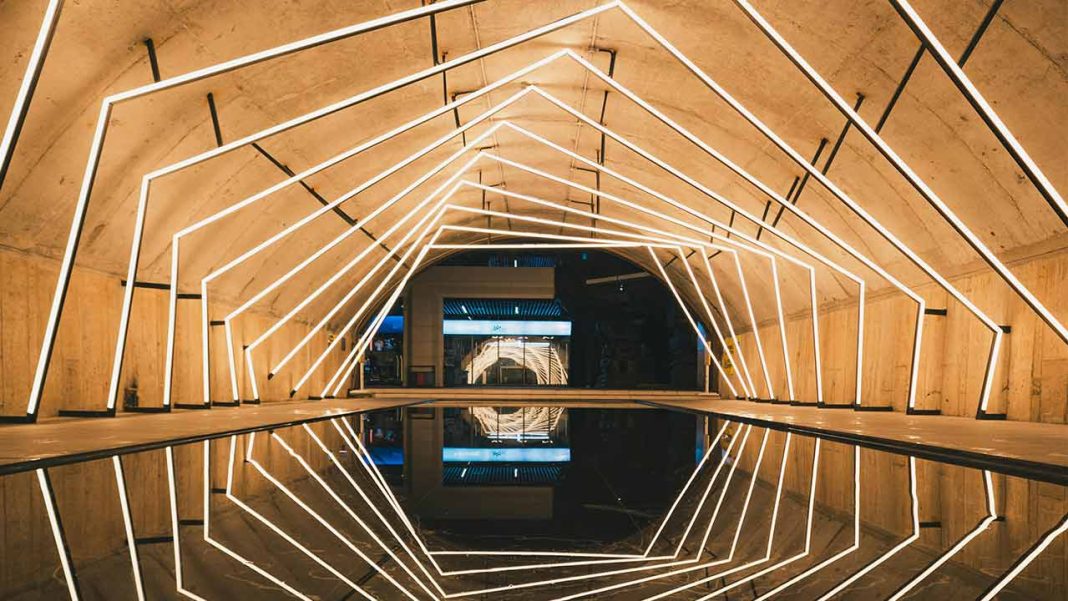
The T2 and T5 connections are comprised of multiple tunnels that create an underground structure with two automated people-mover tunnels, a dedicated baggage tunnel, as well as various MRT and service conduit tunnels that ultimately create a “spine” to connect T5 to Changi. The entire T2 to T5 connection is approximately 2.5 km long and represents significant ingenuity in order for Changi to function as a fully integrated airport versus a dispersed collection of independent terminals.
Engineers describe the scope of work as comprising “two-thirds civil works and one-third surgical precision.” In addition to the significant quantity of work required for the anticipated 1.7 km long link, tunneling teams have successfully tunneled below taxiways, runways, and throughout airside systems without interrupting airport operations. This has been made possible by careful planning, which included tunneling, pumping, ventilation, and monitoring subsurface settlement on the overhead way.
Some of the major statistics highlight why the overhead line is more than just an easy access project. An entire fleet of automated vehicles (five trains with two always in service) will operate the people mover. Each vehicle can carry up to 96 passengers with luggage, operating on service intervals of 4 to 8 minutes for a 4-minute trip in one direction between the terminals. The baggage tunnel will operate at airport throughput levels of up to 3,000 bags per hour, maintaining the quickest connection times and claim-to-gate times.
Among the structural components of the Terminal 5 development, the baggage tunnel is one of engineering’s greatest achievements; being excavated at approximately 12.3 meters in diameter, this baggage tunnel is the largest bored tunnel in Singapore at the time. The passenger tunnels are also located around 30 meters below ground level and are indicative of how modern airports can no longer be viewed solely as sprawling surface facilities. Airports are becoming multilayered systems that benefit from being engineered into bedrock and extending approximately 12.3 meters into sedimentary rock.
Aside from the practical aspects of the connection, Terminal 5 is being developed within a larger strategic context. Terminal 5 is being developed with a dual-use approach whereby it will almost double the current capacity of Changi Airport, utilize high levels of automation, and be designed to withstand climate change events such as flooding; as a result, the airfield elevations are being raised, drainage systems are being improved and expanded, and future storm-related infrastructure is planned for development. The underground connection to Terminal 5 will provide a connection to the current Skytrain and shuttle networks and future MRT extensions; it is anticipated that Terminal 5 and the corresponding infrastructure will be operational by the mid-2030s and that the development of the underground connection is already well underway.
Airport passers experience multiple types of benefits, both measurable and perceived. These benefits will include reduced stress while travelling between terminals, improved clarity of directions, and improved efficiency of the transport systems to allow the traveller to make an expedited transfer from one airport to another by making a quick international connection. The tunnels at Changi will help foster greater connectivity and enhance operational resiliency—Changi is confident that allowing travelers and luggage to travel below the terminal as a silent part of the airport’s operation will be the fastest and most comfortable way to create an airport capable of expanding vertically rather than horizontally.
When the first shuttle departs from the new terminal four minutes away to T2, it will represent one small step for an airport and one large leap towards unifying Singapore‘s many years of growth, innovation, and investment in aviation to make it a singular global hub.