
(Commonwealth_Europe) Forecasters are urging people to prepare for severe and potentially dangerous weather as Storm Goretti moves towards the UK, bringing what experts describe as a powerful “weather bomb” to parts of England and Wales. The storm, named Meteo France, is expected to deliver a combination of heavy snowfall, torrential rain, ice, and exceptionally strong winds, creating widespread disruptions and hazardous travel conditions.
According to the Met Office, Storm Goretti is a “multi-hazard event” driven by explosive cyclogenesis — a rapid intensification of a low-pressure system. This occurs when air pressure drops dramatically over a short period. In this case, pressure is forecast to fall by around 36 millibars within 24 hours, far exceeding the 24-millibar threshold that defines a so-called weather bomb, as reported by the BBC.
As the storm deepens, violent winds are expected to batter exposed coastal and highland areas. The strongest gusts are forecast in the southwest of England, particularly across Cornwall and the Isles of Scilly, where an amber wind warning is in force from Thursday afternoon into the evening. Gusts of 80 to 100 mph are possible in exposed locations, with the Met Office warning that winds could be strong enough to bring down trees, damage buildings and cause power disruptions. Forecasters say the most intense conditions may last for two to three hours before gradually easing.
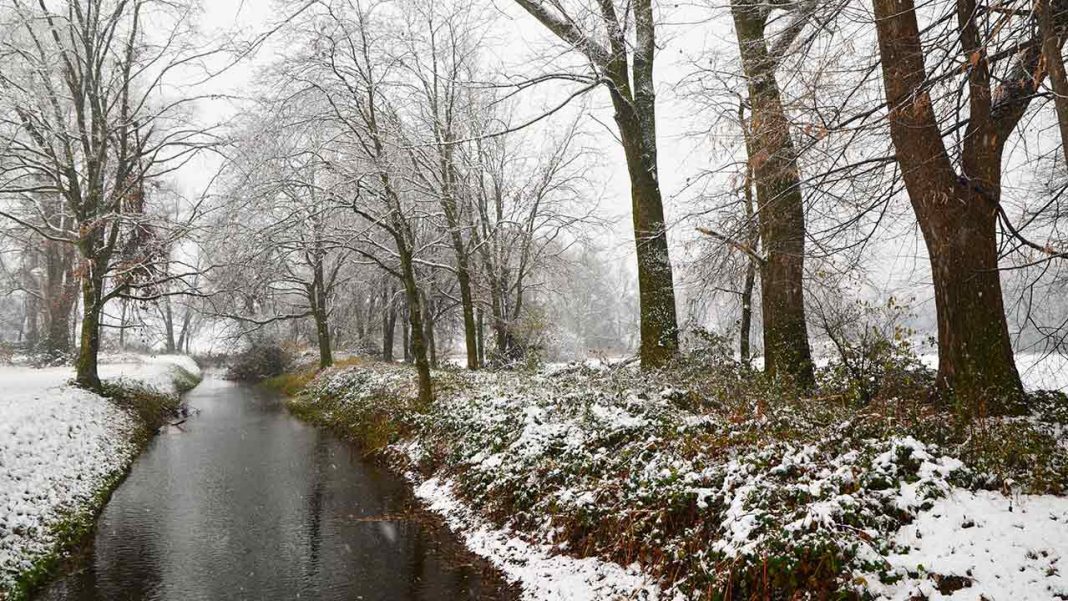
Snow is also a major concern as bitterly cold Arctic air already in place across the UK clashes with milder, moisture-laden air pushing in from the Atlantic. This battle of air masses is expected to turn heavy rain into snow across several regions. An amber snow warning covers parts of Wales, the Midlands and South Yorkshire, where 10–15cm of snow is widely expected, with accumulations of up to 30cm possible on higher ground, including parts of Wales and the Peak District.
Simon King explained that weather bombs can be especially difficult to forecast in detail because they develop so quickly. He noted that the presence of cold Arctic air adds further uncertainty, meaning small shifts could determine whether areas see heavy snowfall or instead experience sleet and rain. Mid- and east Wales, the Midlands, and parts of northern England are considered most at risk of significant snow, though conditions could vary sharply over short distances.
Elsewhere, a yellow wind warning has been issued along the entire south coast, with gusts of up to 60 mph expected, while a broader yellow snow warning stretches from Northumberland down to Wiltshire from Thursday evening into Friday. Scotland is also under snow and ice warnings as the storm’s impacts spread north.
Authorities are advising people to stay informed, avoid unnecessary travel when possible, and be prepared for delays, power outages, and rapidly changing conditions as Storm Goretti sweeps across the country.