
For centuries, royal fashion has followed a strict dress code. Princesses were expected to appear in flowing gowns, soft silhouettes, and carefully chosen dresses that symbolized grace rather than authority. Being decorative and stabilizing tradition instead of challenging it, fashion in the royal families has now begun a quiet shift, which is mainly led by the young women. At the heart of this unconventional transformation stands Princess Leonor of Spain.
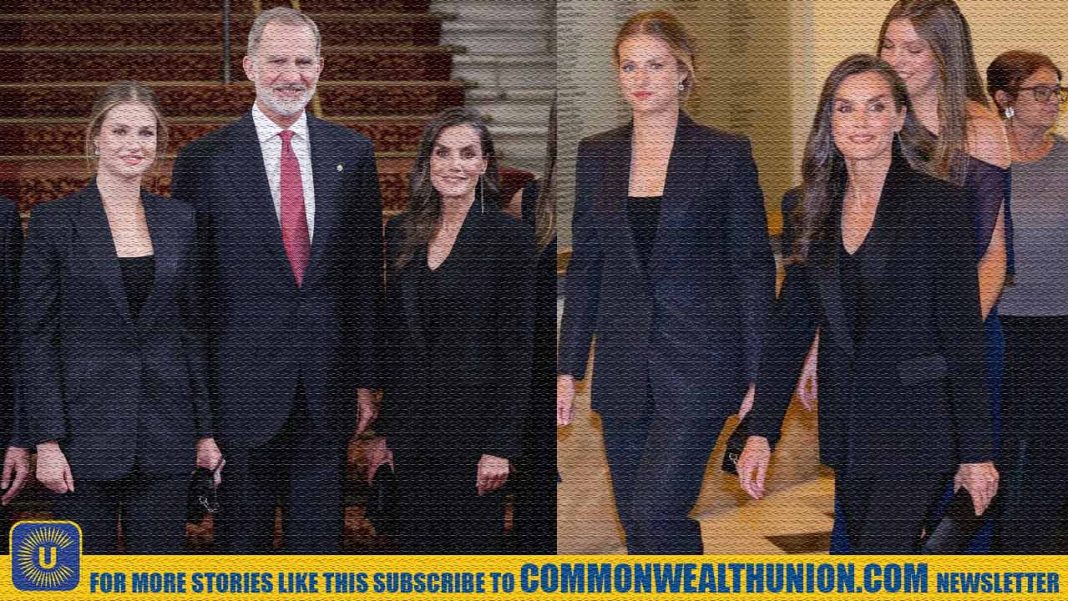
In late 2025, Princess Leonor made a few public appearances in these structured suits, marking a fast shift from the fairy-tale image historically caught onto princesshood. One of the most striking moments came at the Princess of Girona Awards in Barcelona, where Leonor appeared in a tailored jacquard suit while delivering a speech.
Standing beside Queen Letizia, who herself is a longtime advocate of power dressing, Leonor, at this event, embodied confidence, maturity, and composure, and her choice of clothing ended up sharpening her looks instead of softening them.
Instead of decorative dresses, Leonor chose clean, structured suits in neutral tones. By consistently wearing navy and pinstripe tailoring in 2025, she signaled confidence and leadership, proving authority does not need decoration.
For young women watching across the world, this evolution is significant. Fashion has long been celebrated as an art form, a space for creativity, beauty, and self-expression. But Leonor’s wardrobe highlights another dimension: fashion as power. A suit carries historical weight. It has traditionally represented control, professionalism, and decision-making, often reserved for male spaces. By wearing suits confidently and publicly, Leonor reclaims that symbolism and reshapes it for modern femininity.
Importantly, her shift away from dresses does not suggest a rejection of tradition, but rather an evolution of it. Royalty, like society, must adapt to remain relevant. Leonor’s choices suggest that moving out of inherited norms is not only acceptable but also necessary. She shows that respect for history does not require one to adhere to outdated expectations.
In this transformation, Princess Leonor has not been the only female advocate for these bold fashion statements. Princess Catherin of Wales has also contributed to this transformation by involving suits in her dress code, mainly during events that are focused on leadership, policy, and social change. Often featuring structured blazers, these suits show off authority without sacrificing elegance.
Similarly, Princess Charlene of Monaco, Crown Princess Victoria of Sweden, Princess Beatrice of York, and Crown Princess Mette-Marit of Norway have all used tailored suits in place of traditional dresses, signaling authority, professionalism, and modern femininity. Their choices show that royal fashion can move beyond convention, using clothing as a statement of leadership.
Together, these royal women show a broader cultural shift. Their suits are not about masculinity, nor are they about rebellion for its own sake. They are about clarity. They tell the world that femininity and power are not opposites, and that leadership does not require visual softness to be credible.
What makes Princess Leonor’s fashion statements especially admirable is her youth. As a young woman who grew up in the public eye, her clothing choices send a clear message to her generation. It indicates that you are allowed to redefine expectations. You do not need to fit a traditionally accepted image to command due respect. Change is acceptable; in fact, certain shifts are sometimes necessary to show a bolder movement.
In choosing suits over dresses, Princess Leonor demonstrates that fashion is never neutral. It speaks, it signals, and it shapes perception. Her tailoring shows that fashion is a powerful statement of who you are and who you want to be.