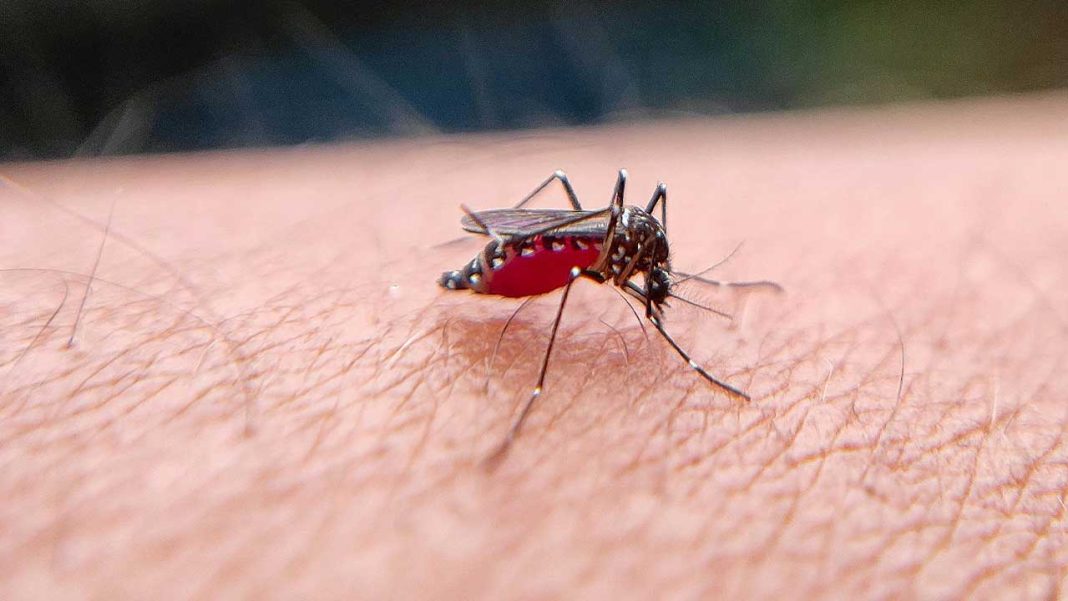

A new study reveals that mosquitoes appear to be shifting their focus toward humans rather than animals, a change that could be linked to shrinking natural habitats and may increase the risk of mosquito-borne diseases.
Scientists studying mosquitoes in Brazil‘s Atlantic Forest are warning that these insects may be changing their behaviour in ways that could put people at greater risk of disease. Even in remote, protected forest areas, researchers found that mosquitoes are increasingly feeding on humans instead of wild animals, a shift that is likely due to deforestation, declining wildlife, and climate change.
The research was carried out in two nature reserves in the state of Rio de Janeiro: Sítio Recanto Preservar and the Guapiaçu Ecological Reserve. The purpose of these areas is to protect wildlife by limiting human activity. However, the mosquitoes that were captured in these areas revealed a distinct narrative.
To understand what the insects were feeding on, scientists set up light traps inside the forest. Female mosquitoes caught in these traps were later analysed in a laboratory. Because female mosquitoes need blood to produce eggs, the DNA found in their stomachs can reveal which animals they have bitten.
Out of 145 mosquitoes collected, researchers were only able to identify blood meals in 24 specimens. Many samples were lost because mosquitoes are fragile and can be damaged during transport. Even so, the findings were striking. About 75 per cent of the identifiable blood meals came from humans, an unexpected result given how few people live or work deep inside these forest reserves.
“This was a big surprise,” said Dr Sergio Machado, one of the study’s authors. “Some of the traps were placed about a kilometre inside the forest. We really didn’t expect to see such a strong preference for human blood.”
The results suggest that mosquitoes may be flying out of the forest to bite people living in nearby communities, then returning to the reserves. While mosquitoes are capable of travelling several kilometres, this kind of regular back-and-forth movement is unusual. However, researchers say it becomes more likely when food sources inside the forest disappear.
Habitat destruction around the reserves appears to be a key factor. The clearing of forests for farming, development, or logging leads to a decline in wildlife populations. With fewer animals such as birds and mammals to feed on, mosquitoes are forced to adapt, and humans become an easy alternative. People are abundant, predictable, and often live close to forest edges.
Climate change may be accelerating this shift. Rising temperatures can shorten mosquito life cycles, allow them to reproduce more quickly, and extend their breeding season. These conditions favour species that are flexible and able to exploit new environments, including ones shaped by human activity.
“Only the most adaptable species are going to survive,” Machado said. “Mosquitoes are extremely adaptable. The danger is that they may adapt to us faster than we can protect ourselves.”
This change in feeding behaviour is worrying because mosquitoes are known carriers of serious diseases, including dengue and Zika. Dengue alone has had a long and costly history in Brazil. After being absent for more than 20 years, it reappeared in 1981 and has since caused around seven million cases across the country, according to the World Mosquito Program. Globally, mosquito-borne diseases kill an estimated one million people every year.
Even though this study focused on a specific region of Brazil, the researchers believe the same pattern is likely happening worldwide. As forests shrink and animal populations reduce, mosquitoes may increasingly turn to humans, carrying potentially harmful diseases with them.
For Machado, the message is clear: protecting natural ecosystems is not just about conserving wildlife; it is also about protecting human health. “If forests remain healthy, mosquitoes have other animals to feed on,” he said. “Humans can live near forests, but there needs to be balance. Right now, that balance is disappearing.”
The research team plans to continue studying mosquito movement in the Atlantic Forest and is developing improved traps to collect larger samples in future studies. Machado stresses that monitoring environmental change is essential. “This is not only about insects,” he said. “It’s about forests, animals, water, climate – everything. Our study is just one small part of a much bigger problem.”