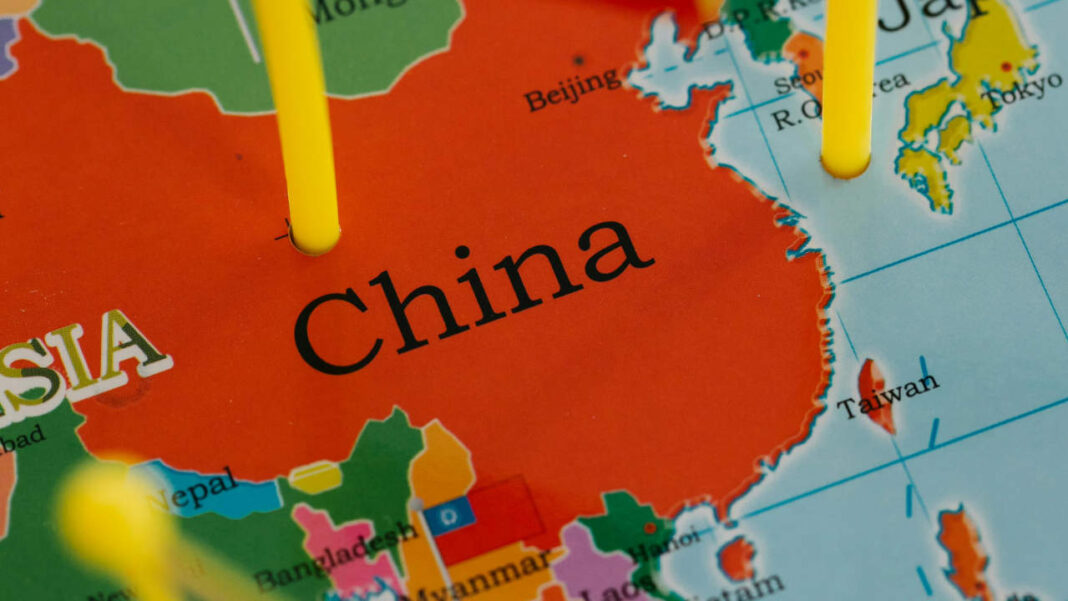

German Chancellor Friedrich Merz to meet Chinese President Xi Jinping in Beijing. This meeting moves with goods worth USD 296.18 (€251) billion traded between the 2 countries during the last year (2025).
Germany’s imported goods from China in 2025 carried a value of USD 201.31 (€170.6) billion. This is more than double the value of Germany’s exports to China, which moved with USD 95.93 (€81.3) billion.
As reflected in these values, China has now overtaken the U.S. as Germany’s top trading partner. Friedrich Merz prepares for his first visit to Beijing since he took office as Chancellor.
Merz is expected to head to China on Tuesday, 24 February. He is expected to be welcomed with military honours on Wednesday, 25 February, by the Chinese prime minister, Li Qiang, prior to a later meeting with President Xi Jinping for talks over dinner, as shared by his spokesperson, Sebastian Hille.
Germany’s Federal Statistical Office released figures on Friday, 20 February, reflecting that China was back on top as the country’s most important market. The total trade value is USD 296.18 billion (€251 billion) for the year 2025. This value reflected a 2.2% gain from the year before in 2024, when the U.S. was Germany’s leading export destination.
Germany imported goods worth about USD 201.31 (€170.6) bn from China during 2025. That’s more than double the value of exports from Germany to China, with a value of USD 95.93 (€81.3) bn.
Trade with the U.S. carried a value of USD 283.2 (€240) bn but reflected a 5% decrease in trade after Donald Trump’s controversial tariffs as a potential factor.

Hill said that during the 2-day trip to China, Merz was scheduled to visit the Forbidden City. Additionally, Merz is scheduled to visit the Chinese company Unitree Robotics and the German car manufacturer Mercedes-Benz, in addition to the turbine manufacturer Siemens Energy. He is also expected to visit the city of Hangzhou in eastern China.
Merz is expected to raise several topics for discussion during his intended visit. Amongst them would be the Russian-Ukraine war, human rights, and trade.
In the meantime, the EU has been struggling to limit China’s overheating manufacturing by imposing tariffs on electric vehicles (EVs) imported to the EU since 2022. This has had little impact on sales, and tariffs are threatened on steel later in 2026 through steel safeguards.
Germany’s relationship with China on trade tends to be complex. This is due to car companies having a significant manufacturing presence in the country. Volkswagen has referred to China as its second home market. This is besides both BMW and Mercedes-Benz being heavily reliant on sales in China for their economic success.
The BMW chief executive, Oliver Zipse, will be one of 30 business representatives to accompany Merz on the upcoming trip to China. Only by working together can we solve complex global challenges, as Zipse shared with Reuters. With his trip to China, Zipse further stated that the Chancellor is sending a strong signal for dialogue and cooperation.
The EU intends to derisk and has introduced several initiatives to wean itself off China. This is due to China dominating supplies of rare earths, processed rare earths, critical minerals and refined critical minerals. This includes lithium for EV batteries. Also, permanent magnets are deployed in everything from cars to fridges to military jets.
Germany’s need to support the automobile sector is due to the auto industry being the largest employer. Germany has adopted a more nuanced approach to addressing barriers to Chinese imports.
Germany voted against an EU decision to introduce tariffs on Chinese EVs two years ago, in 2021. This month, the EU spared Germany from tariffs on imports of the Chinese-built Volkswagen Cupra Tavascan SUV. This relief is in exchange for undertakings on the minimum price of the vehicle.