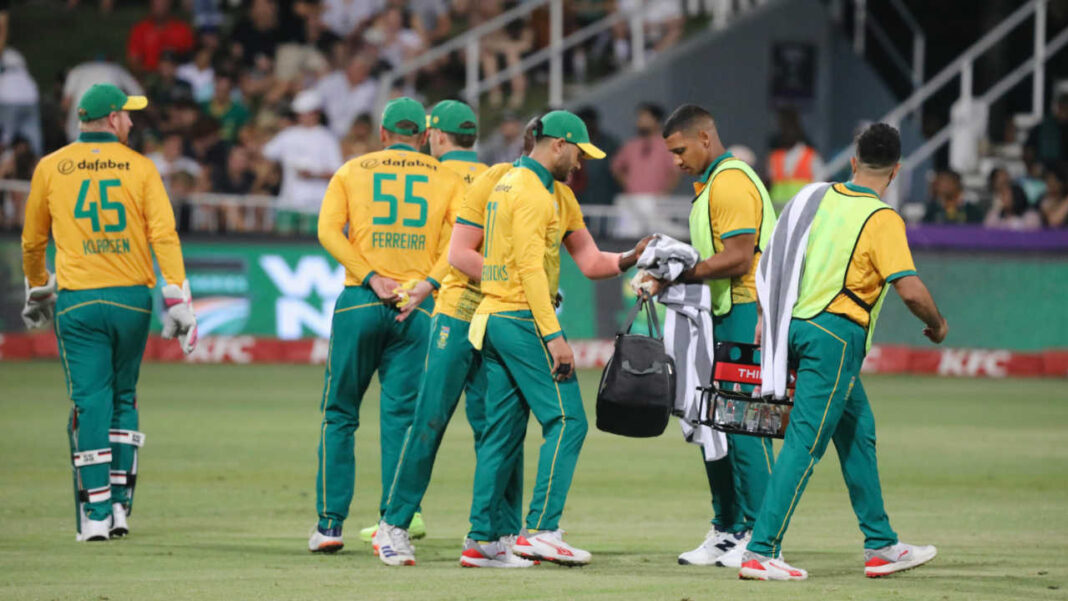

A travel fiasco has turned into a public relations debacle for cricket’s governing body – the loosely tied together controversy of how sport and politics get played out in today’s world. The story goes like this: while the newly crowned world champions were finalising their play for the tournament and heading back home to where they were from, the two eliminated teams (South Africa and the West Indies) were left sitting on tarmacs in India and complaining about the ICC favouring the England cricket team over them, as the England cricket team was able to secure a charter flight back home from the tournament well before either of the other two teams (South Africa and the West Indies) could. In this case, there was a significant online backlash, and ICC issued an official reply.
The ICC moved quickly to diffuse the “favouritism” charge and issued a technical clarification of events by stipulating that departures were determined by “operational realities” to include closures of airspaces, permissions required for specific air routes, and availability of various flight corridors. Furthermore, the ICC stated that teams were accommodated for travel on the basis of “operational safety and routing permissions”, and that further improved communications from the different departure cities and air routes will provide for future equitable travel arrangements. However, despite the ICC’s response, players have indicated that they were left “in the dark”.
Anger over this situation erupted on social media and in interviews using somewhat colourful language. South African wicketkeeper-batter Quinton de Kock and his teammate David Miller questioned publicly how one team may have been allowed to fly home while others were left behind. West Indies coach Daren Sammy joined the chorus of support for both players, and former England captain Michael Vaughan warned that the unequal treatment at this point in time could harm the future image of the game. Each of the posts made by players ranged from confused to accusing and implied that preferential treatment, rather than logistics, was used to determine which teams received priority.
The complicated nature of the exiting teams was not due to something as simple as a lost visa or delayed bus but an escalating geopolitical crisis over 5000 miles away. The U.S.-Israeli/Iranian conflict had repercussions for air travel safety and led to the cancellation of flights throughout many of the major air travel hubs in the Arabian Peninsula, leaving nothing but chaos in the wake of worldwide schedules for commercial flights. There were still a few routes out of Mumbai that were open and allowed for a charter to occur, but other routes were either temporarily closed or required rerouting, making it necessary for the charter to obtain permission and clearance to fly over other countries not previously used. Aircraft and the air corridors of the world, rather than who played in the last game, determined which team could move when.
The optics of this year’s World Cup were evident from the tournament’s final weekend — the cricket world was witness to Punjab’s Modi Stadium, which has become cricket’s new iconic venue, is an example of the sport’s global reach but also is vulnerable to external shocks, as demonstrated through travel chaos encountered by players and fans. For fans witnessing their team leave, knowing all other players were waiting at the hotel bar, there was a perception of disparity between teams that the ICC will have to manage alongside enforcement of their technical decision-making process.
Efforts to remedy this situation are already underway with reports suggesting charter flights for stranded players as well as possible joint travel between South Africa and the West Indies upon obtaining proper clearances. The aftermath has also revealed a second uncomfortable fact: tournament logistics must not only be stress-tested for weather and crowd control but also for sudden geopolitical ripple effects. As a result, cricket governing bodies must now embrace that contingency planning will require the inclusion of diplomacy alongside duty of care.
There are many positive aspects associated with the transparency of this whole situation. Through the debate about how the planes operate and other logistical issues, the ICC have publicly communicated to a much wider audience than they do through scorecards.
The ICC may be able to repair both its own reputation and the reputations of the players who were frustrated by their experiences; however, we will have to wait and see. This incident is a strong reminder of how tightly connected this world has become and how many people will hear about a cancelled flight as a result of what happened during this incident, just as they would have heard about an unintentional drop of a catch.