

Sri Lanka (Commonwealth Union)_ Sri Lanka’s history is closely tied to water management. More than 2,000 years ago, the island’s ancient rulers developed one of the world’s earliest and most advanced irrigation systems. They built hundreds of large reservoirs and thousands of smaller tanks to collect rainwater and store it for farming. Many of these reservoirs were constructed in the dry zone areas of the North Central, Northwestern, and Northeastern parts of the country, where rainfall is limited for much of the year.
Also read: Meet India’s most powerful and wealthiest female leaders who rule the business world!
Despite its long history of water management, Sri Lanka is today experiencing a variety of groundwater-related issues. The country, like many others, is facing rising demand for subterranean water sources. Rapid population growth and increased demand from houses, agriculture, and industry have put a strain on groundwater supplies. In certain areas, this has led to water level shifts and concerns about water quality. The problem is exacerbated by the country’s different climate zones, which cause inconsistency in water supplies between locations.
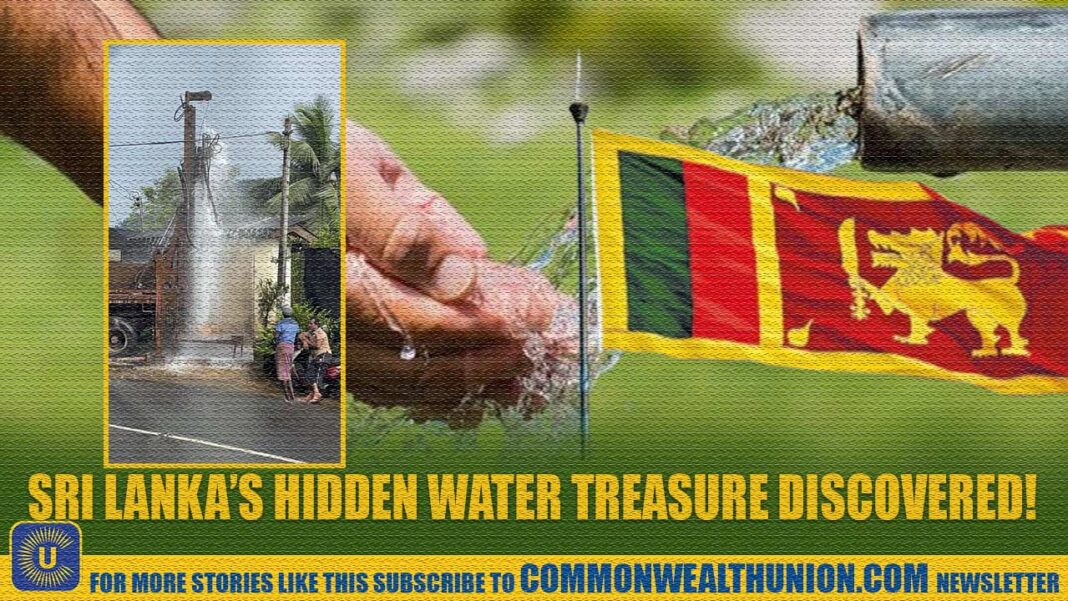
However, in a major development and a remedy to this continuing problem, the National Water Supply and Drainage Board (NWSDB) has announced that it has identified what appears to be the largest groundwater source discovered in Sri Lanka so far. The source was found in Pitabeddara during the excavation of a tube well close to the Pitabeddara Police Station. According to officials, the newly discovered source produces a continuous flow of about 10,000 liters of water per minute. This exceeds the previous highest recorded yield of around 7,000 liters per minute, which was found in the Madhu area.
Also read: Bangladesh and Malaysia explore new areas of cooperation!
Indrajith Gamage, the geologist in charge of the Southern Province, described the discovery as an important development for the region and a valuable addition to the country’s water resources. He said the find could strengthen long-term water security, particularly in areas that experience seasonal shortages. Additionally, experts say locating underground water sources involves a careful and systematic scientific process. Before drilling begins, specialists study detailed geological maps prepared by the Geological and Mines Bureau.
Using maps about the types of subsurface rock, stratigraphy, and major geological features of the region, researchers identify those areas where groundwater is likely to be stored most effectively. After collecting this basic information about a location, scientists will then look for fractures or cracks within their identified stratigraphy, which may act either as storage for or as conduits to deliver groundwater into or from the subsurface. Often, these fractures are utilized as natural conduits for transporting water underground.
Also read: How Tamil Nadu’s unstoppable rise is rewriting India’s economic story!
By using modern survey techniques, scientists can locate areas that have the potential of containing water. The two most commonly used techniques are ground-penetrating radar (GPR) and electrical resistivity imaging (ERI). Both techniques create detailed images of the subsurface layers without needing significant excavation. This information allows engineers to identify the best locations for drilling boreholes, thereby increasing the chances of locating high-yield water sources.
Authorities believe the newly found groundwater source might play a significant role in alleviating water scarcity in Pitabeddara, Morawaka, and other areas. There are also plans to investigate ways to distribute water from this source to other places if necessary. Groundwater is one of the most significant freshwater sources in the world. Scientists believe that natural aquifers hold around 97% of the planet’s usable freshwater.
Sri Lanka’s National Water Supply and Drainage Board has the responsibility of managing the country’s water sources. It is governed by the authority that supplies safe and clean drinking water, as well as regulates the extraction of groundwater. In addition to supplying safe drinking water and regulating groundwater extraction, the National Water Supply and Drainage Board also protects water resources, supports flood control, manages the development of land and water resources, and promotes the sustainable use of water for electricity generation and aquaculture purposes. Officials stated that environmental preservation will remain a primary priority as the country develops and maintains its water resources for the future.